Geopolitical risk has become a pressing concern for businesses running operations across the world. One-third of business leaders surveyed in HUB International’s 2026 North American Report now identify it as a direct profit threat. Yet only 15% feel completely confident managing that exposure. The gap is widest for multinationals navigating geopolitical risk insurance programs across multiple jurisdictions.
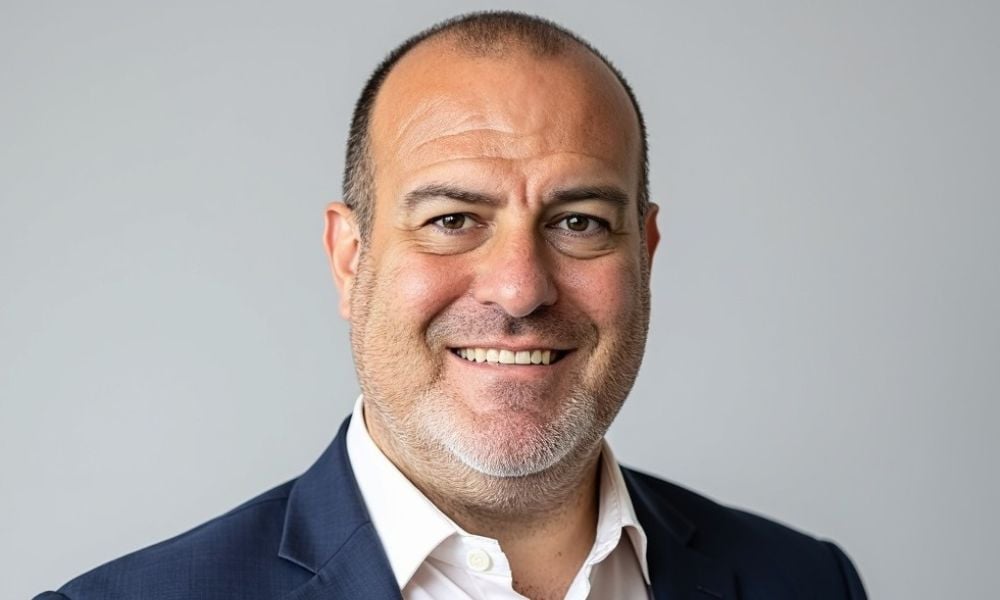
Will Mulé (pictured), senior vice president of commercial lines at HUB International, argues that the confidence gap is widest where most risk managers are not looking. He explains what a well-structured geopolitical risk insurance program actually requires, and where most programs leave businesses exposed.
The natural assumption about geopolitical risk is that the most visible conflicts carry the greatest threat to business operations. Mulé challenges that view.
He argues that named conflicts like Ukraine-Russia, Israel-Gaza, and China-Taiwan do not represent the confidence gap’s widest point. Those risks, however serious, are known quantities. Companies can decide not to operate in those territories, or they can build structured risk management processes around the exposure.
What businesses are less prepared for, he notes, is the kind of risk that does not carry an advance warning. Political risks and violence have been a top 10 global business risk for three consecutive years, according to the Allianz Risk Barometer 2025.
“The real concern or confidence gap is for the unknown, the random attacks on public transport or destruction of property in major cities where companies have either local operations there or employees traveling there,” Mulé said.
That unpredictability is what makes pre- and post-incident risk management a core component of any geopolitical risk insurance program. Mulé noted that organizations with clear protocols in place before an incident are better positioned to keep operating when disruption hits.
Before designing a global program around geopolitical risk, risk managers need two things: a clear picture of where the business is exposed, and an understanding of where standard coverage stops. Mulé’s approach addresses both.
Mulé argues that the starting point is not what a program covers. It is where the business actually operates, and where it only sells into a market.
“Firstly, it is about understanding individual client’s global footprints,” he said. “Everyone will be different. We should also understand where they have physical locations and where they perhaps sell into those countries but not necessarily have operations in that country as that will determine what type of risk exposure they would have.”
The next step is overlaying that footprint against a country risk map. “You would overlay the client footprint over the risk map to see how those countries rate in terms of low/high risk areas,” Mulé said. That assessment, he added, identifies where the program is most likely to respond to an incident and where it may fall short.
Mulé notes that the footprint-to-risk-map step is where program design begins, adding that a business that knows which markets sit in high-risk territories can identify where its global program is most likely to be tested.
Standard property and casualty policies cover most exposures in lower-risk markets. They leave gaps where the risk profile escalates.
“As much as the standard property and casualty policies address most gaps you will also have to consider for some of the more high-risk countries political risk insurance to help dovetail with your traditional global P&C program where cover may not extend,” Mulé said.
Political risk insurance (PRI) is built for the specific exposures that standard P&C policies are not designed to handle. More than half of multinationals surveyed by Howden reported a political loss to an international investment between 2020 and 2025. Demand for PRI has followed. Howden’s 2025 report Opportunity in Flux found demand increased 33%, driven by trade disruption and economic uncertainty.
Mulé outlined the key coverage areas that a PRI policy addresses:
Political violence: Responds to physical damage to property, assets, and inventory, plus resulting business interruption. Mulé says triggers include “war, civil war, revolution, insurrection, rebellion, military coup, terrorism, strikes, riots, and civil commotion.” The coverage may also apply when personnel are barred from safely managing a facility in an active conflict zone.
Trade and regulatory disruption: Two coverages work together here. License cancellation and embargo cover responds when a government illegally revokes import, export, or operational licenses, or imposes sudden sanctions that disrupt trade. Contract frustration applies when a sovereign government, state-owned enterprise, or public buyer unlawfully defaults on a commercial agreement and international arbitration is unavailable.
Sanctions and trade restrictions are shaping how multinationals structure cross-border operations. Mulé notes their direct impact on insurance premium and claims flows has so far been limited.
Currency inconvertibility and transfer restrictions: Covers losses when a foreign government blocks conversion of local currency into hard currency. Mulé says this can occur through “exchange controls or monetary shifts that block an investor from converting local currency into hard currency.”
Expropriation, confiscation, and nationalization (ECN): Protects against government seizure of physical assets, equity stakes, or intellectual property without fair compensation. Mulé says this includes scenarios where a host government acts “unrightfully” or without due process.
Guarantees and sovereign default: Two mechanisms fall under this category. Wrongful calling of on-demand guarantees covers situations where a foreign government or entity improperly draws down performance bonds or letters of credit. Non-honoring of sovereign guarantees covers state defaults on financial commitments, guaranteed debt, or non-honored arbitration awards.
Together, these coverage types extend the protection that standard P&C policies cannot provide in higher-risk markets.
The structure that eliminates cross-border coverage gaps, Mulé argues, is a controlled master program (CMP) with locally issued underlying policies.
“Typically, this is not an issue as the best way to cover a risk globally is by having a controlled master program, where you would issue local underlying policies,” Mulé said. “This way you can eliminate gaps in coverage, provide additional limits by having the CMP scheduled to an excess/umbrella tower.”
He adds that the local policy issuance step carries a second benefit.
“Good local standard in that country is maintained along with meeting mandatory and legislative requirements so that you do not breach any local laws,” Mulé said.
Mulé explains that a CMP keeps a global geopolitical risk insurance program coherent while each market meets its own regulatory requirements. That structure is what prevents coverage from unraveling at the local level.
Mulé outlines what risk managers should prioritize when reviewing a global geopolitical risk insurance program ahead of renewal.
The first priority, he notes, is understanding the current global footprint and how it may change in the next renewal cycle. That picture informs the steps that follow.
“Thoroughly review current policies, wordings and limits to ensure they remain fit for purpose now and are adaptable to any changes in global footprint and/or business operations,” Mulé said.
The final step is a direct conversation with the broker, and Mulé was direct about what that conversation should cover.
“Speak with your broker and ask them how confident they feel about the current program, any potential gaps they see, and what their local broker partners are seeing and recommending in the local market,” he said.