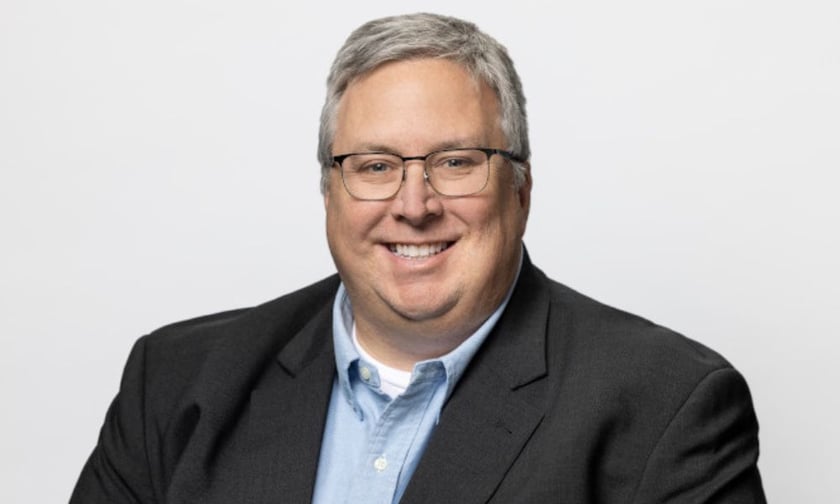
John Kreul (pictured) has a problem with the word "transformation". Not because change isn't happening at Jewelers Mutual Group, where he serves as chief information officer, but because the word implies a beginning and an end and he stopped believing in that framing a long time ago.
"I don't even use the term 'transformation' in my language today," Kreul said. "Companies are in unbelievably consistent change - it is the new normal. There are no more big transformation events."
That perspective shapes everything about how the Neenah, Wisconsin-based specialty insurer approaches its technology strategy. Rather than chasing discrete modernization projects, Kreul's team is building platforms designed to support continuous change and reorienting how the business functions around customer feedback rather than internal processes.
For Kreul, the more consequential shift at Jewelers Mutual Group is organizational rather than technical. The organization, which provides insurance and protection products for the jewelry industry, operates across personal lines, commercial lines, and non-insurance services across sector footprint that most off the shelf insurance platforms simply were not built to handle.
"Traditional insurance solutions don't support that," he said. "We listen to our customers and have products, both insurance and non-insurance, that create value for them and they're all interconnected. So, we own that experience and we own connecting that data."
That ownership imperative drives decisions about what to build versus buy. For foundational infrastructure cloud architecture, data platform technology, core transaction processing Jewelers Mutual leans on third party providers. Where the company differentiates is closer to the customer, and there, Kreul said, proprietary development is non-negotiable.
"Where we build more is as we get closer to the customer and want to differentiate," he said. "We'll still use collaborations there, but we want to own that experience and own that data. That's super important."
The firm's collaborations criteria reflect that philosophy. Kreul is not simply looking for vendors with capable products; he is screening for cultural alignment. "We look for people who are very innovative, willing to try new things, and very customer driven," he said. "Cultural fit is really important a willingness to try, potentially not always succeed, and take those learnings to be better in the future."
The practical expression of Kreul's strategy is an architecture built around two core capabilities: a data platform and what the company calls an event stream. Together, they form the connective tissue between Jewelers Mutual Group's diverse lines of business.
The logic is straightforward but operationally demanding. A personal lines customer may also work with a jeweler who holds a commercial policy. A non-insurance product may intersect with a service contracts claim. Each of those touchpoints generates data, and that data only becomes useful if it can be processed and acted in near real time.
"Data interconnectivity is really important, and so is services interconnectivity quoting, claims, and all kinds of different customer experiences," Kreul said. "We want the platforms to serve up information to our experience teams to understand that journey and make real time adjustments to it."
The aim is to bring relevant customer and business insights back through the orchestration layer, giving front-line teams the context they need to act rather than react. That loop, Kreul argued, is where insurance carriers can create meaningful competitive separation.
None of this works, in Kreul's view, if change only flows from the top. Jewelers Mutual's leadership may set strategic direction, but Kreul is deliberate about the role that customer facing employees, agents, and even policyholders play in shaping the company's priorities.
"We have people interacting with our customers every day, and we get new product ideas and new service ideas from that," he said. "In fact, many ideas that have come from our customers have been implemented."
That bidirectional flow of information is not a soft cultural aspiration it is, for Kreul, what gives a company the confidence to move quickly. When you are genuinely listening to customers, defined broadly to include employees, agents, consumers, and the jewelers the company serves, the feedback loop becomes a source of operational conviction rather than noise.
"If you stay in continuous learning mode and you listen to your customers and by customers, I mean employees, agents, consumers, jewelers that's what gives you the confidence to innovate and try new things," Kreul said.
For organizations navigating an accelerating technology environment, Kreul’s framing offers a pointed challenge: stop treating change as a project to be completed and start treating it as an operating condition the business needs to be built around.