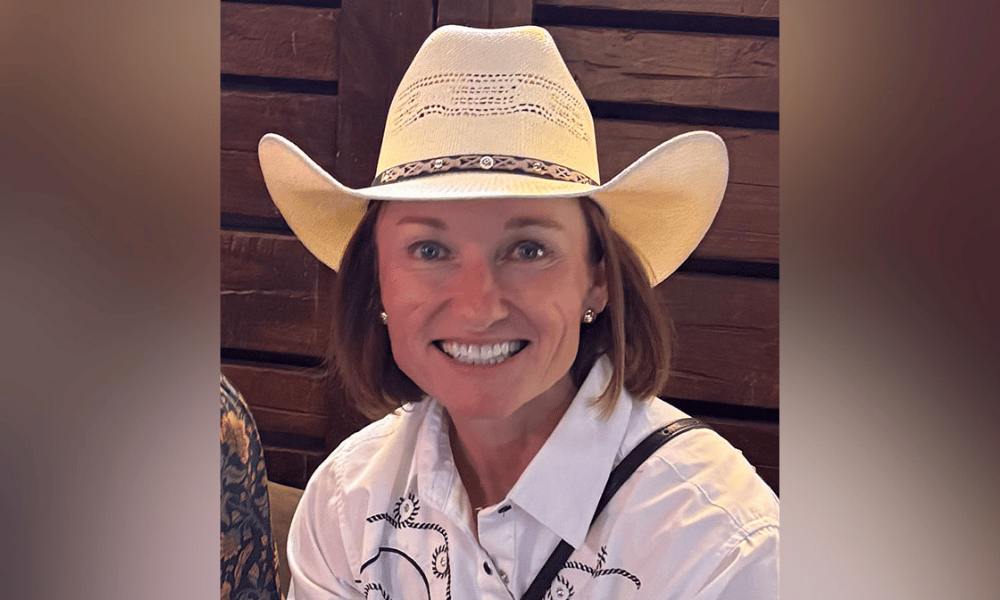
When Kate Walas (pictured) opens her laptop each morning, the problem facing Upland Specialty Insurance’s underwriters is not a shortage of business. It is the size of the submission queue.
Walas, chief operating officer at the Dallas-based excess and surplus lines carrier, said Upland is handling the largest submission volume in its history. Her response has been to build underwriting rules directly into the operating platform, using artificial intelligence to clear submissions faster and a rules-based triage system to help underwriters where to focus first.
The pressure is market wide. Surplus lines direct premium written reached $143.3 billion in 2025, up 10.4% from the prior year, according to AM Best’s annual US Surplus Lines Market Segment Report, as the surplus lines market closed 2025 at a record high.
Walas joined Upland in late 2023 from Indigo Specialty Underwriters, the MGA she founded, to lead the carrier’s professional liability E&O line. She was promoted to chief underwriting officer in April 2024 before moving into the chief operating officer role.
“When I got to Upland the company was still maturing. It was about where I could help quickest,” she said. “We needed to set up foundational process and governance guidelines but also think about how we deliver for the underwriters from a platform standpoint.”
With governance standardized, she built an operations and technology team of people who had worked in or close to underwriting in their past.
“It’s really an underwriting mindset applied to operations and technology, which is a differentiator.”
“Given that we’re a young organization, the transformation is about getting the right building blocks in place from the start versus reimagining something that’s ingrained into the business,” she said.
Clearance at Upland was once a manual task, handled in-house or by an offshore partner. (OIP Insurtech) In October 2025, AI vendor FurtherAI announced that Upland was using its platform to ingest broker submissions and extract the fields needed for underwriting and clearance. Walas said the offshore team has shifted to quality assurance on those data points rather than spending about 20 minutes per submission on manual clearance. According to Walas, all submissions are now cleared within a service level agreement (SLA). That shift reflects a wider trend in how AI is reshaping underwriting and pricing in 2026.
“In the midsize casualty space, the first quote back to the broker is usually the winner,” Walas said. “Getting submissions cleared faster allows our brokers and underwriters to start negotiating on a deal sooner and that’s the biggest change we’ve seen. It helps the relationship, that’s for sure.”
“We’re baking our rules and guidelines into tools that automate more of the manual tasks the underwriters perform and we’re assigning an initial indication to help the underwriters prioritize which deals to focus on, and which we can decline by pushing back to brokers and saying: thanks for the opportunity, but this is outside our appetite,” she said.
Ratings are tuned by the underwriting team. “Some teams see a red rating as a hard no; others see it as an interesting opportunity to explore,” Walas said.
Proving a loss ratio payoff will take time.
“On a lot of these lines, you’re looking 7 to 10 years before you really know,” she said.
In the meantime, Upland leans on experienced underwriters, historical market data and a data and analytics team that tracks claims trends and jurisdictional issues. “From a pure efficiency standpoint, we’re able to quote and bind more of the deals we know are profitable,” Walas said.
“Building something from scratch means you play every role imaginable – underwriter, operations person, claims analyst, technology strategist, relationship manager with your broker community,” she said of founding Indigo.
She is wary of the growing number of carrier veterans launching InsurTech MGAs built around automation. “There’s a component to the small to middle market space that you can’t commoditize around technology,” she said. “MGAs that are commoditizing small businesses will write a lot of business, but they’re going to have a lot of losses too. You have to find that balance.”
Claims is where she sees the biggest risk. Upland went live with Five Sigma’s claims platform in December 2025 as part of a move to a fully in-house claims operation, according to a Five Sigma announcement.
“If you outsource your claims handling to a TPA, you’re giving up control of how that claim is actually managed,” Walas said, referring to third-party administrators. “If you don’t actively manage a claim, you can see defense costs rising. You lose visibility into who the attorneys are on the other side. I think that’s going to become increasingly important over time.”