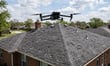
The Trump administration is preparing to loosen restrictions on commercial drone flights, clearing a major regulatory hurdle that could open the skies to widespread delivery services and accelerate changes already rippling through the aviation insurance market.
The Department of Transportation has proposed rules that would allow drones to operate beyond the visual line of sight of their pilots - a requirement that has, until now, forced companies to obtain individual waivers for such flights. Officials say the change could unlock new applications across manufacturing, agriculture, filmmaking, energy, and delivery of goods, including critical medical supplies.
“We are going to unleash American drone dominance,” Transportation Secretary Sean Duffy said at a press conference, adding that the shift could reshape how both people and products move through US airspace.
“This NPRM is long overdue, and we’re encouraged to see the United States reclaiming its leadership in the UAV sector,” agreed Bill Tabbert, co-head of Starfish Aviation at Starfish Specialty Insurance Services. “The potential opportunities are vast, but progress depends on the completion of this essential rulemaking process,” he told Insurance Business.
Under the proposal, drone operations would be capped at 400 feet above ground level and limited to preapproved launch sites. Operators would be required to mark operational boundaries, submit flight plans, and demonstrate protocols for loss of communication. Drones would need to yield to all manned aircraft broadcasting their positions, and activities near airports would be restricted.
“From an insurance standpoint, underwriters will need to carefully evaluate how UAS and traditional aircraft operations can safely and efficiently coexist within shared airspace,” said Tabbert.
Security measures are also included: the Transportation Security Administration would require coordinators and related personnel to undergo background checks and security threat assessments.
The move comes amid concern from lawmakers about drones being used to target major US events, including the FIFA World Cup.
Michael Robbins, chief executive of the Association for Uncrewed Vehicle Systems International, told Reuters that the proposal was “a critical step toward enabling drone operations that will enhance safety, transform commercial services, and strengthen public safety with drones as a force multiplier.”
While drones have been capable of delivering goods like ice-cream or coffee for years, the service has remained largely confined to select US suburbs and rural towns. Executives say regulatory uncertainty has slowed adoption, even as technical capabilities have matured.
Amazon, which resumed drone deliveries in Texas and Arizona earlier this year, is aiming to transport 500 million packages annually by drone by the end of the decade. Walmart, in partnership with Alphabet-owned Wing, expects to expand from 18 to 100 drone-enabled locations by next summer, targeting metropolitan areas such as Atlanta, Charlotte, Houston, and Orlando.
Zipline, Flytrex, and DoorDash have also tested or deployed drone delivery services in the United States, drawing on operational lessons from earlier international programs. “You want to be at the right moment where there’s an overlap between the customer demand, the partner demand, the technical readiness and the regulatory readiness,” Wing CEO Adam Woodworth told the Associated Press. “I think that we’re reaching that planetary alignment right now.”
The payloads are small - often under five pounds - but companies say the operational efficiencies and customer convenience outweigh those limits. In Australia, where regulation is more permissive, suburban residents have normalized the sight of drones lowering groceries and takeout meals by cord.
For insurers, the regulatory shift is not just about expanding delivery zones - it’s about redefining aviation risk. Drone growth is “forcing structural change across aviation insurance programs,” said Tabbert. He cited agriculture as an emerging hotspot for drone underwriting, with multiple insurers vying for market share in that segment.
Charles Koehler, also co-head at Starfish, predicted that drones and advanced air mobility systems “are definitely going to be the biggest impact on not only our lives, but in the insurance world.” He warned that underwriting now requires deep technical knowledge, from software integrity and calibration protocols to fail-safe mechanisms and liability chains.
Cybersecurity is a particular concern. As drones become more autonomous and networked, underwriters must evaluate the risk of hacking or data compromise alongside traditional collision and property damage exposures. “Underwriters are going to have to dig into the weeds… and understand not only the technology, but how to manage that technology,” Koehler said.
Capacity constraints in aviation insurance - a product of years of retrenchment by carriers and reinsurers - are already complicating coverage for drone operators. Koehler pointed to social inflation in the US legal system as another factor eroding available limits.
For program administrators serving cross-border clients, the regulatory picture is even more complex. Starfish executives emphasized the importance of adhering to International Civil Aviation Organization standards and maintaining active monitoring of global rule changes. “You have to have that technical knowledge… not just [for] the operation of the aircraft, but rules and regulations,” Koehler said.
As the FAA moves toward a final rule, industry participants - from technology developers to insurers - are preparing for a market that could shift rapidly from niche deployments to nationwide scale. The insurance sector, long accustomed to matching pilots with aircraft, may soon find itself underwriting fleets of autonomous machines navigating not just physical hazards, but digital ones.
Globally, the drone insurance market was valued at approximately USD 1.1 billion in 2023 and is projected to grow to about USD 2.6 billion by 2032, at a CAGR of 10.4% according to Allied Market Research.