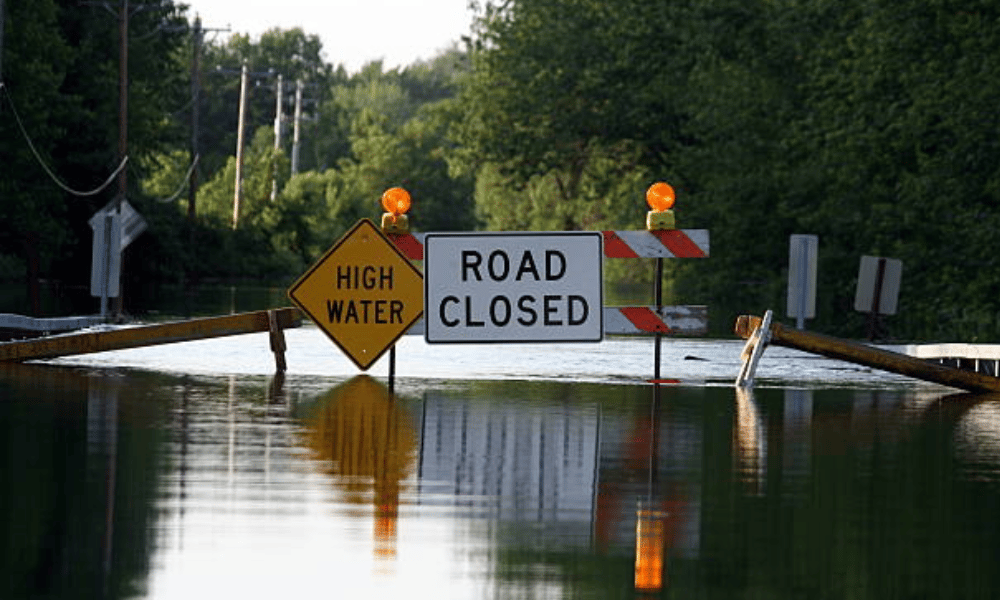
The Insurance Bureau of Canada (IBC) is urging Quebec’s new Parti Québécois government to release the province’s long-delayed flood hazard maps. It wants the maps released alongside expanded incentives for homeowners and more support for municipalities.
In a statement setting out its priorities, IBC said the new government’s mandate gives it an opportunity to make climate resilience an immediate priority. It pointed to the torrential rain that hit Montreal and nearby municipalities in June, when more than 150 millimetres of rain fell and caused $442 million in insured losses.
IBC said insured losses from flooding and water damage in Quebec have risen 300% over the past 20 years compared with the previous two decades.
IBC called for action on three fronts.
The first is larger financial incentives for property owners to install backwater valves, improve drainage and add flood protection. IBC said existing provincial programs, including Rénoclimat and RénoPlex, are a step in the right direction but need to be substantially expanded to meet demand.
The second is more support for municipalities to modernize sewer and stormwater systems so they can handle heavier and more frequent downpours.
The third is tighter land-use planning, including limits on development in the highest-risk areas and the release of new province-wide flood hazard maps. IBC also said both natural and engineered flood defences are needed in areas that are already developed.
Quebec’s new regulatory framework for flood zones took effect on March 1, 2026. The new-generation maps that go with it have been released only gradually. In July, the CMM asked the province to reverse its decision to postpone the first batch of maps it had prepared for the Montreal region to an undetermined date. Those maps had been due to take effect on August 1.
The new maps classify flood risk into five categories rather than the traditional 0-20 and 20-100 year recurrence zones. When it announced the overhaul in 2024, the Quebec government estimated that about 77,000 homes could end up in flood zones under the new mapping, compared with about 22,000 at the time.
IBC said it is ready to work with the government and invited the province’s executive council to open a dialogue.
For Quebec brokers, the flood maps matter even though insurers use their own flood models to price risk. Once published, the maps will affect where people can build and renovate, mortgage lending decisions and what sellers must disclose when a home changes hands.
Clients who find themselves in a newly designated zone are likely to have questions about coverage and value. Expanded retrofit incentives would also give brokers a practical way to help clients reduce sewer backup and flood exposure.