The sole survivor of a fatal vehicle crash at a Tsawwassen Mills mall plaza in British Columbia is publicly demanding the rollback of the province’s no-fault auto insurance framework. His case lands as that framework faces its first mandatory legislative review and a newly elected government committed to replacing it.
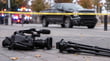
Kevin Li, a 48-year-old videographer and owner of Little Ram Productions in Delta, B.C., was struck by a pickup truck on September 30, 2026, while filming a Truth and Reconciliation Day event at the mall’s outdoor pedestrian plaza. The crash killed two Tsawwassen First Nations elders and a 64-year-old Delta woman. Authorities believe the driver suffered a medical emergency behind the wheel, according to CTV News.
Li sustained a broken collar bone, broken ribs, a fractured pelvis, and a fractured ankle. His injuries have left him unable to work. Under the Insurance Corporation of British Columbia’s (ICBC) Enhanced Care model – B.C.’s care-based, no-fault framework in force since May 1, 2021 – he cannot sue the driver or the mall for damages. For brokers advising personal lines clients in British Columbia, the question of what clients can recover under the current framework is exactly what is now under political pressure to change.
“I’m 100% worried I can’t support my family. The system’s not set up for me. It is cruel,” Li told CTV News.
Read next: BC’s no-fault auto model faces renewed scrutiny
Li also questioned why physical barriers were not in place, referencing the April 2025 vehicle attack at Vancouver’s Lapu-Lapu Day festival – in which 11 people were killed at a Filipino heritage celebration, confirmed by The Canadian Encyclopedia as the deadliest vehicle-ramming attack in Canadian history – as a moment that should have prompted wider adoption of crowd protection at public events.
“After Lapu Lapu, we all learned what could happen. Every public event that I’ve been to has had protection. Why didn’t the mall put up protection?” he said
Li’s case entered a live policy debate before the crash occurred.
In February 2026, the B.C. Legislature appointed a Special Committee of Members of the Legislative Assembly (MLAs) to conduct a mandatory five-year review of the Enhanced Care model – a commitment written into the original 2021 legislation. ICBC presented to the committee on May 8, 2026. The review examined compensation levels, long-term care provisions, and supports for people injured in crashes. The Insurance Brokers Association of British Columbia (IBABC) was among the organisations that participated.
Then-Premier David Eby called a snap election on September 22, 2026 – eight days before the Tsawwassen crash – dissolving the legislature and suspending the review mid-way through public submissions.
The October 24, 2026, election returned a majority Conservative government under Premier Lorne Doerkson, B.C.’s first Conservative premier since 1933. During the campaign, Doerkson wrote to legal and insurance groups – including the Insurance Bureau of Canada (IBC), the Law Society of B.C., the Trial Lawyers Association of B.C., and the Canadian Bar Association’s B.C. branch – committing to replace the no-fault model and restore the ability of seriously injured claimants to pursue civil damages, according to The Canadian Press.
Doerkson was sworn in as B.C.’s 38th premier on November 20, 2026 – the same day Li’s case became public.
The shape of any reform is still unclear. Doerkson’s pre-election letter cited opening auto insurance to private competition as one option on the table, though no legislation has been introduced. The Insurance Bureau of Canada renewed its call in June 2026 for the B.C. government to allow private insurers to compete for vehicle damage coverage, currently a Crown monopoly under ICBC.
Any return to tort – full or partial – would reintroduce legal cost pressure that the Enhanced Care model largely eliminated, with direct implications for how brokers structure coverage conversations and what limits clients carry on optional third-party liability policies.
ICBC’s Enhanced Care quick facts page states that about 95% of claims costs go to customers to support their recovery and to repair or replace their vehicle. Under the previous litigation-based model, legal costs consumed a significant share of that figure. If the new government restores tort access, that balance shifts – and so does the coverage advice brokers need to give clients before any change takes effect.
Insurance Business Canada has previously reported that B.C. sits as the most significant unresolved auto market question in Canada, alongside Alberta’s incoming care-first system. With a new government now in office and the legislative review incomplete, brokers in B.C. should be watching the first legislative session of 2027 closely.
Read next: IBC calls on BC government to act on wildfire, flood resilience and auto insurance competition
Li, who wore a brooch and blanket given to him by the families of the two elders killed in the crash, said he is focused on recovery but wants the system changed first.
“I want to see it rolled back from 2021, when this no fault had been put in place. It is unfair for all the victims, for all the families and people that were injured,” he said.