
Not so long ago, Lloyd’s of London had the air of a grand old institution being lapped by younger rivals. Bermuda and other lighter-touch hubs were quicker to innovate, quicker to approve and, crucially, quicker to win the clever capital structures that investors wanted.
That story is changing, and the money is following. Seven new syndicates started writing in 2025 and a further 13 launched on January 1, 2026, according to Lloyd’s 2025 annual report, which also logged more than 50 serious underwriting inquiries. The 2027 pipeline is still filling: cyber reinsurer Envelop has won in-principle approval to turn its special purpose arrangement into a full syndicate from January.
According to analysis published last week by Barclays’ international corporate banking team, authored by Gavin Westmoreland, the bank’s head of UK insurance, three things are pulling capital back into the market. Lloyd’s has modernized and tightened its grip on underwriting standards. A wider cast of investors, from private equity houses to wealthy individuals, now wants a piece of the action. And the capital set-ups behind syndicates have become complicated enough to change what managing agents need from their banks.
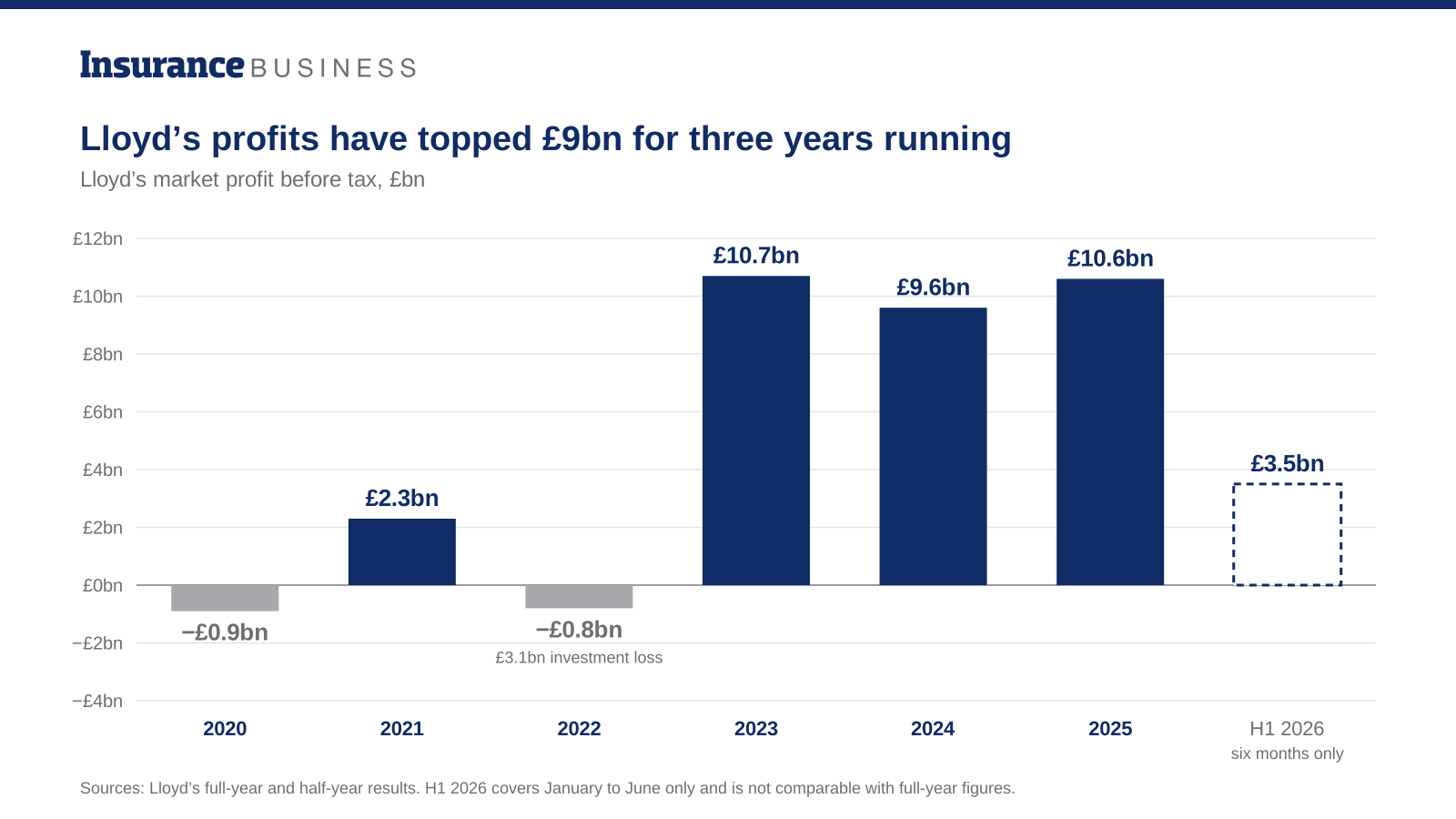
It is not hard to see what has caught investors’ eyes. Lloyd’s 2025 results showed gross written premium climbing 4.2% to £57.9bn, profit of £10.6bn and a return on capital of 22%. According to chief executive Patrick Tiernan’s results statement, that was the third year running in which returns topped 20%. Insurance Business covered the figures alongside the launch of Lloyd’s new five-year strategy to sharpen its capital advantage.
Volume growth of 10.3% in 2025 came from both newcomers and established syndicates writing more, Lloyd’s said. The capital is arriving too: Lloyd’s capital briefing puts approved capital for 2026 at £36.2bn, up 7.4% from £33.7bn.
Westmoreland does not pretend it was all self-made. Steep rate rises in 2023 and 2024, particularly in property catastrophe, gave the market a generous tailwind.
Read next: Lloyd’s and London market enters softening phase, report shows
Anyone who has worked through a few cycles knows how this works. Big profits draw in fresh capacity, fresh capacity drives prices down, and the market goes soft until a catastrophe resets it.
Barclays argues this time is a little different. A good share of the new money is not simply adding more of the same capacity. Some of it is funding the transfer of risk into Lloyd’s from elsewhere. Some is following demand in growth lines such as cyber, where premium is rising faster than inflation. That, the bank says, helps keep supply and demand in balance rather than tipping straight into a price war.
Even so, the softening is real and it is speeding up. Risk-adjusted rates across the market fell 6.7% in the first half of 2026, nearly double the pace of a year earlier, and Lloyd’s has told syndicates that rate adequacy for 2027 is under threat. Half-year profit before tax dropped to £3.5bn from £4.2bn, largely because of unrealized bond losses, though premium grew to £34.7bn and the combined ratio improved to 90.8%.
Tiernan’s message alongside those numbers was blunt. He said “underwriting discipline and innovation are the keys” to keeping the market ahead.
The corporation is backing that up at the front door. Lloyd’s said it turned away £5.1bn of business in its last financial year, with only around one in five applications that reached managing agents making it to market.
Read next: Underwriting discipline breaks down as markets soften
Double-digit returns and a low correlation with stocks and bonds have made Lloyd’s an easy sell to private equity firms, family offices and institutional investors. More surprising, perhaps, is the comeback of the Names.
The wealthy individuals who once backed syndicates with unlimited personal liability were badly burned by the losses of the 1980s and 1990s, and many walked away. Barclays says they are returning, though today’s private capital typically comes in through limited liability vehicles. Products such as the Argenta and Helios Underwriting ‘Starter Homes’ scheme, with first-year commitments of around £270,000, are designed to lower the barrier to entry.
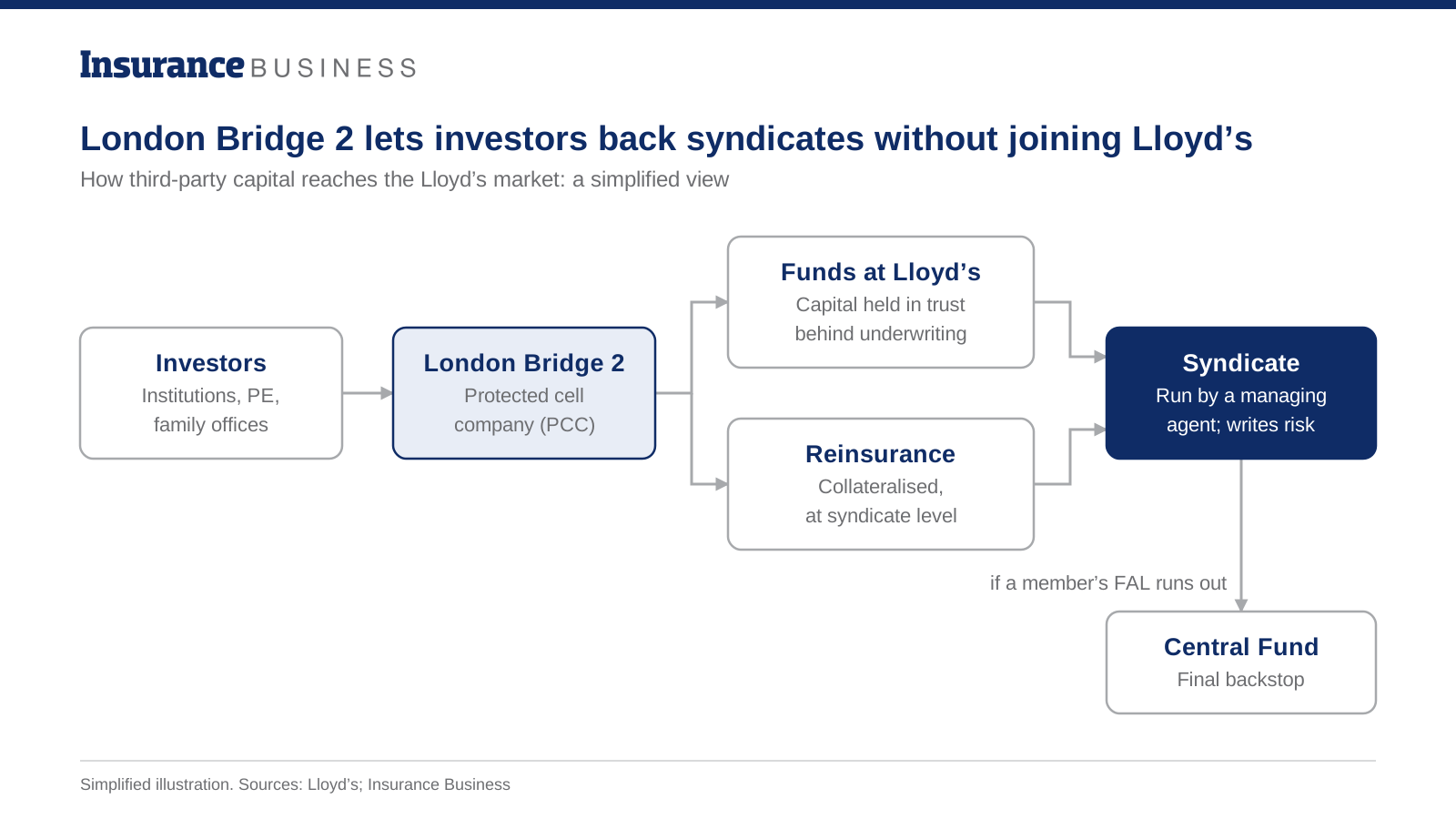
For institutional money, the big enabler has been London Bridge, Lloyd’s risk transformation platform. It launched in 2021, and its second iteration, London Bridge 2, was approved by UK regulators in 2022, according to law firm Freshfields. It lets investors back Lloyd’s underwriting without setting up a syndicate or becoming a corporate member, and it can also fund reinsurance through insurance-linked securities such as catastrophe bonds.
Growth has been rapid. At the end of 2024 the platform had deployed US$1.92bn with US$2.55bn committed from institutional investors. By the end of 2025, total investment through London Bridge had reached US$2.9bn, according to Lloyd’s annual figures as summarized by Freshfields.
The headline example is Syndicate 2478. AIG launched the syndicate in December 2024, managed by Talbot Underwriting and backed by Blackstone-managed funds through London Bridge 2, with US$715m of stamp capacity for 2025. It sits on AIG’s outwards reinsurance program, letting the insurer offload risk and capital requirements while continuing to write the business. AIG executive Charlie Fry called it “a significant endorsement” of the group’s underwriting.
Deals like that have often ended up in Bermuda. For Westmoreland, the fact that this one landed in London shows London Bridge 2 can win business that used to go offshore. Blackstone has since gone again, backing The Fidelis Partnership’s new Syndicate 2126 through the same route.
Canadian capital has a history here too. Toronto-based Fairfax took full ownership of Lloyd’s insurer Brit at the end of 2024, buying out OMERS, the Ontario municipal pension plan, for about US$383 million, Insurance Business reported.
Investors fund a London Bridge 2 cell, which supplies either Funds at Lloyd’s or collateralized reinsurance to a syndicate. The Central Fund sits behind members’ capital as a final backstop.
Read next: MS Amlin launches Lloyd’s sub-syndicate to boost broker capacity
Modernization is welcome, but few in the market want Lloyd’s to become just another carrier. The syndicate model lets very different underwriting views sit side by side, and it separates the people writing the risk from the people funding it.
That separation is exactly what makes the market attractive to third-party investors. They can earn underwriting returns without having to hire, manage or second-guess underwriters, which makes it easier to scale up and spread risk.
The final trend in Barclays’ analysis is closer to the bank’s own patch. Syndicates still need the basics: cash management, shock-loss credit lines, foreign exchange and investment management for the assets backing their liabilities. What has changed is the pressure on managing agents to cut costs, and treasury is an obvious place to look.
Members want to stretch their Funds at Lloyd’s (FAL), the capital held in trust behind their underwriting and the first link in the market’s chain of security. FAL splits into Tier 1, cash and liquid securities, and Tier 2, less liquid assets, with letters of credit commonly used to cover the latter.
The alternative asset managers want something else again. Most supply capital and leave underwriting alone; what they are after is a stable, growing pool of insurance liabilities to invest against. Barclays says that is nudging some non-life portfolios towards a life insurer’s barbell, with liquid gilts (UK government bonds) and bonds at one end and private credit at the other.
Read next: Lloyd’s warns on rapid rate softening
More capital means more capacity and more appetite for structured deals, which is good news for anyone placing complex or large risks. Lloyd’s says around a fifth of the 2026 capital increase linked to exposure growth came from business written by new syndicates, so much of that capacity is genuinely new.
Canadian clients are already seeing some of the benefit. Marsh’s Global Insurance Market Index showed commercial rates in Canada falling by a mid-single-digit percentage in the third quarter, in line with Europe and Asia, and further softening at Lloyd’s can only add to that pressure.
The softening is uneven, though. Property catastrophe, cyber and specialty are falling fastest, Insurance Business has reported, so those are the classes where clients will feel the benefit first, and where underwriters will be most tempted to chase volume.
The risk is the old one. If returns slide as rates fall, capital that arrived chasing 20%-plus returns may prove less patient than the Names who stayed through thick and thin.
The 2027 planning season will be the first real test of whether this new wave of money has changed the cycle, or simply joined it.