CatIQ has issued its first industry loss estimate of $313 million for the Bald Range wildfire that struck Summerland, British Columbia, and the surrounding area between August 7 and 18.
The figure, a snapshot of the insurance market three weeks post-event, covers residential and commercial property claims and vehicle claims, including additional loss adjustment expenses.
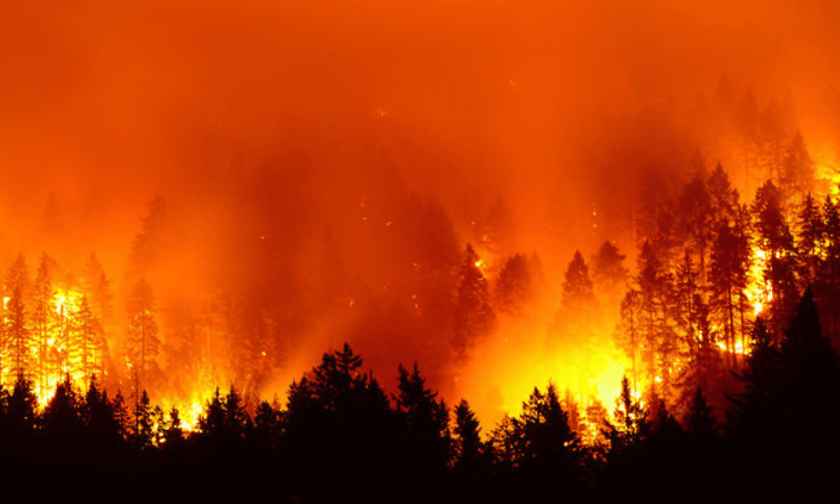
The fire ignited west of Summerland on August 7 and grew explosively, reaching more than 10,000 hectares within 24 hours and eventually peaking at roughly 25,185 hectares before being brought to held status in late August. More than 5,000 addresses were subject to evacuation orders for nearly two weeks, and outlying communities, Faulder and parts of Meadow Valley among them, were devastated. An 80-year-old woman died while attempting to evacuate. Regional officials confirmed roughly 150 structures were damaged or destroyed by August 17.
"2026 has been another challenging year for wildfires across Canada, and British Columbia has seen some of the worst direct impacts in terms of insured losses with three new catastrophes declared to date," said Caroline Floyd, CatIQ's director. She noted the fire's growth to more than 10,000 hectares within 24 hours reflected extremely dry Interior conditions, and that BC currently sits at about 90% of its 20-year average for hectares burned this season, despite only 80% of the average number of fires, a sign that individual 2026 wildfires have burned larger areas on average than a typical season's fires do.
This figure is worth pausing on precisely because of how this event was covered throughout August. This desk repeatedly framed Bald Range against the 2023 Okanagan and Shuswap wildfires, which caused a combined $720 million in insured losses, and against the 2024 Jasper wildfire's eventual $1.31 billion, given Bald Range's comparable or faster rate of growth and its own confirmed fatality and mass evacuation.
At $313 million, this first estimate lands at less than half the Okanagan/Shuswap benchmark and well under a quarter of Jasper's final tally, despite Bald Range burning a considerably larger total area than either.
That gap is the clearest evidence yet for a pattern this desk flagged as early as mid-August: Bald Range's most severe structural losses concentrated in lower-density rural communities, Faulder, Meadow Valley, specific Summerland-area neighbourhoods, rather than in a higher-value townsite core the way Jasper's fire hit that community's built-up centre directly.
A fire's total hectare count, in other words, still doesn't translate directly into insured loss the way property density and value concentration do, the same conclusion this desk drew from the ground-level damage pattern before any loss estimate existed.
First estimates are only the opening chapter. CatIQ's own reporting history for other 2026 events shows meaningful upward revision as commercial claims mature: the June Saskatchewan-Manitoba storm outbreak's estimate climbed from $728 million to $923 million across three revisions, and Jasper's own estimate rose from an initial $880 million to a final $1.31 billion across five separate updates spanning roughly two years.
Given that pattern, and given how concentrated Bald Range's worst damage was in specific, harder-to-assess rural properties, brokers should treat $313 million as a floor rather than a ceiling, with CatIQ's next scheduled update likely to show some upward movement as adjusters complete work in the hardest-hit areas.
Floyd's comment that BC has already declared three new wildfire catastrophes this year, with this being one of them, reinforces that Bald Range isn't an isolated event but part of a genuinely severe season across the province's Interior.
For brokers with clients in similarly dry, wildfire-exposed regions of BC, this first estimate is a useful, concrete data point for renewal conversations: even a fire that grows explosively and forces mass evacuation doesn't automatically produce Jasper- or Fort McMurray-scale losses, but the underlying dry conditions driving events like this one show no sign of easing for the remainder of the season.