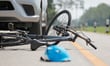
What happened: An Ontario tribunal denied a cyclist’s psychological benefit claims after his 2023 Toronto bike crash.
Who’s involved: Security National Insurance Company and a claimant cyclist.
What’s at stake: $5,633.61 in psychological services and assessments under Ontario’s accident benefits scheme.
Why it matters: A diagnosis alone did not settle the causation question - the medical evidence must explicitly link symptoms to the crash.
Where it stands: Decided - application dismissed in full on October 29, 2026.
Security National Insurance Company does not owe a Toronto cyclist a cent for psychological treatment after his 2023 bike crash, an Ontario tribunal has ruled.
The cyclist was riding in a bike lane on Dundas Street West in July 2023 when a vehicle failed to yield and turned right in front of him, sending him into a third car. He later claimed persistent symptoms - low mood, anxiety, sleep problems, nightmares, and hypervigilance - and sought accident benefits for psychological services and assessments worth a combined $5,633.61.
Two treatment plans and a separate claim form were submitted through All Health Medical Centre. Security National rejected the lot, arguing the cyclist had not shown his psychological symptoms were connected to the crash. The insurer pointed instead to the breakdown of his marriage, roughly six months after the accident, as the real source of his distress.
At the Licence Appeal Tribunal, the adjudicator found the cyclist’s medical evidence fell short.
A psychiatrist had diagnosed him with persistent depressive disorder with anxious distress. But the psychiatrist’s report said the diagnosis was “based on the history provided” without specifically mentioning the crash.
A psychotherapist separately flagged symptoms of depression and PTSD, noting the cyclist had started wearing a safety vest. The adjudicator, however, found that a psychotherapist is not qualified to offer a psychological diagnosis - only to provide therapy.
On the insurer’s side, a psychologist who assessed the cyclist in January 2024 found only mild risk levels for diminished interest and anxiety, with results otherwise in the normal range. A follow-up report concluded his symptoms stemmed from the marriage breakdown, not the accident.
The cyclist’s own records worked against him. In March 2024, he told a doctor he was feeling better. By September 2024, he denied experiencing depression altogether. He never sought prescription medication, and no referrals to a psychologist were ever made.
One of the three claims - a $639 assessment - was thrown out separately because it was filed on the wrong form. Benefits above $250 must be submitted on a treatment plan, and this one was not.
The tribunal dismissed the application entirely. No benefits, no penalty for the insurer, and no interest were owed.
For claims professionals in Ontario auto, it is a clear signal: a diagnosis on paper does not settle the question of what caused it - the medical evidence must draw a direct line from the accident to the condition.
The decision was released on October 29, 2026 by the Licence Appeal Tribunal. No appeal has been noted in the decision reviewed.