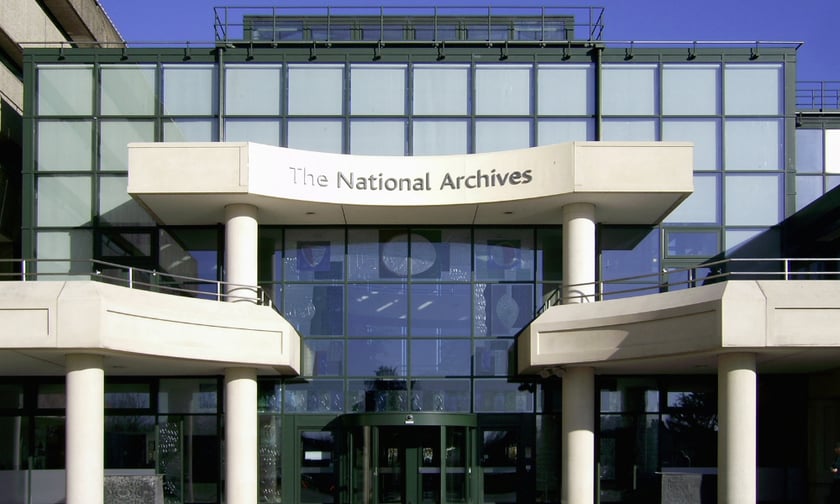
A rare early printing of the US Declaration of Independence has been discovered in Britain's National Archives, one of only 11 known surviving copies of its kind and the only one identified outside the United States, according to a report from Fortune.
The document was found by Michael Scurr, a retired insurance executive who has volunteered at the National Archives for 11 years cataloguing historical papers. Scurr located it last May, attached to a Royal Navy captain's report on the capture of the American privateer Dalton on Christmas Eve 1776. The report listed an enclosure only as "another paper." Scurr told the Associated Press he recognised the word "Declaration" printed across the top: “I thought, oh, right, OK, this is definitely a Declaration of Independence. How exciting is this?”
Researchers have dated the printing to Exeter, New Hampshire, between July 16 and 19, 1776, days after the original document was signed.
How the UK insures its national collections
The National Archives, as an Exchequer-funded national institution, does not typically hold commercial insurance on its permanent collections. Items loaned between UK institutions are instead commonly covered through the Government Indemnity Scheme (GIS), administered by Arts Council England on behalf of the Department for Culture, Media and Sport, which offers a state-backed alternative to commercial cover.
The scheme issued 757 indemnities in 2024-25, covering 26,433 cultural items with a combined value of £19.1 billion, saving museums and galleries £81 million compared with commercial insurance costs, according to Arts Council England. The Archives' Prize Papers, from which the Exeter printing emerged, are part of the government's own retained holdings, an example of the public sector self-insuring significant historical assets rather than transferring the risk commercially. Specialist fine art and heritage insurers in London remain involved in this space, particularly when national collections loan items abroad or borrow from private lenders.
Valuing a document with no direct comparator
Comparable early Declaration printings indicate the values involved when such documents change hands. A similarly rare July 1776 printing carried a pre-sale estimate of $2 million to $4 million at a Sotheby's auction in January 2025, while a July 11, 1776 newspaper-broadside hybrid sold for $3.36 million at Sotheby's in June 2024. For UK fine art and specialty insurers, these figures illustrate the difficulty of pricing cover for unique historical artefacts with no direct market comparator.
A marine insurance connection
The Dalton was an 18-gun privateer operating under the authority of the Continental Congress. It was chased for seven hours and captured off the coast of Portugal by Captain Thomas Fitzherbert aboard the 64-gun HMS Raisonnable. Privateering of this kind was the type of war risk London's marine underwriters, already coalescing around Lloyd's Coffee House by the 1770s, were pricing at the time. Vessels engaged in transatlantic trade during the Revolutionary War faced substantially elevated premiums to reflect the risk of capture, a precursor to the war risk and marine hull covers still written in the London market today.
Amanda Bevan, who leads the National Archives' project cataloguing Royal Navy correspondence from the American Revolution, said the find was "an amazing addition to the story of the Dalton and the many other privateers that fought the British at sea."