Catastrophe models remain fundamental to insurance underwriting, but insurers are increasingly treating them as the starting point rather than the final answer. Across the London market, firms increasingly combine commercial model outputs with proprietary research, underwriting expertise and technology to build their own view of risk.
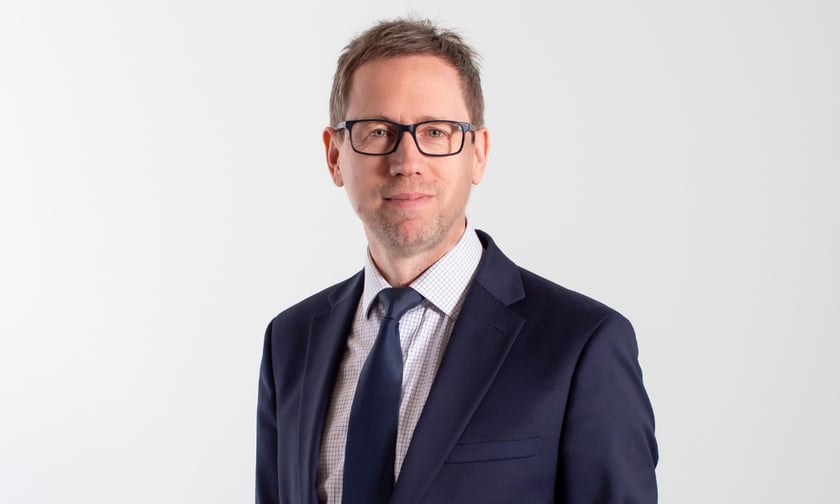
Richard Dixon (pictured), head of catastrophe research at OAK Global, whose syndicates underwrite through the Lloyd's market, said insurers are increasingly distinguishing themselves not through the catastrophe models they use, but through how they interpret and apply them. At OAK Global, catastrophe models provide "a structured starting point rather than the answer," with proprietary research and underwriting insight layered over commercial model outputs.
"The engineering behind models can easily be underestimated," Dixon said. "Forming a view of risk is only the first part. The next question is whether risk systems and processes are set up to take that view into account, adjusting the model output for bespoke frequency and severity assumption, and doing this live at the point of underwriting."
One area where catastrophe models are often underestimated is the depth of vulnerability data they contain. Built on years of loss experience, they allow insurers to distinguish how different buildings are likely to perform under similar catastrophe scenarios in ways that would be difficult to replicate independently.
Historical experience, however, has its limits. Models that are calibrated too closely to past losses risk becoming less effective at estimating losses from future events that have not yet occurred.
"There is a fair debate to be had about over-tuning, where the risk is circularity: a model fitted too closely to past losses becomes proficient at reproducing them, but worse at estimating losses from events that haven't happened yet," Dixon said.
Many firms now overlay catastrophe model outputs with their own view of risk to better reflect present-day conditions.
"If every company priced from the same model output, we would lose the diversity of views across the market," he said.
Headline catastrophe losses rarely tell the whole story. A season that appears costly or relatively benign may owe as much to where individual events make landfall as to any underlying change in hazard.
"A single hurricane that makes landfall over a major city might cause $150bn of loss; but shifting the steering flow a day or two later, the same storm might hit a different location a hundred miles up the coast for a fraction of the loss," Dixon said.
Rather than taking historical loss records at face value, OAK Global repeatedly re-simulates historical events through catastrophe modelling frameworks to test whether apparent trends reflect genuine changes in underlying risk or simply one sequence of events.
"This tells us whether an apparent trend is a real underlying signal or an artefact of one particular sequence of events," he said. "It takes longer than reading the headline loss figures, and it is the level of rigour we maintain before inferring a genuine shift in risk."
Developing a view of risk is only part of the process. The challenge is ensuring that research is reflected consistently in underwriting decisions.
At OAK Global, that means combining catastrophe research with actuarial and underwriting expertise, supported by external advisers, while embedding bespoke frequency and severity adjustments directly into underwriting systems. Just as importantly, underwriters need confidence in the firm's assessment of risk if those insights are to influence decision-making.
"While we have a strong research team, it is crucial that our outputs reach the underwriters in an accurate, relevant and timely way and that they trust them," Dixon said.
The value of catastrophe modelling ultimately depends on what happens after the model has produced its output. Research, systems and underwriting must work together if firms are to translate a view of risk into better underwriting decisions.