Acrisure has launched Acrisure Private Office, a dedicated service to support high-net-worth individuals and families with complex personal insurance needs across the UK.
The service is aimed at wealthy clients whose assets, lifestyles and risks have become increasingly interconnected, an area Acrisure said has often been served through a fragmented, reactive approach. Acrisure Private Office offers clients a single relationship to oversee and coordinate their cover, combining specialist expertise across property, collections, travel, cyber, health and personal liability.
The announcement does not specify what changes operationally beyond bringing recently acquired specialist teams under one branded proposition, so it remains unclear whether this is a genuinely new service model or a repackaging of existing capability.
The launch follows Acrisure's acquisition of high-net-worth specialist broker Smith Greenfield in April 2026, part of a wider deal in which the group also acquired London-based managing general agent Confidas, along with brokers Healthwoods Insurance & Financial Services and Marrs Insurance Brokers.
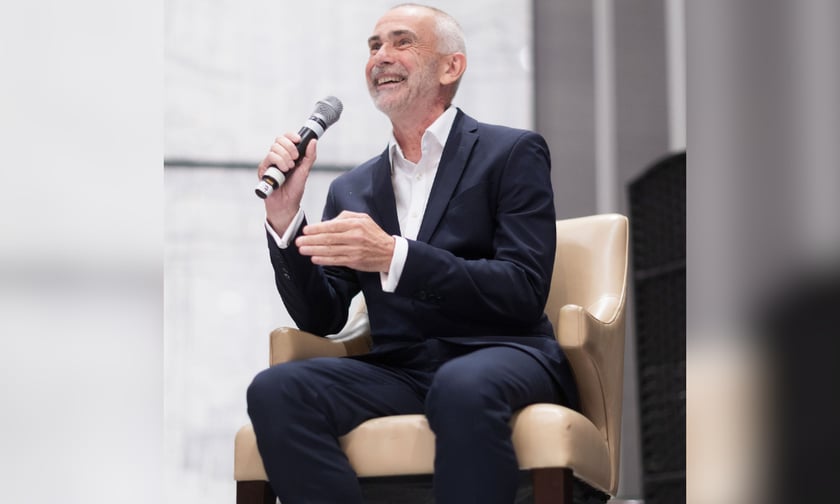
Smith Greenfield's founder, Steve Smith, who has worked in the high-net-worth insurance sector for more than 30 years, was appointed head of private clients at Acrisure UK at the time of that deal and now leads the newly created Private Office team.
Smith said the complexity facing wealthy clients has outgrown a single-policy approach.
"Private client insurance is becoming more complex, with clients often managing multiple assets, changing family circumstances, international considerations, and emerging risks such as cyber exposure," he said. "This is rarely about a single policy or asset. It is about understanding the wider risk profile around the client and their family, and making sure the advice reflects that full picture."
Smith's comments come as the UK's high-net-worth home insurance segment continues to expand.
GlobalData estimated the market grew at a compound annual rate of 9.6% between 2021 and 2025, reaching £861 million in 2025, driven by rising rebuild costs and a growing pool of wealthy households.
UK high-net-worth individuals are estimated to have risen 7.5% to 474,000 in 2025, with GlobalData forecasting growth of around 2.8% a year to 2029. Underinsurance remains a persistent issue in the segment, one of the gaps Acrisure said its coordinated advice model is intended to close.
Smith's reference to cyber exposure points to a wider coverage gap. Most standard home insurance policies exclude cyber risks entirely or cap cover well below the exposures faced by wealthy individuals, whose multiple properties, public profiles and business interests present numerous entry points for attackers.
Cybercrime cost the UK economy an estimated £38.1 billion in 2024, projected to climb toward £44.6 billion in 2025, according to Statista data cited by the Information Technology and Innovation Foundation, and personal lines cyber cover for high-net-worth clients remains considerably less developed than the equivalent commercial market.
The launch also comes as competition for high-net-worth clients builds across the UK market.
Taken together, these moves point to a common shift: rather than treating high-net-worth cover as an add-on to standard home insurance, insurers and brokers are building standalone, advice-led propositions with dedicated branding, of which Acrisure's launch is the latest example rather than a distinct innovation.
With the UK's high-net-worth population and home insurance premium pool both growing faster than the broader personal lines market, Acrisure's Private Office launch fits a wider consolidator pattern of converting acquired specialist expertise into a branded advice service.
Whether that translates into better client outcomes is separate from the branding exercise itself: underinsurance and thin cyber cover have persisted in this segment despite previous launches from other carriers, and Acrisure has not disclosed what mechanisms, beyond coordinating existing acquired teams, will address either gap.
Brokers competing in this space should treat the announcement as a signal of where demand is heading rather than evidence the underlying service gaps have been solved.