Driverless cars injure fewer people than human drivers, but a senior underwriter behind Uber's autonomous vehicle insurance program says a US jury may not care.
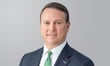
Chris Moore, chief underwriting officer of ibott, the digital economy and emerging technology unit of London-based Lloyd's platform Apollo, told an InsureTech Connect (ITC) Vegas audience in Las Vegas that the safety gains are real but may never show up in loss costs. The danger, he said, is how a crash plays in front of jurors who know little about the technology – the setting in which nuclear verdicts and social inflation are reshaping liability risk. Nuclear verdicts are jury awards of $10 million or more.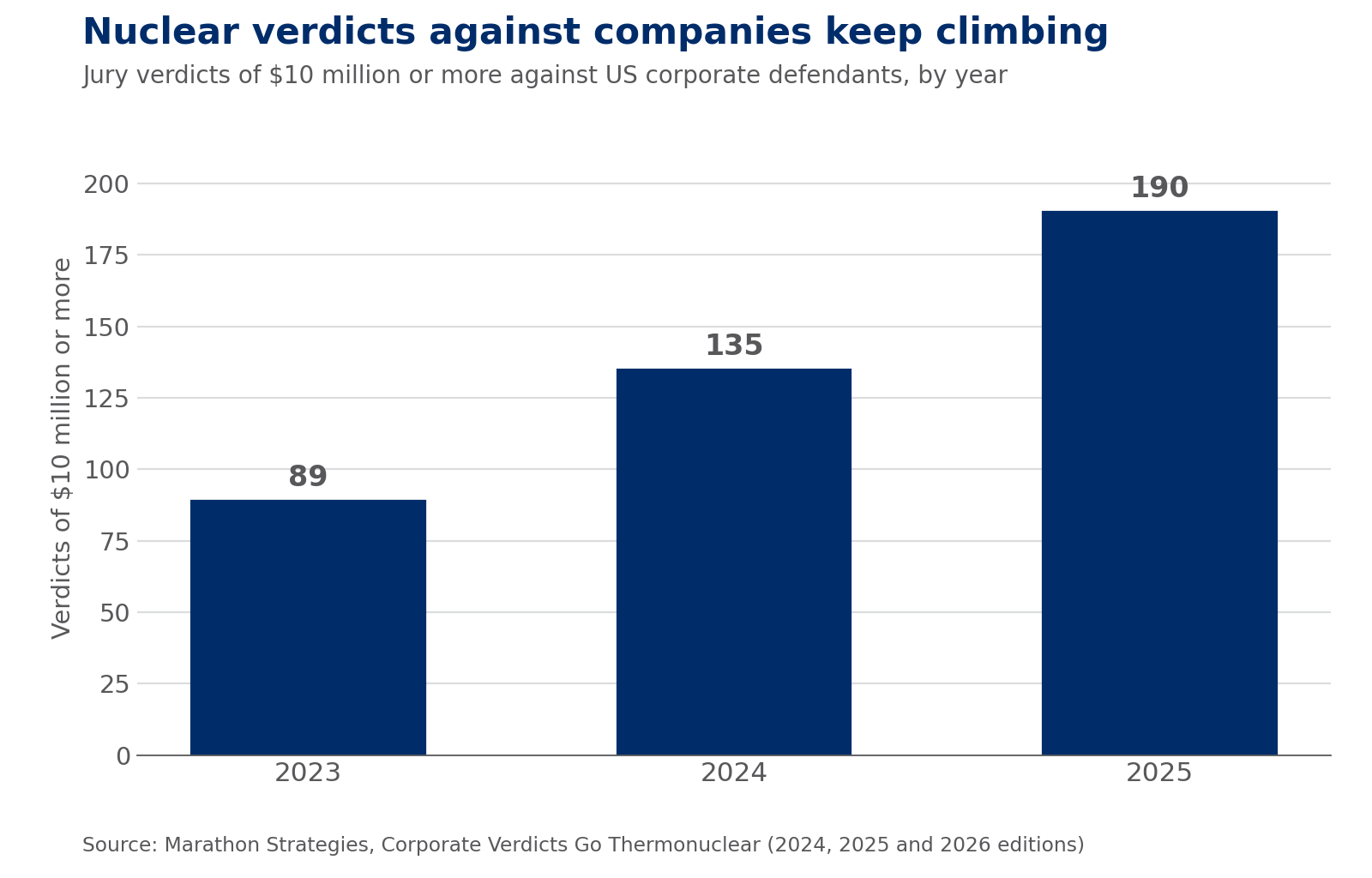 The warning comes as ibott's parent group bets bigger on the segment. On September 30, Skyward Group said it would take ibott's autonomous vehicle coverage into the US primary market, writing risks shared by vehicle manufacturers, autonomous driving system developers and fleet operators.
"If I'm a plaintiff lawyer and an autonomous vehicle is in an accident, I will stand up in front of a jury that don't know the intricacies of autonomous technology and I'll be saying there's a dangerous robot on our streets," Moore said. "That would scare me because that's very difficult to defend against somebody because human beings don't have too much empathy with technology."
Moore shared the stage with Andrew Robinson, chairman and CEO of Houston-based Skyward Group, the holding company for Skyward Specialty and Apollo. Skyward closed its $555 million acquisition of Lloyd's specialist Apollo Group in January 2026. Apollo's ibott unit also underwrites the Autonomous Vehicle Insurance Program (AVIP), a liability facility built with Marsh Risk for companies on Uber's autonomous platform. When Marsh and Apollo announced the program in March 2026, they described it as a single master policy covering every key participant in Uber's autonomous vehicle ecosystem.
Moore said his thinking has shifted. Asked two years ago, he said, he would have pointed to how "the severity of injury from autonomous vehicles is undeniably reduced because there's no reaction times, there's no human waiting time, they will brake quicker."
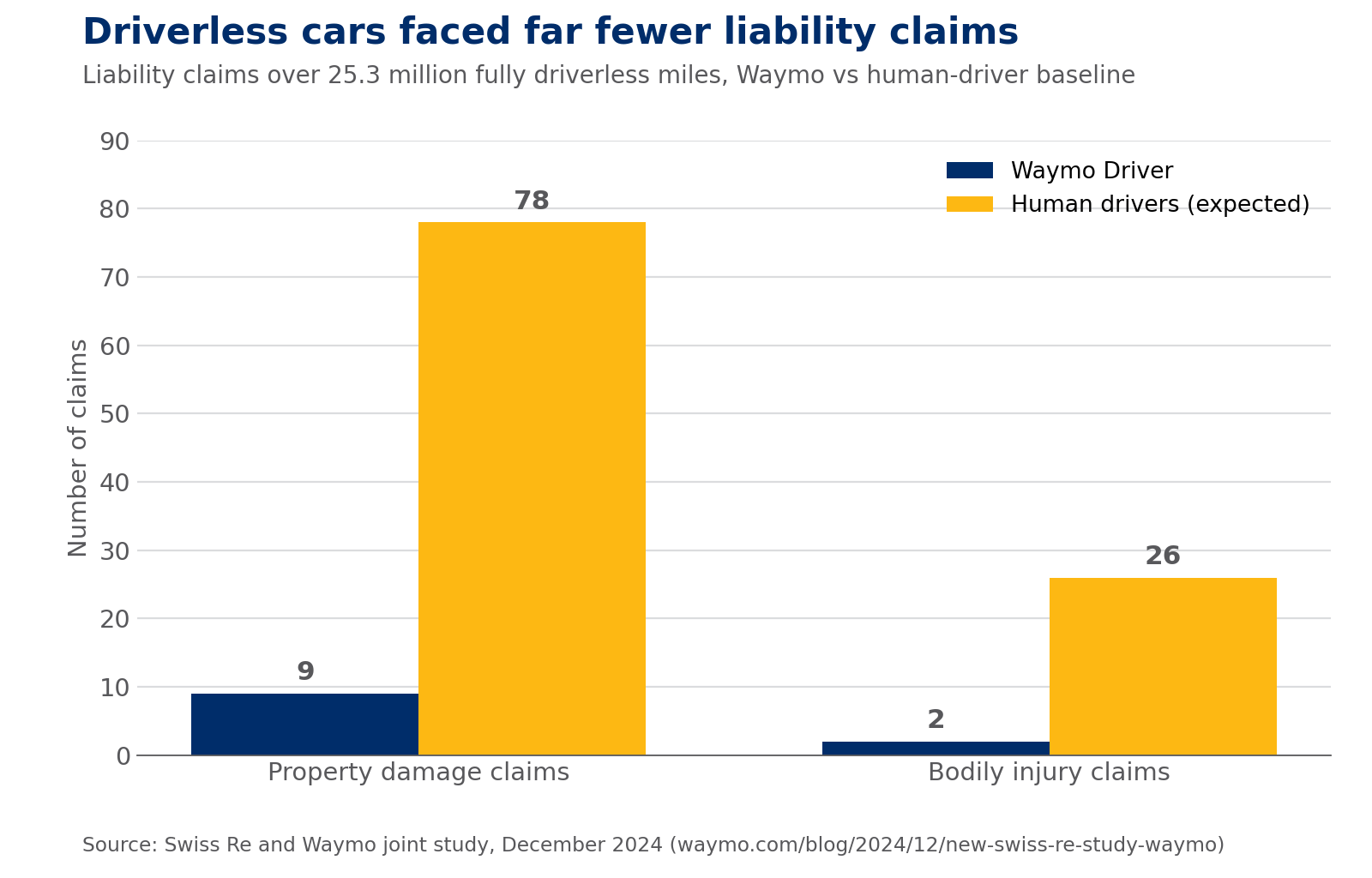
He still holds that view, and the claims record backs it. A joint study by Waymo and reinsurer Swiss Re, released in December 2024, covered 25.3 million fully driverless miles. It found 88% fewer property damage claims and 92% fewer bodily injury claims than for human-driven vehicles.
Robinson argued the data works in insurers' favor. Radar, LiDAR, environmental sensors and video of the passenger mean that after a crash "all that is now knowable," he said. In a tort environment he called "really difficult for personal injury," that data "fundamentally changes the equation."
"Even if God forbid there's an accident and somebody's injured and the AV's involved, you'll know everything about it because the amount of information that you have from that AV is far greater than you'd ever have from a traditional vehicle," Robinson said.
"Somebody's going to basically take it all the way through trial," he said.
"I think the people testing autonomous vehicles have been quite right in probably being proactive in settlement before they get to a courtroom steps because they don't want to risk the whole technology and the advancements of AVs," Moore said.
The panel also raised the question of who is liable when a robotaxi drives between rides with no one aboard. Robinson said the liability stays.
"There's still liability and there's still an opportunity for a smart company to make sure that they're capturing that," he said.
Outside the US, Moore said ibott insures operations in the UK and is looking at Europe, the Middle East and Asia. In the UK, Uber and British AI firm Wayve have launched London's first robotaxi service for paying passengers, the first real-world test of the country's new autonomous vehicle liability rules. "Autonomous vehicle regulation and certainly insurance regulation is not keeping up with the speed of technology," Moore said.
Public officials "want to know these things are safe," he added, and their message to operators is: "if you can find a really reputable insurer to insure this risk, then we'll allow it to launch in these cities."