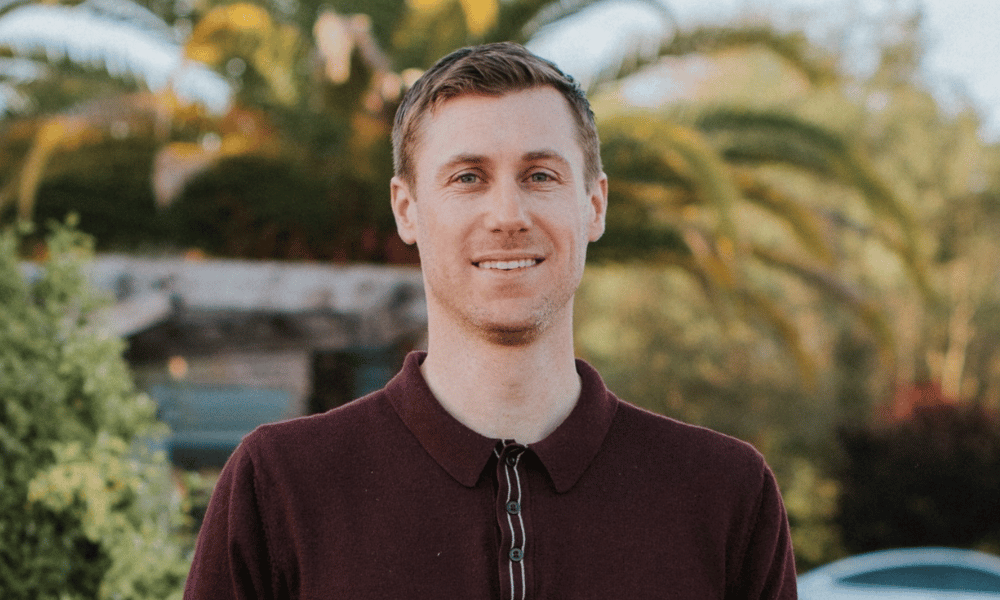
A badly damaged $20 million collector car will almost never be declared a total loss, according to Bryan Ballatore (pictured), chief marketing officer at Dallas-based OpenRoad Insurance. For agents that shows where the real underwriting work happens: when agreed value is set, not after a claim.
Ballatore, a US Navy veteran who spent seven years at Hagerty before joining OpenRoad, said the enthusiast market has matured markedly over the past 10 to 15 years. OpenRoad estimates there are 43 million collector vehicles in the United States, he said.
“Standard auto insurers approach a classic car the same way they would a daily driver. They only have a risk profile for a commuter vehicle – the same claims process, the same valuation approach, the same assumptions on usage. That leaves a gap, and companies like OpenRoad can bridge it with specialization,” Ballatore said.
That gap has drawn attention as rising auto insurance premiums hit classic car owners, and as large carriers move in: Liberty Mutual and Safeco began offering Hagerty collector car coverage through independent agents in 2026. OpenRoad, which writes with National Interstate Insurance Company, said in August 2026 it is available in 40 states.
Ballatore said the inputs behind agreed value go well beyond the basics.
“It’s not just the year, make, and model – it can be rarity, color, a unique option package. Maybe it’s one of only three in the US with a certain color and option combination. Condition matters, whether it’s original or a restomod, and any provenance presented with the vehicle. All of these factor into how we determine agreed value, which we establish before writing the policy,” he said.
Owners usually know what their cars are worth, he said, and OpenRoad typically defers to them within an acceptable range. Unlike actual cash value policies, agreed value coverage for classic and collector cars fixes the payout in advance. “We don’t wait until there’s a claim to determine value. That’s critical,” he said.
He described values as fairly steady; when markets dip, most clients keep their agreed value rather than lower it. OpenRoad’s average vehicle value is $40,000, he said – Mustangs, Corvettes, Camaros and C10 pickups.
Above a set value, OpenRoad reinsures the excess. At the top of the market, Ballatore said, the best valuation data point is usually the purchase price.
“Agreed value protection only comes into play in the case of a total loss, and far less than 1% of our claims are a total loss. And when you think about it – I’ve never seen a bill to restore a car that costs more than two or three million dollars. So even if a $20 million car looks balled up, we’re almost never going to total it. The intrinsic historical value of the vehicle far exceeds what it costs to fix the metal, so you fix the metal,” he said.
“The reason a car like that is worth $20 million isn’t the chassis. It’s the fact that that specific chassis number carries that specific history.”
Fraud is fairly rare in the segment, Ballatore said. Underwriting uses Department of Motor Vehicles (DMV) records and fraud history, but deeper scrutiny comes at claim time, when OpenRoad can validate VINs, title history and prior losses, and bring in special investigative units to verify ownership before paying.
“A clear red flag: if a fairly common car that everyone knows is worth $50,000 comes in wanting to be insured for $200,000, we stop. We send it to underwriting and ask: does this car really have $150,000 of additional value? If the client can bring the agreed value back down to a reasonable range, fine. If they can’t, we probably pass on insuring the vehicle,” he said.
High-value submissions skip straight-through processing and go to an underwriter, who checks that year, make, model, VIN and value align, along with storage and ownership history.
Asked what he would change, Ballatore pointed to distribution. “It all starts with awareness. The single thing we would most like to change is the awareness that specialists in this space actually exist,” he said.
Most OpenRoad clients call the company directly for servicing, he said, and want staff who understand requests such as original equipment manufacturer (OEM) parts or a preferred shop.
“If more agents were aware that we, and others like us, exist in this space, they could better serve their clients. Agents gain trust and credibility when they put clients with the right coverage and the right provider,” Ballatore said.