
The Census Bureau's annual scorecard on how Americans are faring was released earlier today, and for health insurers, brokers and benefits advisers, the headline number is a strange kind of good news: the share of Americans without coverage held almost steady last year.
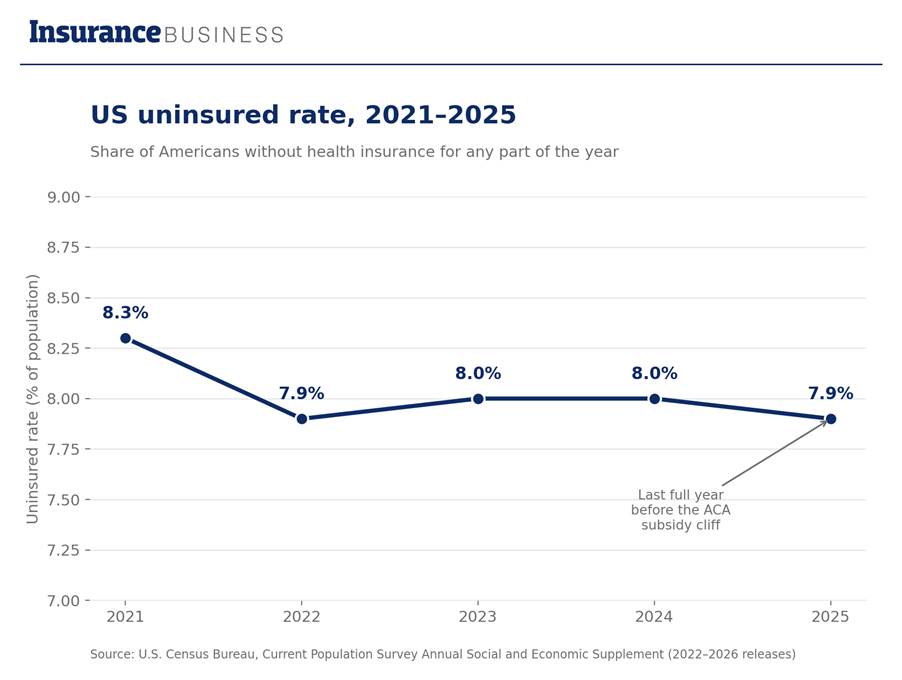
According to the Census Bureau's Current Population Survey Annual Social and Economic Supplement, 26.7 million people, or 7.9% of the population, went without health insurance at some point in 2025. That's not a statistically meaningful shift from 2024, when 27.1 million people, or 8.0%, were uninsured, and the bureau said the rate remains near its historic lows.
The same release showed the official poverty rate falling half a percentage point to 10.2%, the lowest level since the bureau began tracking the measure, with 34.5 million people counted as living in poverty which is a second straight annual decline.
Median household income rose to $87,460, described by the bureau as a 2.6% increase in inflation-adjusted terms (the nominal dollar gain from 2024's $83,730 is larger; the smaller percentage reflects the real, inflation-adjusted comparison). The Supplemental Poverty Measure, which factors in taxes and non-cash benefits such as food assistance, came in at 13.1%, not a significant change from 12.9% the year before. For a family of two adults and two children, the poverty line in 2025 was an annual income of $32,649.
Read next: Higher ACA costs drive coverage losses – KFF
Those are solid numbers on the face of it, and they matter for insurers because coverage rates and household income both feed directly into who can afford a plan and what kind. But there's a catch that every carrier, broker and benefits consultant reading the release already understands: 2025 is the last calendar year the data will look like this for a while.
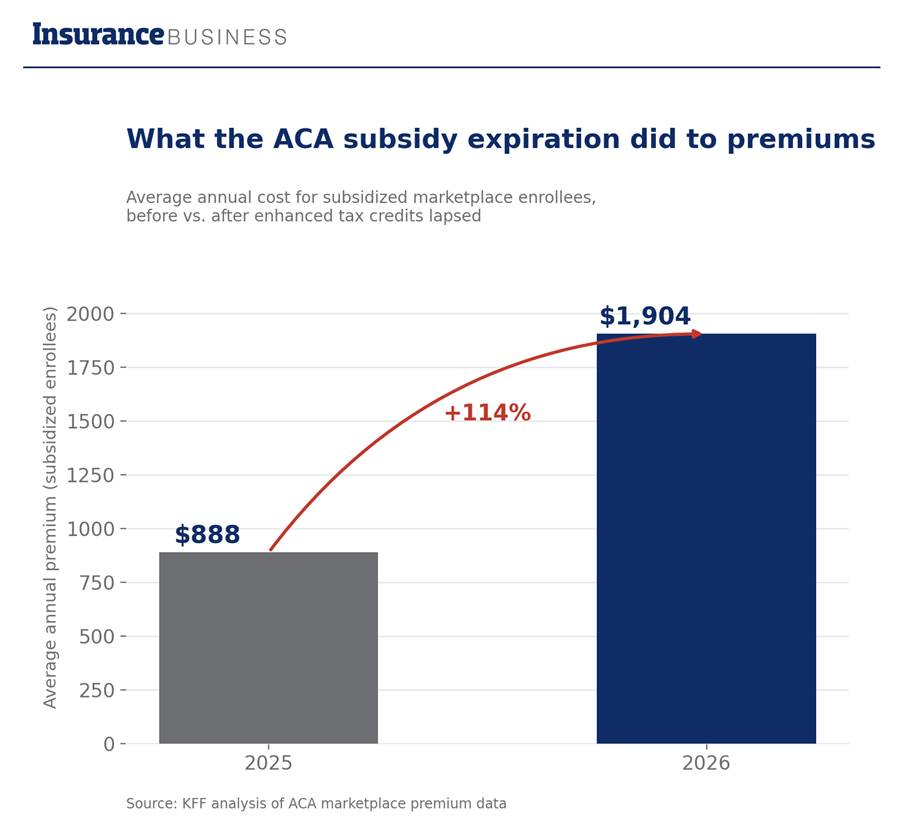
The CPS ASEC survey captures what happened during calendar year 2025 — before enhanced premium tax credits for Affordable Care Act marketplace plans expired at the end of that year. Those subsidies had held down costs for roughly 22 million enrollees. Once they lapsed, average premiums for subsidized marketplace shoppers jumped from $888 to $1,904 a year, an increase of 114%, according to KFF, the health policy research organization. Marketplace enrollment has since slipped from about 24.2 million to roughly 23 million.
Read next: US insurers face 30% Obamacare premium surge
In other words, the 7.9% uninsured rate the Census Bureau just published is closer to a floor than a forecast. Researchers at the Urban Institute and the Commonwealth Fund had projected, ahead of the subsidy cliff, that roughly 4.8 million people would drop coverage entirely once the enhanced credits disappeared, while another 3.2 million would push into employer-sponsored plans as individual-market premiums became unworkable.
Benefits teams at smaller employers are already fielding more questions from workers who used to buy their own coverage on the exchange and no longer find it affordable.
Policy researchers have made a similar point about the broader release. Analysts tracking the numbers noted beforehand that 2025 figures would show the poverty- and coverage-reducing effect of programs such as Medicaid and marketplace subsidies before this year's federal budget reconciliation law cuts to food assistance and health coverage take hold, meaning next year's report, covering 2026, is the one to watch for the real test of how much ground gets given back.
The bureau's 2025 release did not yet include a full breakdown by coverage type at publication time. For reference, in 2024, employment-based insurance covered 53.8% of the population for some or all of the year, followed by Medicare (19.1%), Medicaid (17.6%) and direct-purchase coverage (10.7%) which is the category that includes ACA marketplace plans and the one most exposed to this year's subsidy expiration. Once the 2025 detailed tables are out, that direct-purchase figure is the one to watch for early signs of exchange erosion.
There's also a small-business angle buried in the topline figures. People in small-business households have historically been about three times as likely to be uninsured as those working for large employers, and offer rates at the smallest firms are already thin. With individual-market coverage now considerably more expensive than it was for most of 2025, brokers who work that segment may see more employers asked to step in and fill a gap that the exchange used to cover on its own.
None of this diminishes what the Census Bureau reported for 2025 itself: real income was up, poverty was down, and coverage held close to record highs. But for an industry that lives and dies by risk pools and renewal cycles, Tuesday's numbers read less like a report card and more like a "before" photo. The "after" shaped by the subsidy expiration, tighter CMS marketplace rules for 2027, and whatever comes of Congress's ongoing fight over extending ACA assistance — is still being written, and it's the data insurers will actually be pricing against.