Some of the calls coming into Guardian Life are no longer being made by people.
Healthcare providers have started using artificial intelligence to verify patients' benefits with the New York-based mutual. Rather than checking one patient at a time, the AI is working through whole lists of them in a single call.
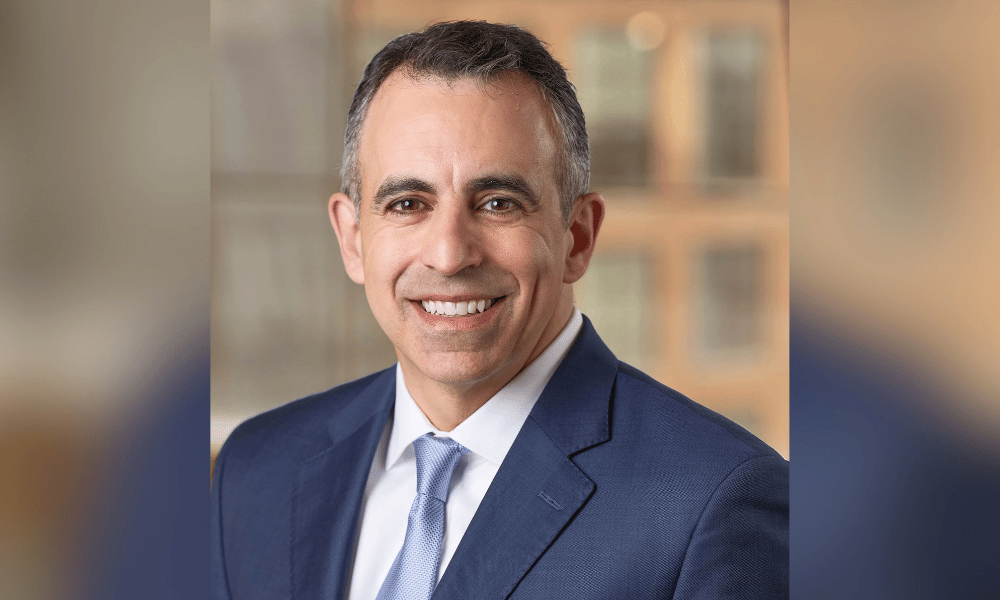
Steve Rullo, chief digital and technology officer at The Guardian Life Insurance Company of America (Guardian), told Insurance Business at InsureTech Connect (ITC) Vegas, the insurance innovation conference in Las Vegas, that the shift is an early sign of what agentic AI will do to the business. Agentic AI refers to systems that can act and transact on a user's behalf with little human direction.
READ MORE: Consumers trust pizza drivers more than insurers, says CMT's Powers
"We are already seeing providers calling in for verification of benefits with AI. They're calling with not just one verification of benefits, but for a whole list of patients. At scale, we need to be able to handle that interaction and provide a level of experience that can respond to the speed, reliability, and efficiency it provides," Rullo said.
The comments come as agentic tools move from pilots into live work across the sector. At the same event, an iSolved executive argued that agentic AI could finally disrupt workplace benefits for small businesses, while global insurers are racing to deploy agentic AI at the core of their operations.
For Guardian, which was founded in 1860 and sells life, disability, dental and vision coverage, the pressure is arriving from the other end of the phone line.
"Insurance is going to be transformed and disrupted by agentic AI," Rullo said. "Think about a world where AI agents are interacting with you as an insurer, and you're going to have to interact with those agents in a way that's effective and compliant."
AI agents working at that speed raise an obvious problem for carriers: how to keep control without slowing everything down. State regulators have made clear they expect an answer. In December 2023, the National Association of Insurance Commissioners (NAIC) adopted a model bulletin on insurers' use of artificial intelligence systems, setting out the expectation that carriers maintain a written program governing how they use AI.
Rullo said Guardian still keeps people in its AI processes, but it is changing what those people do.
"We'll still have a human in the loop. For the right risk profile, we're starting to look at how do we take that human and automate governance more and more so that we're getting flagged on alerts where there are exceptions and deviations versus looking at every single transaction," he said.
Those controls cannot be bolted on later, in his view. "Employees need to understand AI's immense potential and adopt an innovation mindset, while also recognizing the governance and risk requirements – both acceptable individual uses and the controls that must be built into every AI-enabled process from the start," Rullo said.
He was blunt that the technology is the easier half. "You can't just focus on the technology. You really have to focus on the culture and mindset of the people," he said. "We've had very rigorous AI fluency, AI general productivity awareness with employees to make sure that they not just get comfortable using AI, but also can see the opportunities that AI can bring to their role every day."
Guardian is running two tracks at once: a long-term overhaul of its core systems, and AI deployed now in underwriting, claims and service. Rullo said waiting for the first to finish was never an option.
"A 165-year-old carrier who's got legacy technology, we can't wait for modernization to be completed. We need to keep that work moving while using the technology that's available now to deliver value today. And sometimes that means looking for partners that can innovate with you," he said.
Those partners are kept on a short leash when it comes to data. "We send only what's needed. We treat it as transient data, with clear obligations for how it is handled, including how long it is retained. We don't want to build data sources outside the company," Rullo said.
That caution lines up with what Guardian's home-state regulator expects. In July 2024, the New York Department of Financial Services (DFS) issued Insurance Circular Letter No. 7 on AI in underwriting and pricing, which calls on insurers to build appropriate terms into their contracts with third-party vendors.
The reason is commercial. "Data is absolutely an advantage and something we treat as a differentiator – our history of data, from underwriting analyses to member experience over time. It is an incredible advantage, and that's why we don't want to give it away," he said.
Guardian has also become more selective about where AI goes. "About three years ago, we had a lot of use cases – everybody wanted to use it. We pulled way back on that and determined our big end-to-end opportunities, value pools, and that's where we're going to focus," Rullo said.
The bigger question for Guardian's distribution – a network of more than 2,500 financial professionals, according to the company – is what happens when AI agents start acting for policyholders too.
Rullo would not predict where that ends up. "How far AI will go to disrupt that relationship between policyholder, advisor, and carrier remains to be determined. It will certainly play a part, and it'll emphasize even more the human elements that are very difficult for AI to replicate," he said.
It is a familiar line in the debate over whether AI will sideline insurance brokers, but Rullo framed it as a design problem rather than a defense of the status quo.
"Empathy, creativity, judgment, meeting face-to-face and having a personal, warmer engagement – that's going to be very difficult for AI to replace," he said. "So how do you take the advantages of AI to make that whole end-to-end process as efficient as possible and bring in the human element where it's most valuable?"