The health and welfare benefits industry is long overdue for disruption – and agentic artificial intelligence could be the force that finally delivers that change.
That’s according to Barry Gauch, executive vice president for marketplace and benefits at iSolved Incorporated, who told Insurance Business America the growing prominence of agentic AI in the industry was one of the standout themes from this year’s conference.
“I knew there was a lot of AI out there, but the agentic items that kind of live beneath the user platform that assist in actually running the business – I didn’t realize how much was out there for that,” he said. “It gave me a lot of ideas of how we could run our business more effectively for our clients.
iSolved has already launched its first AI agent for HR providers, designed to guide payroll processes and error connection. Further agents to support benefits advisors and platform participants are in development, but Gauch says this year’s ITC has strengthened his view of how AI can drive back-office efficiencies as well – an area he describes as ripe for acceleration.
Despite the rise of AI in the insurance space, Gauch is adamant that it doesn’t risk displacing human expertise from the sector entirely. “I think there always has to be a human in the loop,” he said.
Read more: AI is accelerating in insurance. Are you ready?
Rather, augmentation instead of replacement is likely to continue. In Gauch’s eyes, AI will handle the triage: surfacing relevant data, flagging claims issues, and generating explanations of benefit usage so that by the time a case reaches a human agent, the groundwork is already done.
“By the time it gets to the human, you’re looking at very quick resolution for any kind of issues that pop up,” he said.
Accelerating resolution timelines – across service calls, claims support, and benefits navigation – is where he said the technology is likely to have its most immediate impact at the member level.
Leaders who built their expertise before AI entered the picture need to move faster to understand the technology if they’re to deploy it responsibly, according to Gauch. But beyond the individual knowledge gap, there’s another structural risk he sees specific to health and welfare – data privacy.
Read more: Insurers push ahead with AI despite skills gap
Companies handling sensitive personal health information face particular exposure as AI becomes more deeply embedded in benefits platforms.
“When you’re in insurance and you’ve got people’s health and welfare information, there’s a lot of privacy around those,” he said. In his eyes, some companies may be forced to reverse course if AI data regulation tightens around current deployment practices.
Meanwhile, regulatory frameworks governing how AI can access and process health data remain incomplete, and companies building on assumptions about what will be permissible may face an abrupt correction. “If you get a U-turn that results from legislation, then you’re having to think differently about how you apply that technology to your business,” he said.
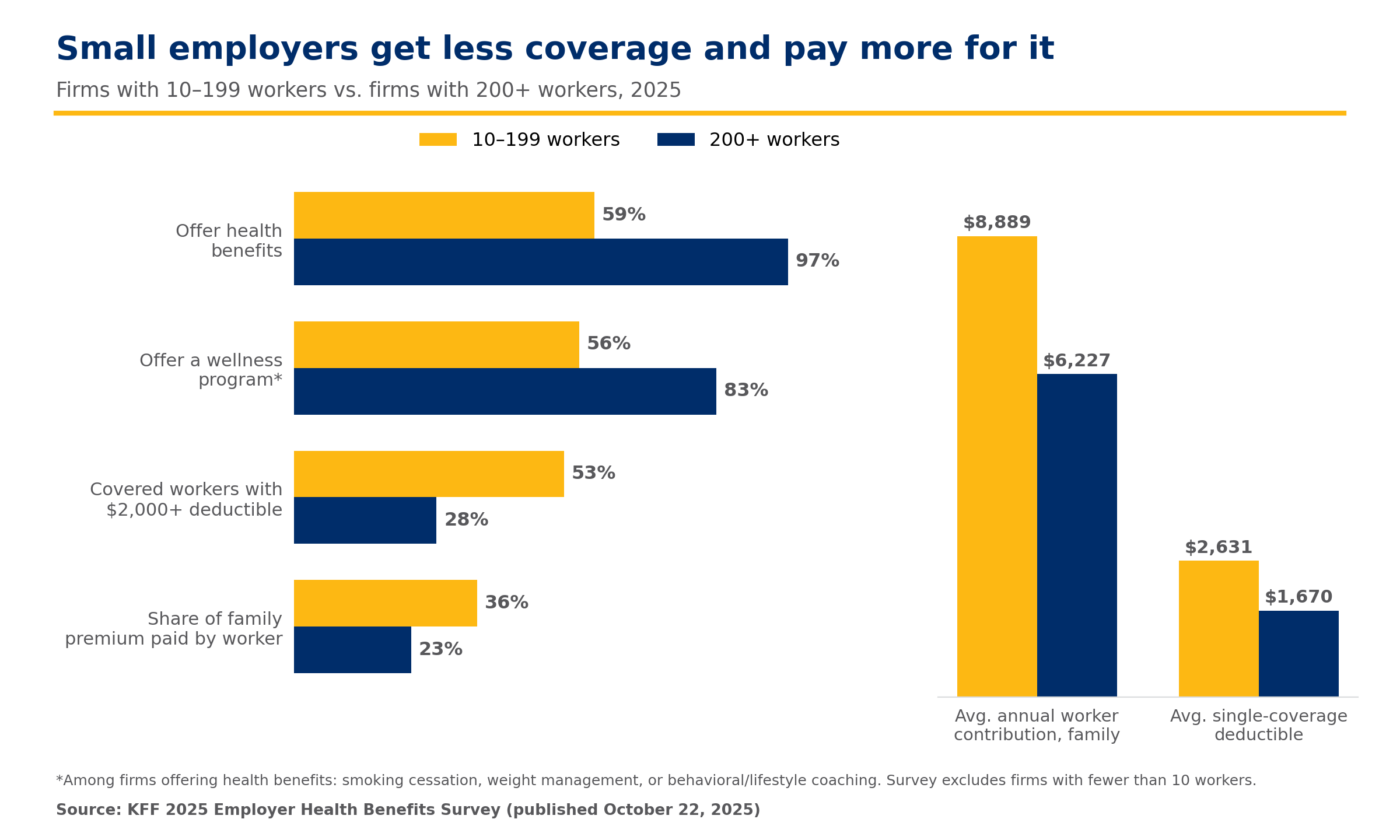
For the small and mid-sized employer, Gauch sees AI having a transformational impact. Access to quality benefits has historically favored enterprise companies, leaving smaller businesses and their employees at a disadvantage. “Costs are out of control for consumers,” he said. “They don’t get the same access as enterprise companies.”
Read more: Rewiring the broker-insurer tech relationship: Fixing the global readiness gap
But he said AI-enabled consolidation, where multiple platforms connect and operate as a single native experience through an agentic layer, may help to bridge that gap.
“You’re not stitching together things anymore,” he said. “It can actually operate like one native platform.”