
A Florida retiree who bought an annuity from Delaware Life Insurance Company has opened a new legal front against Dodgers and Cadillac Formula 1 owner Mark Walter, accusing his insurers of hiding the true scale of dealings between the companies and the billionaire's wider business network.
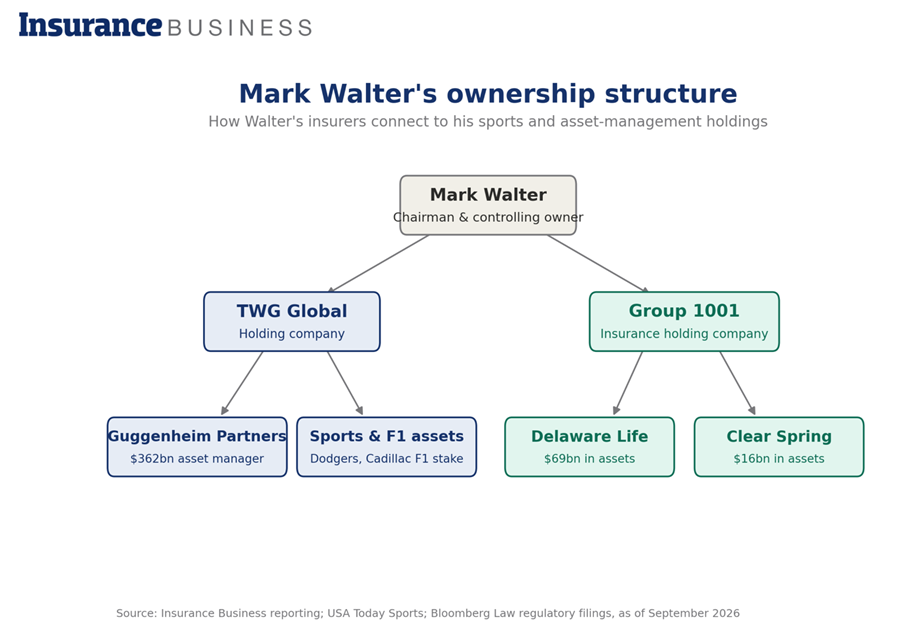
Ira Rosner, 67, filed the proposed class action in the U.S. District Court for the Southern District of Florida, naming Walter personally alongside Delaware Life, Group 1001, TWG Global and Guggenheim Partners. The suit, brought by the law firm Robbins Geller Rudman & Dowd, runs to nine counts, including fraudulent concealment, breach of contract, and aiding and abetting fraud, with damages pegged at a minimum of $5 million, according to a summary of the filing carried by Front Office Sports.
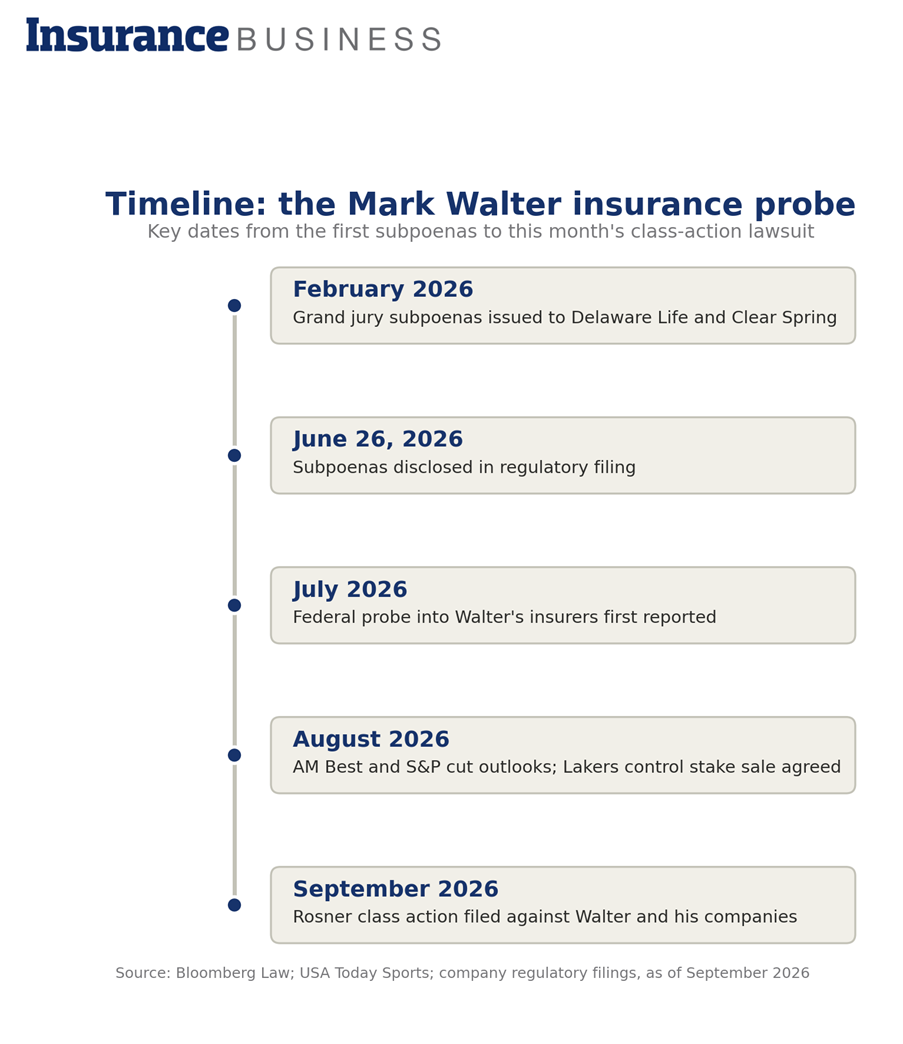
At the heart of the complaint is a disclosure gap that regulators and rating agencies have also been chasing for months. Rosner's lawyers allege that Group 1001 sat on grand jury subpoenas Delaware Life received in February, only disclosing them once a June regulatory filing forced the issue.
The suit also claims the insurer told policyholders that roughly 3% of its invested assets were tied to related parties connected to Walter, when the real figure was, in the complaint's words, "more than 1,000% greater" which is a gap that lines up with the far larger related-party exposure Delaware Life has since restated to regulators.
Read next: Mark Walter's insurers face federal probe over undisclosed related-party investments
The lawsuit has arrived at the same time as a federal probe that has been building since Delaware Life and Clear Spring Life and Annuity disclosed in a June 26 filing that they'd received grand jury subpoenas in February. Prosecutors in Manhattan and the Securities and Exchange Commission are examining whether the insurers properly flagged private credit holdings tied to other parts of Walter's empire.
As of March, Delaware Life carried roughly $69 billion in assets and Clear Spring about $16 billion. No charges have been filed against Walter or any of his companies.
The numbers involved have moved considerably since that first disclosure. Delaware Life's own internal review, prompted by the subpoenas, found errors in how related-party holdings had been classified, and the corrected figure has been reported by several outlets as exceeding $17 billion, which is substantial a jump from the roughly $1.4 billion, or 3%, the insurer had previously told regulators.
That shift has already shown up in credit ratings: S&P moved its outlook on Delaware Life to negative from stable, while AM Best did the same for both Delaware Life and Clear Spring, though both affirmed the companies' A- financial strength ratings.
Read next: US annuity boom fuels private credit surge that worries regulators
The Rosner suit is also not the first time Walter's insurance-linked financing of his sports and business holdings has drawn a courtroom challenge. A similar proposed class action, filed in 2014, alleged that policyholder funds from insurers Walter and Guggenheim then controlled had helped finance the 2012 purchase of the Dodgers for about $2.15 billion by an ownership group that included Basketball Hall of Famer Magic Johnson.
The new complaint revives those allegations, arguing the financing structure was never fully disclosed in regulatory filings which is a claim that lines up with earlier reporting that traced more than $1.2 billion of the Dodgers deal's financing back to Guggenheim-linked insurers.
Walter's holding company, TWG Global, sits at the center of a sprawling portfolio that stretches well beyond insurance: the Dodgers, a recently sold controlling stake in the Los Angeles Lakers, a minority holding in Chelsea Football Club, and through its TWG Motorsport division's acquisition of Andretti Global and partnership with General Motors, the new Cadillac Formula 1 team.
The lawsuit doesn't accuse the F1 operation itself of wrongdoing, but it frames the team as part of the broader network the complaint says was financed, in part, by capital tied to Walter-controlled insurers.
That sports portfolio has been shrinking fast amid the scrutiny. Walter agreed in August to sell his controlling Lakers stake to venture capitalist Joshua Kushner and former Disney chief Robert Iger for a reported $12.5 billion, though the deal is currently on hold amid a dispute among the Buss family over a separate minority stake.
This week brought news that Walter and co-owner Todd Boehly agreed to sell their combined 25% stake in Chelsea to majority owner Clearlake Capital Group for roughly $1.2 billion. TWG Global has said the Dodgers themselves are not for sale and no sale process has begun.
Read next: Warren presses insurance regulators for answers on private credit ties as Walter probe widens
The bigger regulatory question
For carriers well beyond Group 1001, the case has become a proxy for a much larger debate about how much of the life insurance industry's balance sheet now sits in private credit arranged by, or connected to, an insurer's own ownership group.

Sen. Elizabeth Warren has pressed the National Association of Insurance Commissioners on whether its existing rules for private-equity-owned insurers are keeping pace with that shift, and Treasury Secretary Scott Bessent has separately met with the NAIC this year to discuss the sector's growing private credit exposure. Group 1001 has said its capital position and liquidity remain strong and that it is cooperating fully with investigators.
For now, the Rosner suit adds a policyholder-driven legal track to investigations that had, until this point, been running mainly through prosecutors, the SEC and rating agencies - and it puts a dollar figure and a named plaintiff behind allegations that regulators have so far only sketched out in filings and letters.