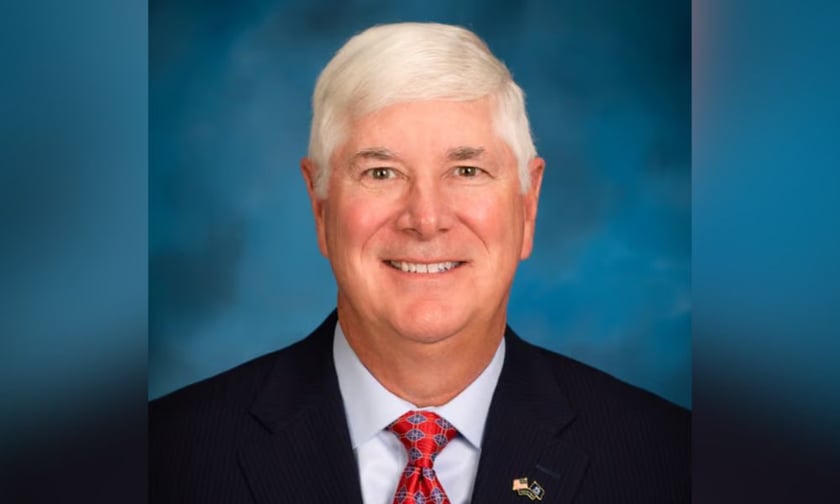
USAA has named retired lieutenant general David F. Melcher (pictured) of the US Army as chairman of its board of directors, succeeding retired vice admiral James M. Zortman of the US Navy in a planned leadership transition.
Melcher has served on the USAA board for nearly seven years, most recently as vice chairman. He spent 32 years in the US Army before moving to the private sector, where he served as president and chief executive of Exelis Corporation - a Fortune 500 aerospace and defense company with revenues exceeding $5 billion - from 2011 until its sale to Harris Corporation in 2015. He then led the Aerospace Industries Association as president and chief executive from 2015 to 2017. His board experience includes roles at GM Defense, Becton Dickinson, C.R. Bard and Embecta Corporation, where he served as non-executive chairman. He holds a Harvard MBA and has been a USAA member for more than 51 years.
Zortman served on the USAA board from 2013 and as chairman from 2021, and has been a USAA member for 54 years. USAA CEO Juan C. Andrade said Melcher knows the association, understands its members and brings tremendous experience and perspective to the role.
USAA was founded in 1922 by 25 Army officers and now serves more than 14.5 million members from the US military community and their families. It ranked as the third-largest homeowners multiperil insurer and fifth-largest all-private passenger auto insurer in the United States in 2024 by direct premiums written, according to AM Best data.
That scale makes the association's strategic direction under new board leadership directly relevant to the personal lines market. Approximately half of USAA policyholders are expected to see an auto premium decrease in 2026, at a moment when most personal lines carriers are still managing elevated loss trends and seeking rate. USAA returned a record $3.8 billion to members in 2025 through distributions, dividends and bank rebates - up 72% from $2.2 billion in 2024 and the largest member return in the association's 103-year history. Net worth reached $38.6 billion by the end of 2025, the third consecutive year of growth, having grown by $6.3 billion in that year alone.
The trajectory matters because USAA arrived at that position from a difficult starting point. The association posted a net loss of $1.3 billion in 2022 - its first annual loss since 1923 - before recovering strongly. Net income reached $3.89 billion in 2024 and net worth grew to $32.1 billion, a 10% increase from the prior year, before the further $6.3 billion expansion in 2025.
Despite those results, S&P Global Ratings lowered USAA's financial strength rating from AA+ to AA in May 2025, citing an average pretax loss of $236 million at its banking subsidiary from 2020 to 2024. S&P maintained a stable outlook on the insurance operations and projected combined ratios of 93 to 95% for 2025 and 2026.
The board appointment follows a significant restructuring at the executive level. Andrade, who joined as CEO in April 2024 from Everest Group, dissolved the existing executive council and created a new member-focused operational unit. Four senior executives departed USAA in September 2025 as part of that restructuring. A new board director, Andrew J. Pinkes, was added in May 2026.
Melcher's appointment as chairman completes the leadership picture at the top of the organization. His background in defense contracting and aerospace gives him a different reference point from Zortman's operational naval leadership - and a closer parallel to USAA's challenge of running a large, complex financial services organization with a mission-driven rather than shareholder-driven mandate.
For the personal lines market, the combination of USAA's scale, its rate reduction commitments, and the financial strength now supporting those commitments makes the association a significant competitive variable in auto and homeowners - particularly in states where military populations are concentrated and where USAA's direct-to-member model competes directly with broker-distributed personal lines programs.