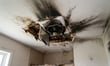
Earlier today British counterterrorism detectives took a 27-year-old man holding both British and Iranian citizenship into custody in London on suspicion of preparing a terrorist act, the latest twist in a strange and still-murky investigation into an alleged plan targeting RAF Fairford, the Gloucestershire airfield that has been a launch pad for American bombers flying missions against Iran.
Nobody was hurt and nothing was damaged outside the base. For the insurance industry, though, the case matters less for what happened than for how it may have been organized: investigators are examining whether Tehran used criminal middlemen, some possibly unaware of who was paying them, to carry out the job. That is precisely the scenario that turns a security scare into a coverage dispute.
The case began in the early hours of Sunday, when police detained five men, all British citizens in their twenties from London, after three vans were spotted in the countryside near the base, according to NPR and The Associated Press. Fairford is owned by the UK but has hosted American B-1 and B-52 bombers during this year's conflict with Iran.
The vans turned out to hold barrels of fuel rather than explosives, and the five were released on bail on Monday, Al Jazeera reported. Stranger still, it was reported that the tip-off that brought police to the scene came from one of the suspects himself, who called emergency services, prompting speculation that someone had second thoughts.
The picture shifted on Wednesday when Prime Minister Andy Burnham said there were strong indications Iran was involved. A day later came the dual national's arrest, while a 26-year-old British man was questioned and two properties were searched, the Journal reported. Vicki Evans, the UK's senior national coordinator for counterterrorism policing, said detectives were pursuing "all possible angles—including possible foreign state involvement."
Tehran has denied any role. Iran's embassy in London dismissed the reports as malicious speculation, according to Al Jazeera, which also noted that the Islamic Revolutionary Guard Corps had declared Fairford a legitimate target in July. Israeli Prime Minister Benjamin Netanyahu said this week that Israel had passed the British government information about a suspected Iranian plan weeks earlier; London has not commented on that claim, according to the Journal.
Read next: Middle East conflict puts terrorism insurance accumulation risk in the spotlight
Hiring local criminals gives a hostile government a layer of plausible deniability. Analysts at the Institute for Economics and Peace have described Iran's long-standing reliance on criminal proxy and surrogate networks, and cited a West Point Combating Terrorism Center assessment that early plots following the February strikes would likely involve lone offenders and criminal proxies.
The same fog that shields the sponsor also clouds the claim. Standard commercial property policies exclude war; terrorism cover picks up certain politically motivated attacks; and standalone political violence policies are meant to bridge the two. But those layers do not always line up cleanly with the war exclusions they are supposed to complement, particularly when the peril a client bought does not match how the loss happened. Morningstar DBRS has warned that separating terrorism from sabotage, cyber incidents and acts of war is becoming harder, raising the odds of disputes.
Tarique Nageer, terrorism placement advisor at Marsh Risk, said in March that the US-Iran conflict was "blurring the lines between terrorism, political violence and civil unrest." The market has noticed: WTW's Terrorism Pool Index found that insurers in volatile territories increasingly prefer broader political violence wordings over terrorism-only cover, precisely to avoid gray-area fights.
A Fairford-style plot, executed successfully, would have tested every one of those seams. Was it terrorism by private individuals, an act of a state at war, or simply criminal damage? The answer could hinge on government attribution that might take months, and might never be stated publicly.
Read next: The Iran War's hidden insurance crisis
The specialist market that would absorb such a loss is already bruised. Marsh Re Bermuda CEO Richard Morgan has put the political violence and war risk market at roughly $2.5 billion in annual premium, and warned that Middle East losses could approach $2 billion, raising the prospect of the class's first underwriting loss since the September 11 attacks.
Lloyd's booked £1.4 billion in first-half losses tied to the conflict across marine, energy and political violence lines. Conduit Re chief executive Neil Eckert has said political violence losses could ultimately reach about $4 billion, according to Business Insurance.
Corporate buyers are anxious too. Allianz Commercial's 2026 trends report found that 53% of respondents named armed conflict as their top political violence worry, with terrorism and sabotage cited by 46%, and the category has climbed to seventh place on the Allianz Risk Barometer, its highest ever.
At home, the federal backstop has its own fine print. To be certified under the Terrorism Risk Insurance Act, an attack must cause damage in the US or on certain US-flagged carriers, vessels or mission premises, aim to coerce the American public or government, and generate more than $5 million in insured losses, according to IRMI's summary of the statute. Acts committed as part of a war declared by Congress are carved out, except for workers' compensation. Congress has not declared war on Iran; lawmakers instead passed a largely symbolic war powers resolution in June. Even so, individual policies' own war and military action exclusions still apply to certified acts.
The program itself expires on December 31, 2027. The House passed a seven-year extension, H.R. 7128, by 373-15 on June 29, and the Senate Banking Committee advanced its companion bill, S. 4395, by 24-0 on September 17. Both would run the program through 2034, but neither has reached the president's desk. Industry groups warn that clients are already negotiating coverage that stretches past the current sunset, and that past delays led insurers to add conditional terrorism exclusions.
Read next: War is now the risk every boardroom fears most, and insurers are hiring accordingly
For brokers, the Fairford episode is a prompt to read wordings before the next incident rather than after it. Clients with facilities near military installations, along with defense contractors, logistics operators and energy firms with European footprints, are the obvious candidates for a review.
The useful questions are concrete. Does the political violence policy cover sabotage and malicious damage as well as terrorism? How does it define war, and who decides attribution, the insurer or a government? Does the property program carry a conditional TRIA exclusion that kicks in if Congress lets the program lapse at the end of 2027?
The investigation in Britain is far from over, and it is possible that the alleged plot was never as dangerous as the headlines suggested. But the template, a state outsourcing violence to local hired hands, is not going away. The industry would rather settle the definitions now, on paper, than in court after a real attack.
Read next: Political violence hits record high on Allianz Risk Barometer