For brokers trying to place California property business, the name on the ballot this November may matter more than any single carrier's appetite change this year. For the first time since the office became elected, the race is between two Democrats: former San Francisco supervisor Jane Kim and state senator Ben Allen. They disagree on almost everything that touches how brokers will work this market in the years ahead, including how much of it stays private, how FAIR Plan exposure gets managed, and how hard carriers get pushed to underwrite mitigated risk.
Some eye-watering numbers explain what’s at stakes. Average California homeowners premiums are up 84% since the end of 2020, or 45% after inflation, according to a Stanford University analysis of loan-level mortgage data released in June. Average deductibles have climbed from $1,813 to $2,553 over the same period. FAIR Plan enrollment has grown from under 2% to roughly 5% of single-family homes statewide, and the growth is fastest in ordinary suburban ZIP codes, not just high-risk canyons, so placement pressure is no longer confined to the wildland-urban-interface accounts brokers are used to treating differently.
State Farm, the state's largest home insurer, also faces a pending license-suspension action tied to claims-handling failures from the 2025 Palisades and Eaton fires, an open question that could move admitted-market capacity depending on how it resolves.
That's the poisoned chalice the next commissioner inherits. Whoever wins will also decide how far to push reform of the FAIR Plan itself, which outgoing commissioner Ricardo Lara's office has already sued once over its handling of smoke-damage claims. Plenty of brokers now treat the FAIR Plan as a fallback placement, so its stability matters well beyond wildfire country.
State interference - public option versus a private-market fix
Kim topped an 11-candidate primary in June with more than 27% of the vote. Her platform is framed as a direct response to the affordability crisis: a state-run catastrophe insurance authority, funded through a share of the premiums Californians already pay carriers, that would guarantee wildfire and other disaster coverage to any homeowner who can't get it privately. She's paired that with a promise to expand low-cost auto coverage statewide, in line with Medicare for All-style thinking on the party's left. For brokers, a state-run catastrophe authority would be a new distribution channel to learn, and a potential competitor to both admitted carriers and the E&S market for the hardest-to-place accounts.
Allen, who represents the fire-scarred Pacific Palisades district and finished second in the primary with just over 19%, wants to work inside the existing private market rather than build a public alternative to it. He'd shrink the FAIR Plan's footprint, push carriers back into high-risk ZIP codes, and give the Department of Insurance more staff and enforcement power to handle the claims complaints that have piled up since the 2025 fires. That's closer to the market brokers already navigate, just with, he argues, more admitted capacity eventually returning to hard-to-place ZIP codes.
He's called Kim's disaster fund proposal "a massive subsidy for the rich," since he claims wealthier homeowners with higher rebuilding costs would draw disproportionately on a pool everyone pays into. Kim counters that letting private insurers keep raising rates unchecked isn't a policy, and that the state can't afford more residents getting priced into the FAIR Plan or out of coverage altogether.
The party itself is split. The California Democratic Party gave Allen its formal endorsement earlier this month, after an inconclusive delegate vote back in February. Kim picked up the backing of the California Federation of Labor Unions and, notably, Senator Bernie Sanders, for whom she worked during his 2020 presidential run. Consumer Watchdog president Jamie Court, whose organization wrote the ballot initiative underlying California's current insurance law, has publicly questioned whether Kim's fund could ever raise the tens of billions of dollars needed to be credible, let alone survive a single catastrophic season.
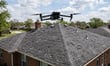
For brokers, the practical stakes sit less in the campaign rhetoric and more in how the next commissioner treats the mitigation-based underwriting incentives Lara built during his two terms. That's what determines whether "harden your roof and we'll get you a better renewal" is a conversation a broker can actually have with a client, or just a talking point.
AB 1, sponsored by Lara and already signed into law, requires the Department of Insurance to periodically update its "Safer from Wildfires" framework so homeowners who retrofit get a premium discount. But it leaves the size of that discount up to individual carriers. A companion bill, SB 1060, tried to go further by requiring insurers to build mitigation credit directly into their underwriting models rather than leaving it optional.
State legislative records show it passed the Senate 29-8 in 2024, but the author canceled the Assembly Insurance Committee hearing that June, which effectively killed the bill. That tells you how much resistance remains, even among Democrats, to telling carriers how to underwrite. For brokers, the practical effect is that mitigation credit still varies carrier by carrier, so shopping a hardened home across multiple markets can produce meaningfully different quotes, and there's no sign that's changing on its own.
The financing side of mitigation matters just as much for clients who can't get, or can't afford, coverage. A tally compiled by the urban-policy nonprofit SPUR counts 16 bills introduced in Sacramento since 2023 to help homeowners pay for retrofits through tax credits, grants, loans, and underwriting incentives. Only two have become law. One is AB 1. The other, AB 888, created a dedicated grant program for retrofits, but independent bill-tracking confirms the state has only appropriated a $3 million proof-of-concept amount so far, with nothing yet flowing to individual homeowners. Brokers shouldn't be telling clients a grant is available today. A separate wildfire-resilience loan program, SB 894, passed the Senate unanimously this year and remains alive, per SPUR, while a PACE-style proposal that would attach retrofit debt to property tax bills has drawn pushback over foreclosure risk for owners who fall behind.
The underlying economics explain why insurers care. A UC Berkeley-led study published in Nature Communicationsfound that hardening and defensible space together can roughly double the share of homes that survive a wildfire, cutting structure losses by as much as 50% when adopted at neighborhood scale. Carriers such as Mercury have started writing new business again in places like Inverness, where local governments coordinated retrofits community-wide instead of leaving it to individual homeowners, and brokers may see that pattern repeated as more communities organize group retrofit efforts. Cost is still the barrier: Headwaters Economics puts retrofit costs anywhere from roughly $2,000 to more than $100,000 per home. Until financing catches up with that price tag, mitigation credit will remain easier advice to give than to act on.
Both candidates say they'll refuse insurance-industry campaign contributions, but the money around them tells its own story. Business groups, led by a coalition tied to the California Chamber of Commerce, spent roughly $1.5 million opposing Kim in the primary. Ripple co-founder Chris Larsen gave $1 million in May to a political committee backing Allen. Kim's largest funders are the California Working Families Party and the California Teachers Association. Neither candidate's money is coming from carriers directly, but that could shift before November, particularly if support starts arriving from the surplus lines or MGA side of the market instead.
CDI's State Farm license-suspension hearing is expected to take months, and a prolonged fight likely keeps more business flowing to the FAIR Plan and E&S markets in the meantime. SB 894, the wildfire-resilience loan program, has the clearest path to becoming law this session and is the financing bill most likely to actually put retrofit dollars into clients' hands rather than just authorizing a program on paper. AB 888 is worth checking again closer to renewal season: until the Legislature appropriates real money beyond the $3 million proof-of-concept, the Safe Homes grant program should be treated as not yet operational. Broker and agent associations running candidate questionnaires or debates this fall are also a good place to watch Kim and Allen get pressed specifically on underwriting standardization and admitted-market capacity, questions general-election coverage tends to skip. And the race itself is close enough that either outcome will set the regulatory tone for California property placement well into 2027.
The next commissioner will have direct influence over how mitigation credit gets standardized, if it does, how much FAIR Plan exposure keeps growing, and which of the 16 stalled home-hardening financing bills finally get funded. For brokers building renewal strategy around California property risk, that makes this one of the more consequential down-ballot races on this fall's ballot.