Mid-America Catastrophe Services' Henry Maley says sharper imagery and wider acceptance have turned drone inspections from a novelty into standard practice
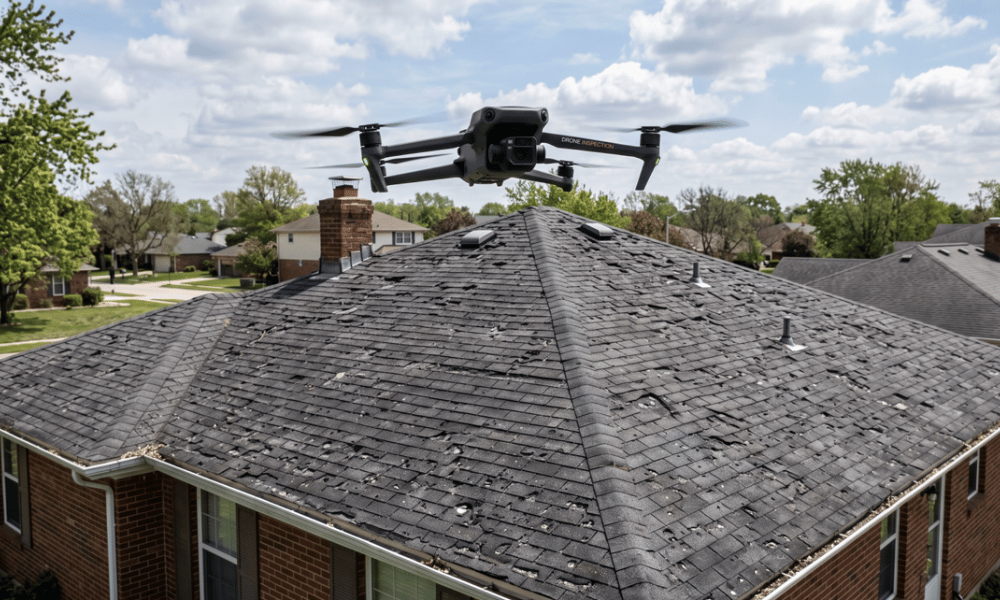
For most of the past decade, the drone hovering over a hail-battered roof was more promise than practice. The pictures were fuzzy, homeowners were wary, and regulators were not sure what to make of it.
That has changed quickly, according to Henry Maley, senior vice president of sales at independent adjusting firm Mid-America Catastrophe Services (MACS).
He told Insurance Business that the claims business is in the middle of a significant shift in how files are produced, inspected and closed, and that drones are now central to it.
“Probably the biggest issue in the claims sector is producing a file with fewer touches,” he said.
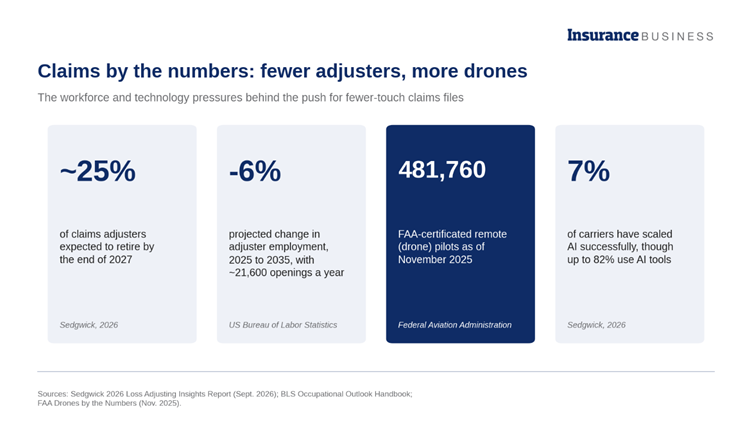
Every visit, phone call and re-inspection on a claim costs time, and claims departments are short of both time and people. Nearly a quarter of claims adjusters are expected to retire by the end of 2027, according to Sedgwick's 2026 Loss Adjusting Insights Report.
The Bureau of Labor Statistics projects employment in the occupation will fall 6% between 2025 and 2035, even as about 21,600 openings need filling each year. And the pipeline is thinning: job postings for claims adjusters have fallen about 55% from their post-pandemic peak, according to Glassdoor and Indeed research.
Demand, meanwhile, keeps arriving faster. The US had 23 weather disasters costing more than $1 billion each in 2025, and the average gap between them shrank to just 10 days, according to Sedgwick. Severe convective storms, the hail and wind events behind huge volumes of roof claims, caused more than $50 billion in insured losses for the third year running. That leaves little time to reset and redeploy adjusters before the next event.
Drones are increasingly being used to close that gap, letting one adjuster inspect more roofs, more safely, without climbing a ladder.
Read next: Is the everyman drone owner the answer to rural loss adjusting?
Maley says the technology itself has improved dramatically.
“The accuracy of the drones has increased 100%,” he said. “[Before] they were not very accurate. Their images were pixelated, so it caused a lot of problems. Plus, compliance was a big issue. Security, secrecy. A lot of people didn’t like drones flying around their house.”
That skepticism once showed up in the claims file. When drones were first used after hailstorms, one Denver homeowner told a local TV station that an aerial pass could not see damage to the underlayers and decking beneath his shingles.
In Maley's experience, most of that resistance has faded over the past 18 months, with state insurance commissioners increasingly treating drone inspections as standard practice. The pool of operators has grown too: the Federal Aviation Administration counted 481,760 certificated remote pilots as of November 2025, according to its drones by the numbers tally.
Read next: Claims has structural disadvantage in insurance talent challenge: Crawford CEO
Maley also sees a change of tone in claims technology more broadly. After years of hype, he said, expectations are now closer to what the tools can actually deliver.
“I think probably five years ago with insurtech, a lot of the innovative people overpromised a product,” he said. “And now [the industry is] starting to promise a product – and there’s more focus on delivering what they say.”
The data suggests there is still a long way to go. Sedgwick's report found that while up to 82% of carriers use AI tools somewhere in their operations, only 7% have achieved scalable success. Crawford & Company, in its 2026 US predictions report, expects more straight-through processing of simple, low-complexity claims, where a file can move to approval with no adjuster involved.
That is the space drones now occupy: not a replacement for the adjuster, but one way to make each adjuster's file faster to build and easier to close.
Read next: Why insurers and drones may not mix