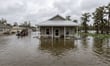
For most people in Edgewater, a narrow borough along the Hudson River in Bergen County, last weekend's nor'easter meant water to stay away from. Officials now suspect some car owners may have seen it as a chance to make money.
Borough and state authorities are looking into whether people drove or pushed vehicles into a flooded parking lot on River Road so the cars could be written off as storm losses. The vehicles include a BMW 7 Series and a Mercedes-Benz S580 valued at about $130,000.
Edgewater police, the state Attorney General's fraud unit and the New Jersey Department of Banking and Insurance are involved, and insurance carriers have been alerted to the footage circulating on social media.
The timing is what raised suspicion. Video recorded on Saturday showed a handful of cars underwater in the lot. By Monday, new footage showed even more, and some of them appeared after the floodwater had started to go down. "These vehicles didn't accidentally end up in this water," Borough Administrator Greg Franz told PIX11 News. He said the borough has video of drivers deliberately heading into the flooded area.
Franz has been careful to describe the activity as alleged. No one has been charged, and he has said there are currently no identified victims of a crime. That makes sense from a claims point of view: no insurer has been defrauded until someone files a false claim and gets paid.
Read next: NICB urges consumers to take action against rising insurance fraud losses
The lot's reputation is part of why officials are suspicious. Franz has described it as a well-known flood zone, and residents say they stay away from it when heavy rain is forecast. It has made headlines before: around Christmas 2022, the same lot flooded and then froze solid, leaving several cars trapped in ice for days.
This time, the flooding was limited to state-owned land along the river near the Marketplace at Edgewater shopping center, Franz said. River Road stayed passable and no drivers needed to be rescued. A pump usually clears the lot during ordinary rain, but a tidal surge off the Hudson drained away much more slowly. Firefighters used a high-water truck to evacuate about 40 guests from the Comfort Inn next door.
The storm itself was unusually strong for so early in the fall. It hit the Northeast on Sept. 26, and at one point downed trees contributed to outages for about 100,000 customers across the region, according to the Associated Press.
Parts of the Jersey Shore got as much as 8 inches of rain. Weather stations near Edgewater recorded two to three inches. Rutgers University's state climatologist said it has been more than 30 years since a New Jersey storm caused this many flood cycles with water topping 3 feet.
Investigators have a name for this kind of scheme. The National Insurance Crime Bureau calls it an "owner give-up." An owner deliberately gets rid of a vehicle, historically by driving it into a pond, lake or quarry or setting it on fire, and then files a claim. The usual motive is financial: someone who owes more on the car than it is worth, or who has gone over a lease's mileage limit, can walk away from the debt. A storm offers something those older schemes didn't have, which is a believable reason for the damage.
The economics make today's market risky. Analysts at Verisk have warned that inflated vehicle values, high loan-to-value ratios and rising repossessions could be early signs that owner give-ups are coming back. Under a typical personal auto policy, flood damage falls under comprehensive coverage, and a luxury sedan with soaked electronics is very often a total loss.
What's different in Edgewater is the evidence. Bystanders posted time-stamped video, and investigators can compare it with the dates and times of loss that claimants report. For SIU teams, the clearest warning signs are:
Read next: Allstate unleashes RICO suit over alleged $7.9 million auto insurance fraud
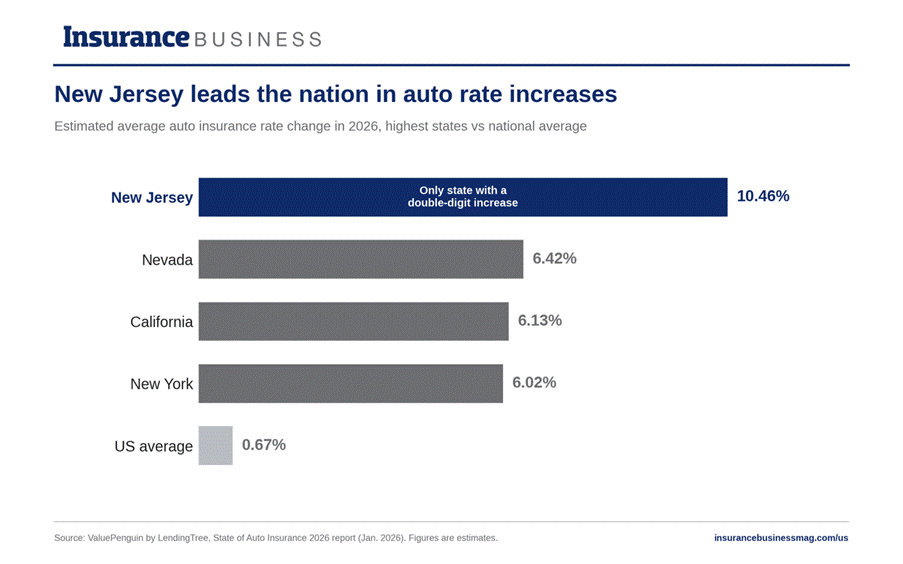
New Jersey drivers are already paying heavily. According to LendingTree analysis, insurers in the state are raising auto premiums 10.46% in 2026. It is the only double-digit increase in the country, compared with a national average of 0.67%, and the average cost is expected to reach about $249 a month. The report lists fraud among the causes, together with higher mandatory minimum coverage, crowded roads and inflated medical claims.
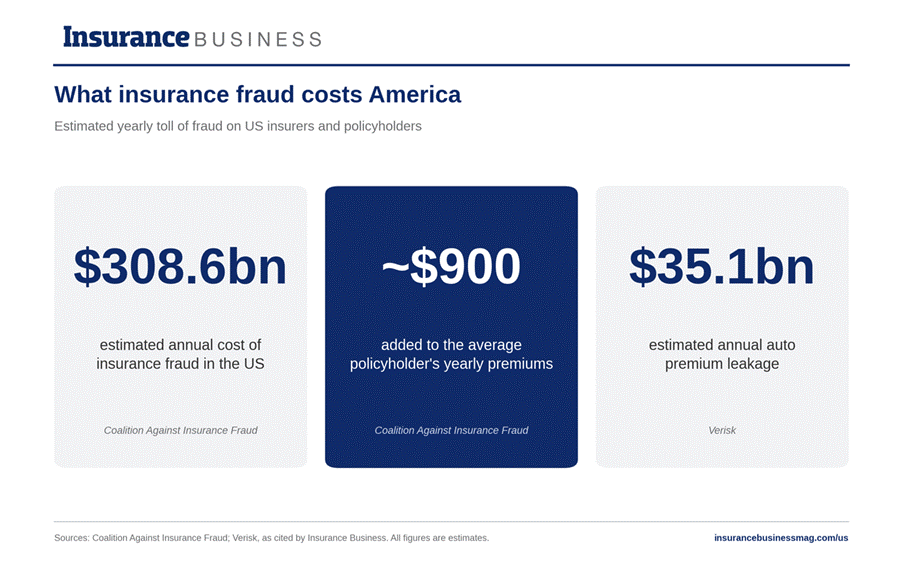
Franz also linked the problem to household costs, saying fraud costs about $900 per insured person. That figure is close to the national estimate from the Coalition Against Insurance Fraud, which puts fraudulent claims at roughly $308.6 billion a year, or about $900 in extra premium for the average policyholder. That estimate is cited by supporters of the bipartisan Stop Auto Fraud Act of 2026, which would make staging a crash to file a false claim a federal crime. Rep. Josh Gottheimer of New Jersey, one of the bill's sponsors, warned that "the fraud rings behind them don't stop at state lines." Verisk separately puts auto premium leakage at about $35.1 billion a year. That same case file includes California's "Operation Bear Claw," in which a person in a bear costume allegedly damaged the interiors of a Rolls-Royce and two Mercedes to fake animal attacks.
Flood-related auto fraud is not new in this region. Hurricane Sandy flooded roughly 250,000 cars in the US, and insurers spent months afterward warning buyers about waterlogged vehicles being cleaned up and resold.
Read next: Two gangs arrested over alleged $100 million auto insurance fraud scheme
It's unclear how many of the Edgewater vehicles will lead to claims, or whether any charges will follow. For carriers with exposure in Bergen and Hudson counties, the practical steps are clear. Flag any comprehensive claims tied to the River Road lot. Save the social media footage before it is deleted. Compare each claimed time of loss with when the water actually peaked.
Brokers have a role too. Clients shopping for used cars after the storm should run a VIN through NICB's free VINCheck before buying. Clients who own vehicles should know that damage they cause on purpose is not covered, and that filing a claim for it is a crime under New Jersey law.