A stretch of severe storms and a derecho that tore through the Midwest between August 9 and 12 likely left US and Canadian insurers with losses in the single-digit billions, according to separate estimates from Aon and Gallagher Re.
The event pushed year-to-date US severe convective storm losses, covering both public and private insurance, past $35 billion, Gallagher Re said in an event commentary on the outbreak.
The August storms mark at least the sixth billion-dollar-plus severe convective storm outbreak in the US this year, continuing a run of multibillion-dollar events that has held steady even as the total count has eased slightly: 11 such outbreaks in 2023, 10 in 2024, and seven in 2025, according to Gallagher Re.
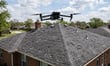
The derecho swept from Iowa to Kentucky on August 11, producing straight-line winds near 90 mph through Chicago's south suburbs and northwest Indiana, and spinning off 11 tornadoes, including an EF-2 with peak winds of 115 mph that traveled more than 25 miles from Illinois into Indiana. Aon said wind damage across Illinois, Indiana and Ohio was substantial, with more than 1.1 million power outages, torn-off roofs and submerged vehicles, while towns in Indiana and Ohio saw enough rain and flooding to prompt states of emergency.
Consecutive high-wind days compounded the damage in some areas, Aon said, particularly in Chicago's southern suburbs and northwest Indiana. North of the border, back-to-back storms in Ottawa on August 10 and 12 added further compounding damage and power outages, according to Aon.
Guy Carpenter noted the recent outbreak could rank among the ten costliest US severe convective storm events since 1995; the current tenth-place event, a 2014 central US hail and windstorm, caused $5.1 billion in insured losses.
The state absorbing the worst of the damage, Illinois, also happens to have one of the more concentrated homeowners insurance markets among storm-prone states.
State Farm Group wrote 33.68% of Illinois homeowners multiperil premium in 2025, more than double the combined share of the next two largest writers, Allstate Insurance Group at 14.27% and Country Financial Property Casualty Group at 7.79%, according to BestLink data.
That concentration means a disproportionate share of any resulting Illinois claims activity from this event is likely to land with a small handful of carriers rather than being spread evenly across the market, a pattern less pronounced nationally, where State Farm's 18.69% homeowners share, while still the largest, sits closer to Allstate's 9.42% and USAA's 7.02%.
Illinois' exposure to this kind of loss has been building all year. Gallagher Re said the state has now recorded more than 200 confirmed tornadoes year-to-date, a new all-time calendar-year record that has already surpassed the 142 tornadoes confirmed in 2024, with several months of severe weather season still remaining.
This outbreak follows a first half of 2026 that Insurance Business previously reported ran below the seasonal average, with Gallagher Re estimating roughly $22 billion in SCS losses through mid-June and Aon at approximately $27 billion, both below the five-year first-half average of $38 billion.
That the year has now pushed past $35 billion in total losses reflects how sharply activity accelerated through the summer rather than a consistently elevated pace throughout the year.
Wildfire losses are adding to the year's toll separately, with Gallagher Re and Aon preliminarily estimating that wildfires burning in Washington's second-largest metro area could become a billion-dollar event on their own.
For brokers placing property coverage in the Midwest, the concentration of Illinois homeowners business among a handful of carriers means claims-handling capacity at those specific insurers, rather than the broader market's total capacity, will likely determine how quickly this event's claims move through the system.
For carriers and reinsurers, the pattern Gallagher Re has now tracked across four consecutive years, double-digit numbers of billion-dollar SCS outbreaks each year regardless of how any single season starts, suggests that budgeting around a "quiet start" to convective storm season carries real risk of understating full-year exposure, a dynamic this August's rapid acceleration illustrates directly.