 Talk about what separates the excess and surplus lines market from the admitted market usually turns to freedom of rate and form. Elizabeth Brannen (pictured right) starts somewhere simpler.
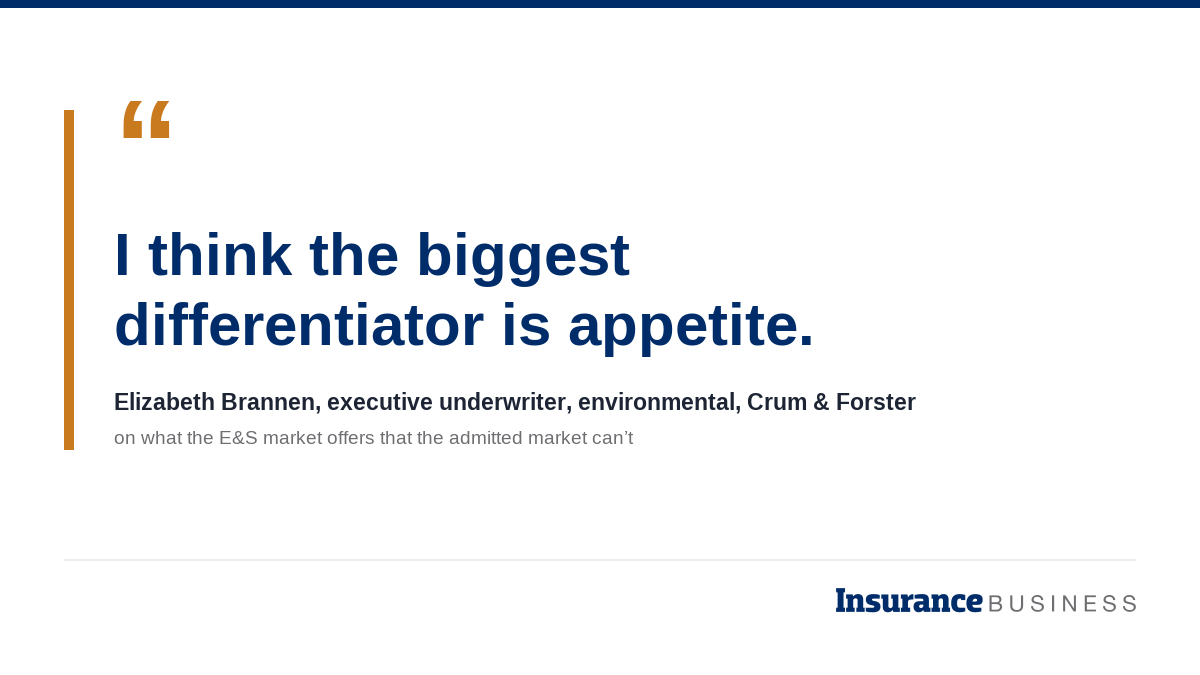
"I think the biggest differentiator is appetite," said Brannen, an executive underwriter in the environmental unit of Crum & Forster's Surplus & Specialty division. "The admitted markets tend to heavily restrict or outright decline risks that the E&S market is willing to put up quotes for, as long as terms are adequate, it's priced well and controls are in place."
In Brannen's telling, E&S appetite isn't a willingness to write anything; it's a willingness to write difficult risks on the right terms. Crum & Forster, part of Fairfax Financial Holdings, writes its environmental business on a non-admitted basis through appointed wholesale brokers.
What keeps business moving into E&S, she told Insurance Business, is innovation. As long as industries keep innovating, she said, "there will always be a continuous flow of business into the E&S marketplace."
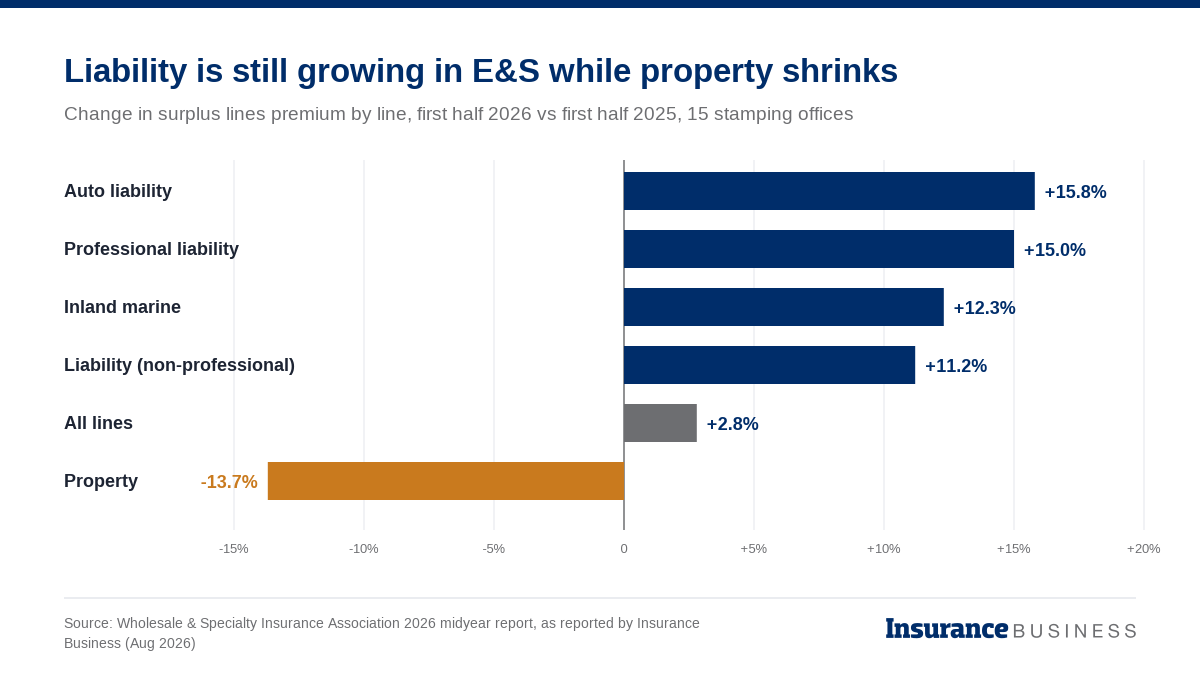
Right now, the most movement she sees is in auto and transportation risks. The stamping office data agree: surplus lines premium for auto liability rose 15.8% in the first half of 2026, against 2.8% for the market as a whole.
Read next: Cover Whale launches Breakwater Markets wholesale brokerage with senior transportation hire
A client's program, says Brannen, increasingly doesn't sit with one carrier. The MGA market is creating many layers of capacity, which means brokers can no longer simply match a quote to a carrier. They have to understand the capacity behind each MGA, and what each layer brings in areas such as claims handling and engineering.
For the broker in the middle, she said, that means understanding "a lot more carriers and capacity and options to make sure that the end client is getting what they need and the value from each respective carrier."
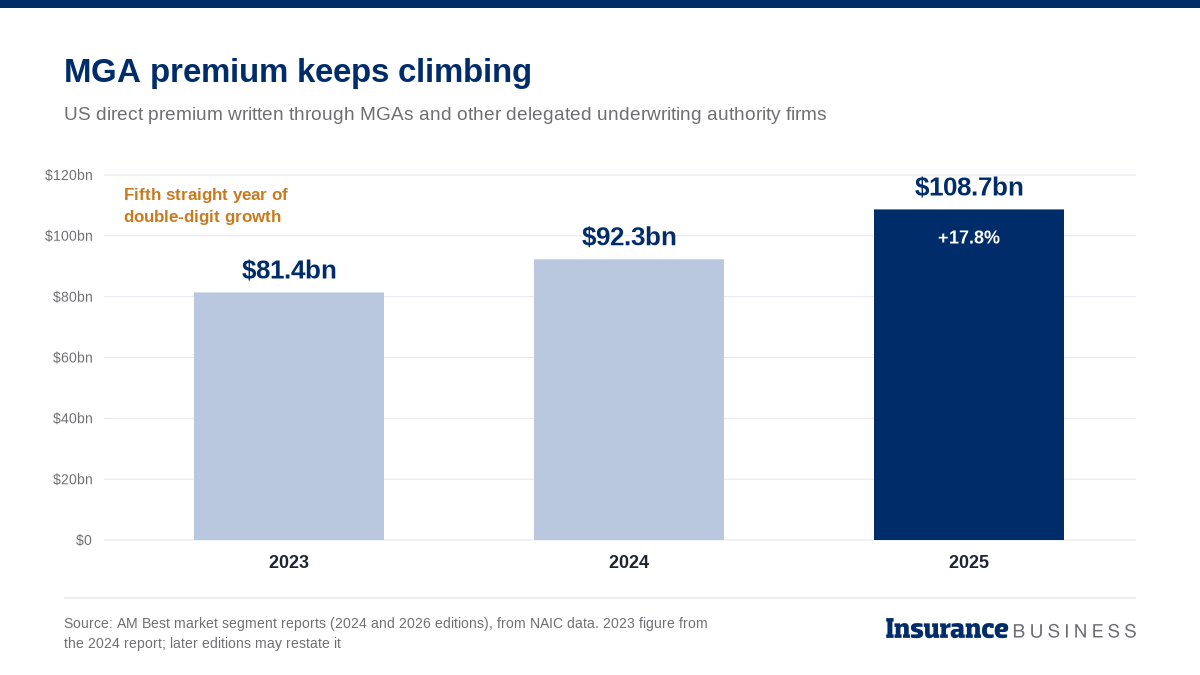
The scale of that shift can be seen clearly. MGAs and similar delegated authority firms wrote $108.7 billion of US premium in 2025, about 10% of the market, and more of the capacity behind them now comes through fronting carriers backed by reinsurers.
Read next: Conning: fronting sector's easy growth phase is ending
That is where Brannen's two points meet. E&S carriers will take on risks the admitted market declines, but on their own terms. With more of that capacity reaching clients through layered MGA programs, the broker's job is to know exactly whose terms, and whose claims service, the client is buying.
Read next: Telling a good story is just not going to work: commercial auto's new renewal reality