
The US managing general agent market is still expanding at a double-digit pace, but the next phase of growth will require greater selectivity as competition intensifies.
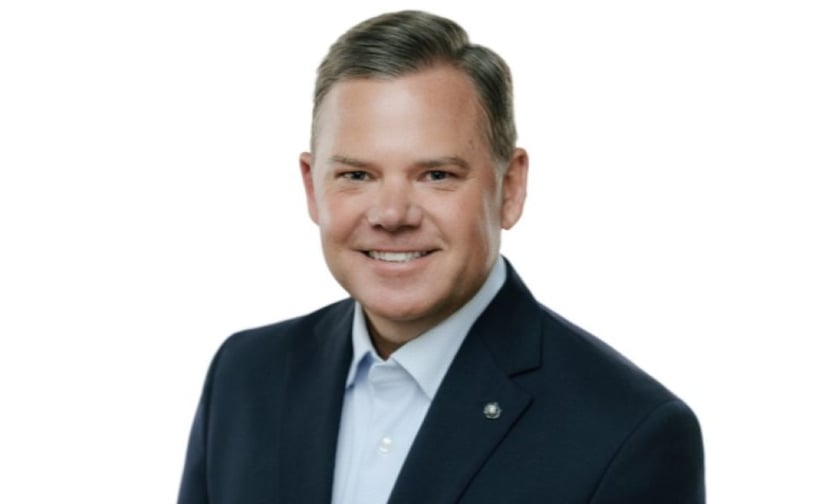
Bill Wilson (pictured), president of commercial lines at MSI, said MGAs must retain the ability to decline business as property pricing softens, rather than allowing premium targets to override commitments made to carrier partners.
“What’s core to any MGA, and really any carrier, is staying true to the underwriting disciplines and the commitments we have made to our capacity partners,” Wilson said. “As we go through market cycles, with property being one of them, we’re now seeing rates at a level we really haven’t experienced since probably 2016. It came quickly.”
The warning comes as the delegated underwriting sector reaches new scale. AM Best said direct premiums written sourced through US delegated underwriting authority enterprises reached $108.7 billion in 2025, up from $92.3 billion in 2024 and marking a fifth consecutive year of growth. The rating agency said capacity is becoming more selective, with greater attention placed on long-term underwriting quality and stable loss ratios.
Conning separately estimated that US MGA direct premiums written reached $114.1 billion in 2024, representing a 16% annual increase that outpaced the wider property-casualty market. Its industry survey found that 91% of insurers had increased their use of MGA partnerships, while 93% of MGAs were exploring new markets.
MSI, which is held by The Baldwin Group and has more than $1 billion in premium, operates across a diverse commercial lines portfolio. Its business includes a significant habitational concentration, an umbrella facility offering limits of up to $50 million, cyber programs and directors’ and officers’ and employment practices liability capabilities. This mix exposes the organization to sharply different market dynamics. Property pricing has become more competitive, while casualty portfolios continue to face social inflation, nuclear verdicts and claims that may develop over several years.
Wilson noted that some underwriters have not previously worked through a comparable market cycle. MSI is responding with education, stronger systems and clearer authority to reject risks that no longer meet its standards. “What we have to do is provide our teams with more tools," he told Insurance Business. "In any challenged market, it’s okay to have walkaway power. It’s okay that we don’t retain every risk or write every piece of new business. While we’re here to serve our partners from a brokerage perspective, we have to do what’s right for our capacity and what’s right for our company.”
The balance is becoming more important as MGAs assume greater responsibility on behalf of insurers. AM Best found that a slightly higher percentage of MGAs were empowered to handle claims and underwrite risks in 2025, including underwriting authority in more than 75% of their carrier contracts. Greater authority, however, is being accompanied by heightened oversight, more selective capacity and tighter economics during renewal negotiations.
At the same time carrier expectations have moved beyond the traditional bordereau, according to Wilson. Capacity providers now expect predictive analytics, portfolio insight and ongoing collaboration between MGA underwriting teams and carrier actuaries.
“MGAs owe it to our capacity partners to present data and be more forward-thinking, working hand in hand with their actuarial teams on pricing guidance and what we need to do to continue operating very profitably,” he said. “The underwriting disciplines, as I shared earlier, have always been there, but now it’s about the data.”
MSI operates with in-house product, actuarial, legal and compliance functions, allowing it to behave more like a carrier than a traditional underwriting intermediary. It is also developing proprietary artificial intelligence systems capable of ingesting thousands of submissions and presenting information to underwriters in a form designed to improve risk selection and pricing. Wilson said the technology can help both experienced employees and newer underwriters assess accounts more deeply as they encounter greater pricing competition. “By leveraging those tools, we can make quicker decisions and better pricing decisions. It’s been transformative,” he said.
The investment reflects a wider industry trend. Conning identified increased AI and automation adoption as one of the factors supporting MGA expansion. Only 25% of MGAs surveyed by the firm expressed concern about underinvestment in technology, down from 34% five years earlier.
MSI's objective is to strengthen rather than replace underwriting expertise. Wilson described MSI’s approach as the intersection of artificial intelligence and human intelligence, creating what he called “superhumans.” “The key word there is ‘human,'" he stressed. "Continuing to have that human element is very important to our processes."
One of the key growth levers for MGAs is being able to determine and respond to coverage gaps, including exclusions that could emerge as carriers respond to new and evolving risks. But Wilson said immediate demand is not enough to justify launching a program. A sustainable product requires credible pricing, appropriate capacity and evidence that demand will persist after the market’s most difficult conditions subside.
“At one point, the role of MGAs was filling a market need. You build a product around something that is very challenged,” Wilson said. “Now, it’s about the diligence we put into the product to ensure long-term sustainability, rather than quickly capitalizing on premium because something is very challenged.”
He added that the consequences of mispricing may remain hidden until losses mature: “We may be able to collect premiums quickly, but we also know how quickly claims can happen three years later. Suddenly, you’re losing capacity and starting over."
Over the next three years, MSI plans to build a broader habitational platform spanning property, casualty, package, excess umbrella, D&O and other products. Diversification is also expected through cyber, EPL and emerging-risk offerings supported by The Baldwin Group’s retail network and MSI’s wholesale partners. “It is my goal to create the most defensible, well-rounded habitational programs in the industry, supporting all areas of the habitational market,” Wilson said.





