For Lindsay Shipper, the debate over whether parametric cover and alternative risk transfer are a passing phase is not up for debate.
"It's not a trend, it's the future of the insurance industry," said Shipper, head of commercial property, North America, at Beazley.
[Insert graphic: ib-quote-card-shipper.svg]
Shipper joined Beazley in April 2025 after 16 years at Marsh, where she was most recently managing director and Southeast zone property leader. She leads the property business at a carrier that has just changed hands: Zurich completed its £8.1 billion ($10.9 billion) takeover of Beazley on October 1.
It’s what clients are asking for
The shift, in Shipper's view, is being driven by buyers. Clients are looking for better ways to secure long-term stability in their programs, she told Insurance Business, and they want to "own their programs a little bit more." Parametric and ART structures, she says, give them both.
The other draw says Shipper, is that these offer is flexibility. The parametric and ART products on the market today, she said, can be customized so a client can tailor its cover to the exposures it actually faces and build its program around them.
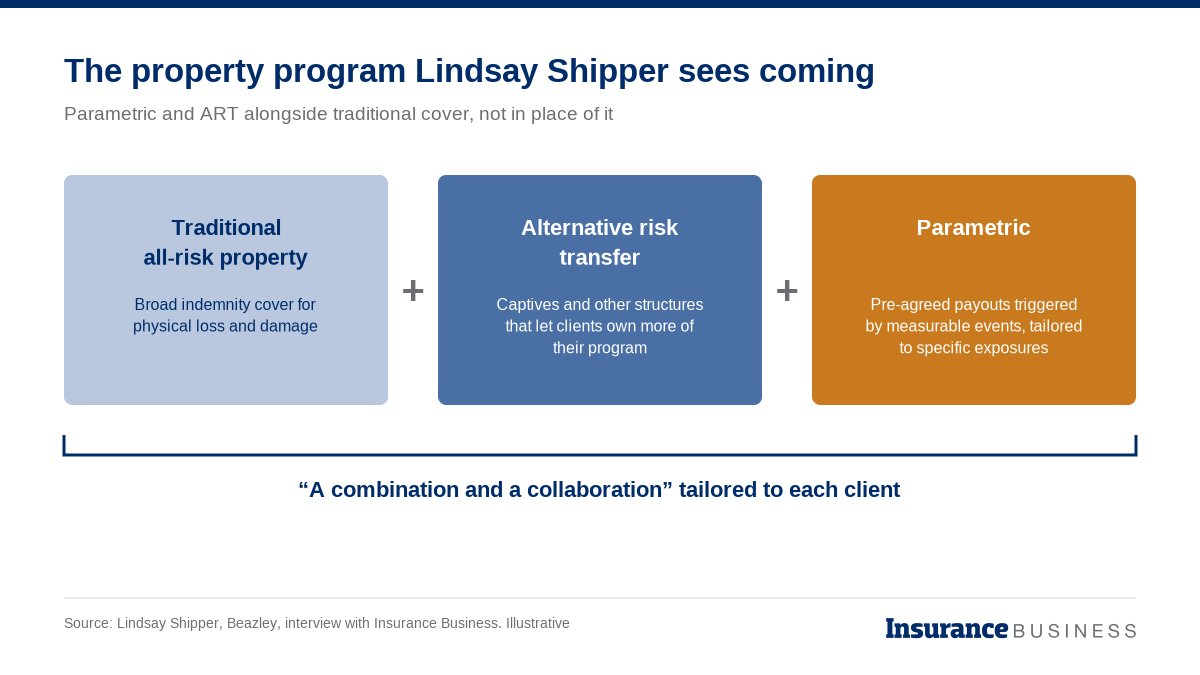
Shipper doesn't, however, see these tools replacing conventional insurance. The future, she said, will be "a combination and a collaboration of traditional all-risk property programs and ART and parametric solutions."
Beazley has been building toward that mix itself. The company says it has trebled the size of its property underwriting since 2022, and it hired Stefan Wunderlich from Swiss Re as head of parametric insurance to build out parametric solutions alongside its traditional property book. It now offers parametric property cover to US clients.
Read next: Gallagher Re on how parametric protection survived a reinsurance market recovery
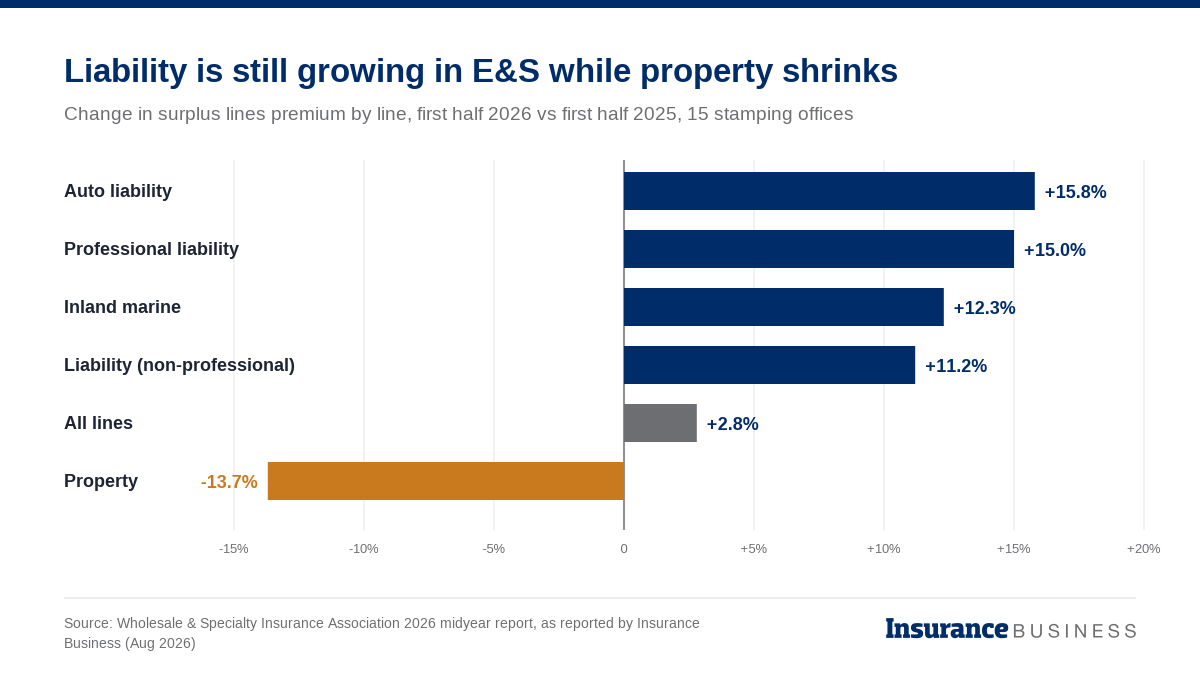
Shipper’s assertion that this isn’t a passing trend also has other data supporting it. If parametric and ART were only a hard-market fix, demand would be fading now. Conventional property cover is getting cheaper: surplus lines property premium fell 13.7% in the first half of 2026, even as the number of property transactions rose 15.2%.
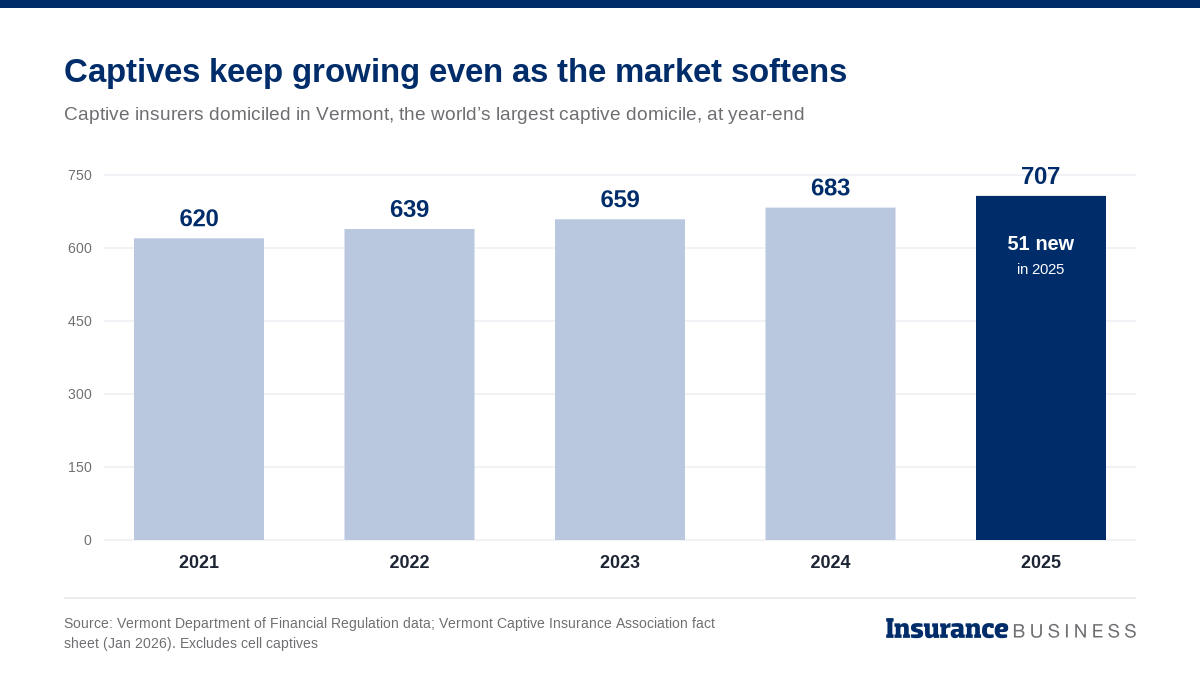
Yet the alternatives keep growing. Captives managed by Marsh wrote $79 billion of premium in 2025, with 118 new formations against 92 the year before. Vermont, the largest captive domicile, licensed 51 new captives in 2025. And parametric reinsurance allocations reached record levels in 2026, even though the traditional reinsurance market was the softest in a decade.
Read next: Captive growth continues in Vermont despite softening market
That is consistent with Shipper's argument. Demand that keeps growing while conventional prices fall suggests buyers are choosing these structures for reasons beyond price: the stability and control she described, and cover shaped around their own exposures.
Read next: Bold Penguin CEO: parametric is 'a good bet' for small commercial