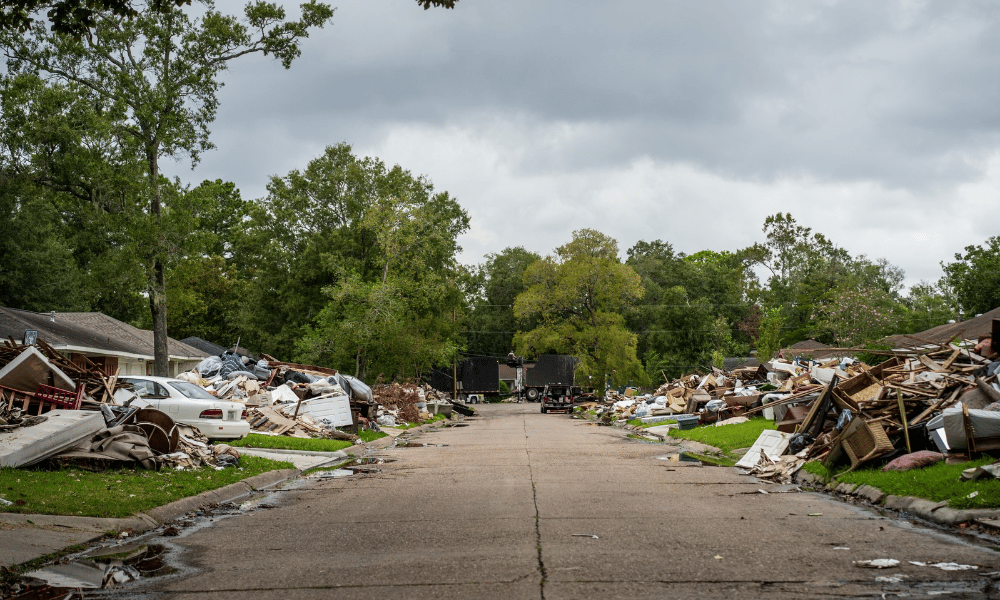
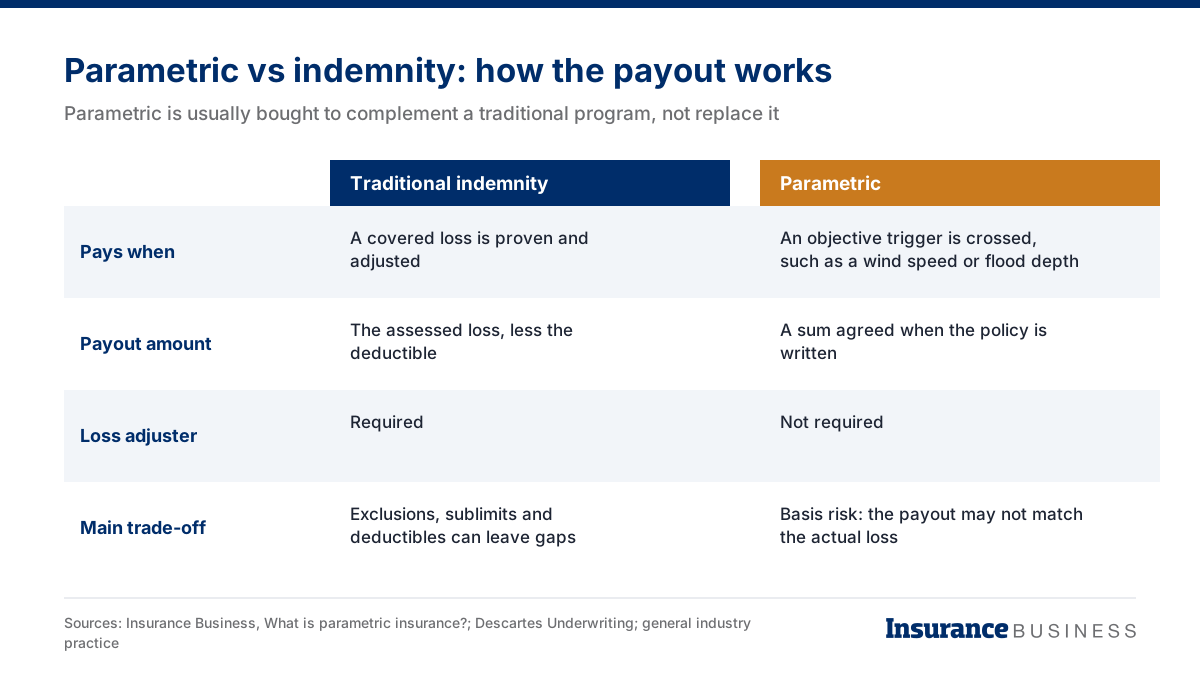
Parametric insurance has long been sold on its simplicity. A pre-agreed sum is paid when a measurable event, such as a wind speed or a flood depth, crosses a set threshold, and no loss adjuster is involved. Austin Roberts thinks brokers are still discovering how much else that structure can do.
"The unique thing about parametric is you can use it in so many different ways," said Roberts, a vice president at Descartes Underwriting, which writes parametric cover for climate, cyber and other emerging risks.
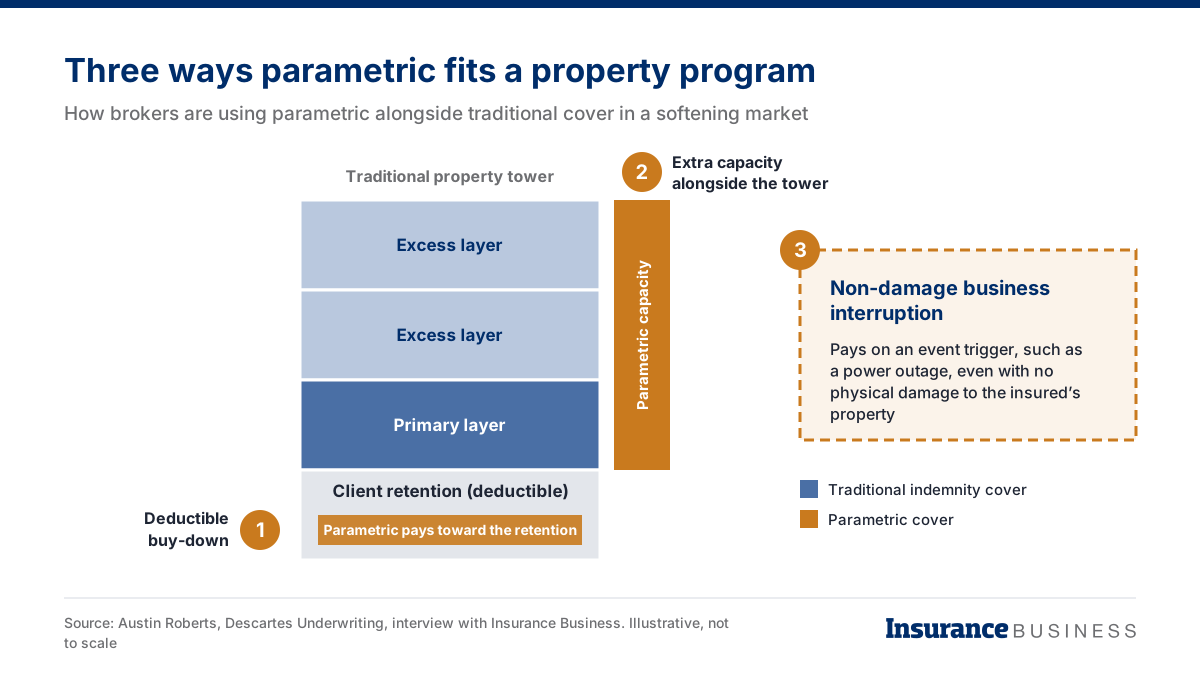
As the market softens, Roberts said, brokers are using it to solve three problems. The first is the deductible: a parametric policy can buy down a large retention the client would otherwise carry. The second is limit, with a parametric layer sitting alongside a property tower as additional capacity. The third is non-damage business interruption, where a business loses income without suffering physical damage of its own, something conventional property forms generally don't respond to.
"These are all three pain points brokers have," he said. "This is another tool in your tool belt." Used well, he added, it can strengthen a client's whole risk management program.
Specialist products have grown up around that third gap. IB's guide to parametric insurance covers the basics for brokers new to the product.
Read next: Gallagher Re on how parametric protection survived a reinsurance market recovery
Demand has held up even as conventional capacity has returned. Parametric reinsurance allocations reached record levels in 2026, even though the traditional reinsurance market was the softest in a decade, and cedants are increasingly building parametric into their programs as a permanent feature.
For retail brokers, Roberts' advice was mostly about timing. The old habit, he said, was to try direct markets first and bring in a wholesaler only if they passed. "Wholesale brings so much value from an expertise standpoint and the market access to the point that the earlier you can get there, the better, to be honest," he said.
Parametric deals show why. Each structure is modeled to a specific client's exposure, and that takes time. "It's tough for us to model some of these accounts in just a day," Roberts said. "We need a few days."
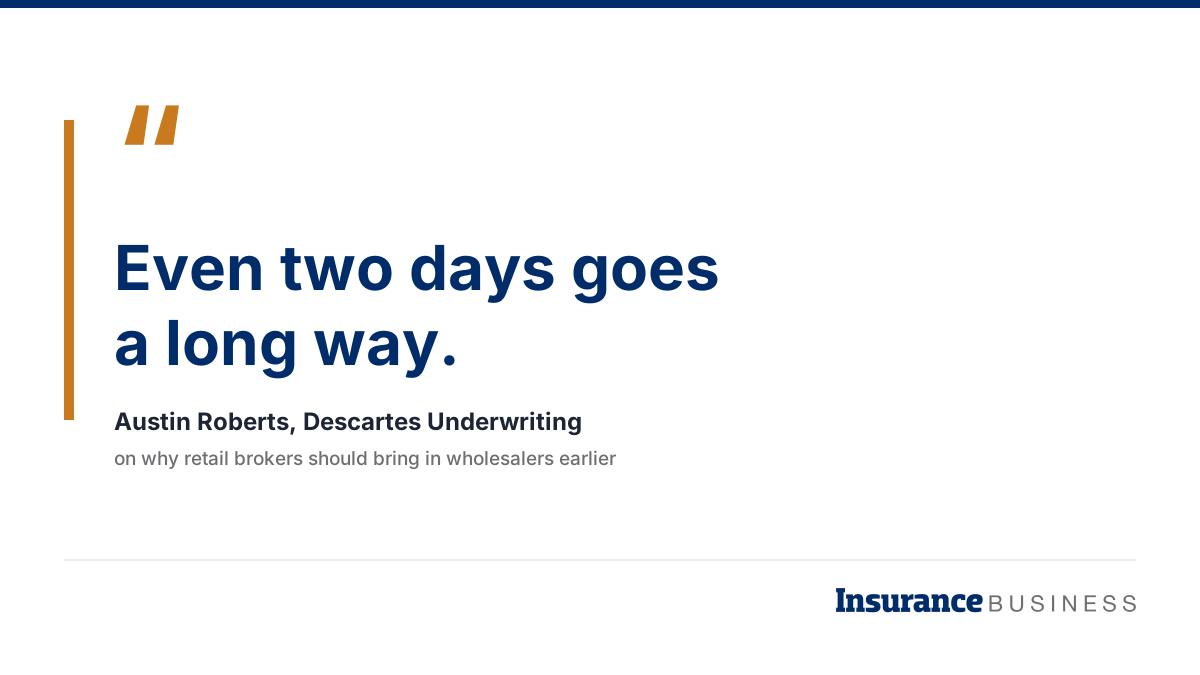
An earlier call also gives the retail broker, the wholesaler and the underwriters room to work through the structure together before a deadline hits. Roberts acknowledged that approaching a wholesaler early isn't always practical, but said "even two days goes a long way."
Swiss Re Corporate Solutions' Caitlin McGrath described a similar pattern in September, saying brokers were considering E&S earlier for accounts that need tailored coverage or a mix of conventional insurance and alternative risk transfer.
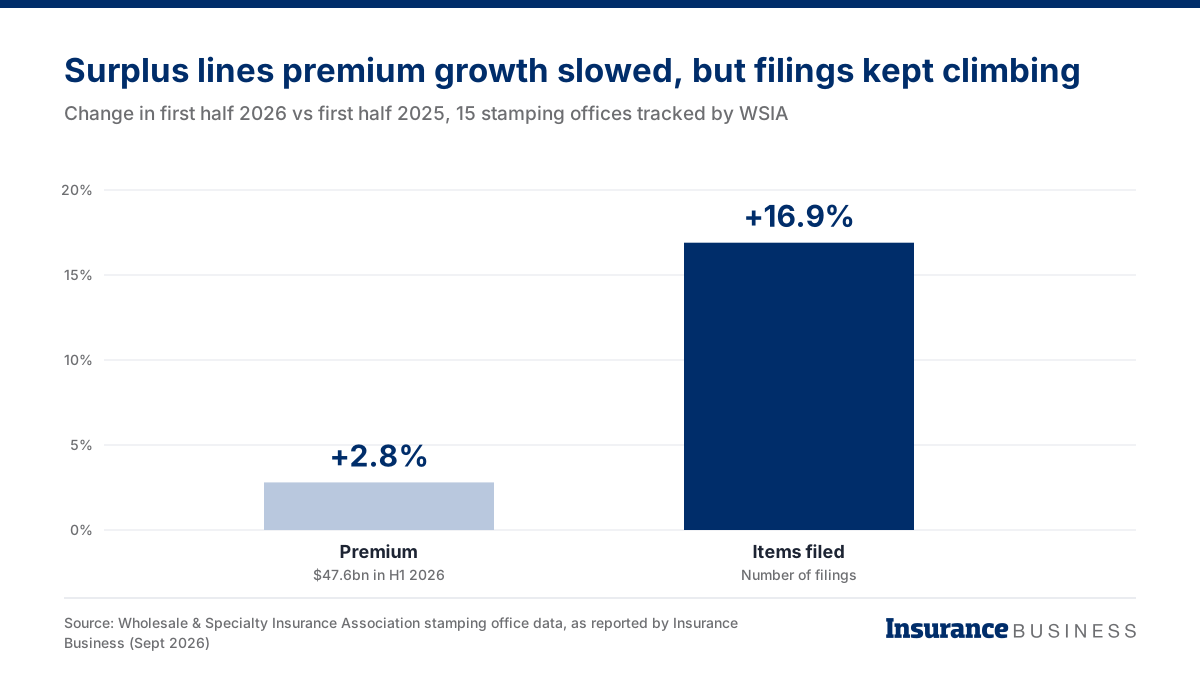
Figures from the stamping offices point in the same direction. The 15 offices tracked by the Wholesale & Specialty Insurance Association recorded $47.6 billion in surplus lines premium in the first half of 2026, up 2.8% on a year earlier. The number of items filed rose 16.9% over the same period. Premium growth is slowing as rates ease, but considerably more business is moving through the channel.
Read next: Brokers need to be extremely careful when changing casualty towers: Hartford E&S leader
Roberts doesn't think the rise of specialist retail brokers leaves wholesalers with less to do. Wholesalers are specializing as well, he said, citing data centers and public entities as two verticals where dedicated practices have formed.
"When you put two heads together, you can come up with some really incredible programs," he said. "The wholesaler is still going to play a big part of it."
Specialist expertise was also the thread running through this year's Top Specialist Wholesale Brokers list, which recognized brokers for placing complex and hard-to-insure risks.
Asked whether the industry is doing enough to develop the next generation of wholesale brokers, Roberts was upbeat. "I'm pretty optimistic on this," he said. "I think we are doing a great job." He said several of the young brokers he works with are exceptionally talented.
The harder problem, in his view, is the size of the pipeline. Roberts entered the business through the risk management and insurance program at Appalachian State University, which let him commit to the industry early. He cited the collegiate insurance fraternity Gamma Iota Sigma and WSIA's internship program, which dates to 1981, as efforts worth continuing. "We just really got to keep it up," he said.
Read next: AI won't replace E&S expertise, says Jose Pagan, as stamping office deepens university ties
The brokers who come through those programs, he said, will need to combine two things. "Insurance is always going to be a relationship business," Roberts said, and the industry's veterans are good at passing that on. Technical expertise, he said, is what will set the next generation apart once those relationship skills are in place.
Read next: Bold Penguin CEO: parametric is 'a good bet' for small commercial