The US commercial property market is softening at a pace that is surprising even seasoned industry specialists, who have pointed to a growing disconnect between falling insurance costs and a risk environment that remains persistently severe.
After years of rate increases and tightening terms, buyers are once again finding abundant capacity, broader coverage, and lower premiums. Yet at the same time, the industry continues to grapple with elevated catastrophe losses and rising secondary peril exposures. The dynamic is raising questions about whether underwriting discipline is eroding too quickly, and if market may be repeating patterns that have historically preceded sharp corrections.
Speaking to Insurance Business, Ed Leibrock (pictured below), head of US corporate property at Munich Re Facultative & Corporate North America, characterized the property market as extremely soft. “In fact, it's sliding a little off a hill,” he said.
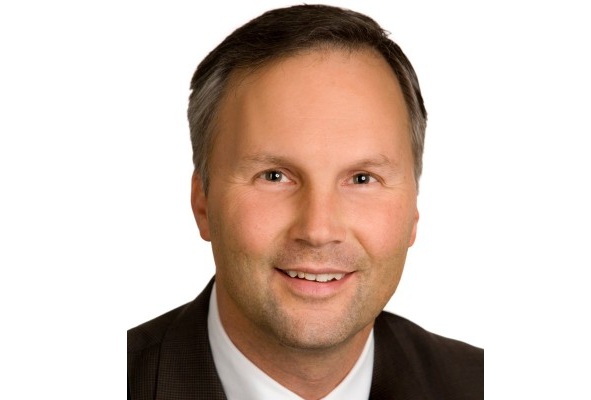
The pace of change has become one of the industry's biggest talking points.
According to the Council of Insurance Agents & Brokers (CIAB), commercial property premiums rose by just 1.9% in Q2 2025, a dramatic drop from an 8.9% increase in Q2 2024. WTW's Commercial Lines Insurance Pricing Survey adds further context: US commercial insurance rates increased 3.8% overall in Q2 2025, continuing a downward trajectory from 5.3% in Q1 2025 and 5.6% in Q4 2024.
According to Leibrock, pricing has already fallen back to "roughly 2019 or 2020 levels." But his concern is not simply that premiums are declining. Historically, property market cycles have followed a familiar pattern: when conditions soften, prices typically fall first. Coverage enhancements, broader policy wording and reduced deductibles tend to emerge later once rates reach a floor. This time, Leibrock argued, both developments are occurring at once.
"We're seeing terms and conditions soften on long-established issues," he noted. “I think some of the underwriting discipline that existed during previous cycles has weakened.
One example is wind deductibles in catastrophe-exposed coastal regions. Deductibles that have historically sat around 5% in Tier 1 counties are increasingly being negotiated down to 2% or 3%, according to Leibrock. While seemingly modest, such changes can significantly increase insurer exposure during a major loss event.
"Not only are prices declining, but the amount of risk being ceded to insurers is increasing significantly," he said. "I don't think many underwriters fully appreciate how much additional risk they're taking on while receiving substantially less premium."
While competition among insurers has intensified, the underlying risk environment has shown little sign of easing. Severe convective storms, wildfires, flooding and other weather-related events continue to generate substantial losses across the industry.
Insured losses from natural catastrophes surpassed the $100 billion mark in 2025 for the sixth consecutive year, according to Swiss Re Institute's December 2025 report, driven primarily by the LA wildfires and severe convective storms. Swiss Re estimated total insured losses in 2025 at $107 billion. Aon's annual Climate and Catastrophe Insight report corroborates this: global insured losses reached $127 billion in 2025, marking the sixth consecutive year exceeding the $100 billion threshold.
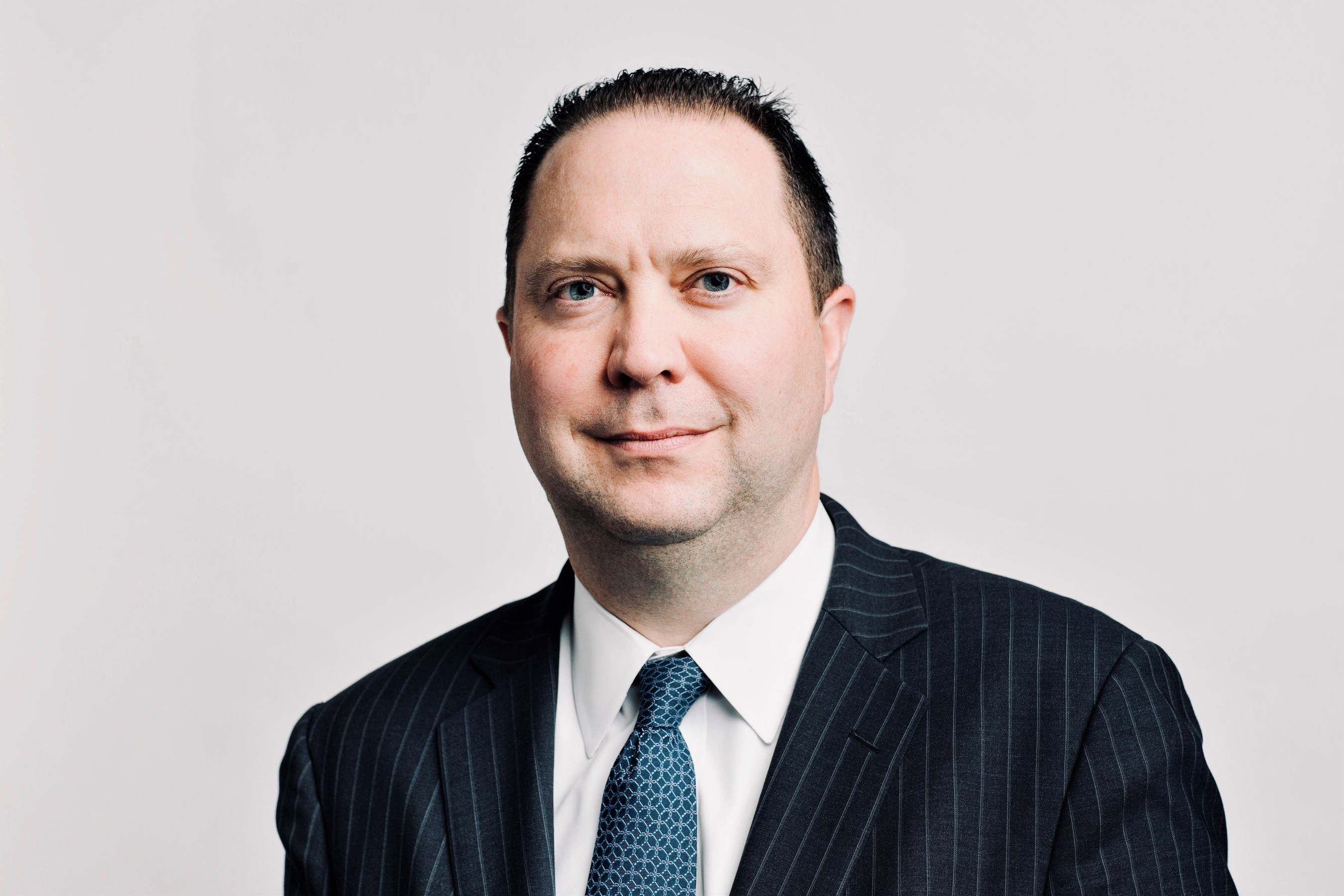
Will Porter (pictured below), head of property US at Swiss Re Corporate Solutions, said the abundance of capacity creates a tension that brokers are increasingly encountering in the marketplace. Clients understandably want to capitalize on improving conditions, but insurers remain under pressure to ensure that pricing remains adequate for the risks they are assuming.
“For companies like us, the focus is on being long-term partners to our customers,” Porter told Insurance Business. “We want the capacity and pricing we provide to be as consistent as possible. Of course, we have to follow what the market is doing and make smart underwriting decisions, but customers are looking for carriers that can offer stability and predictability regardless of market conditions.”
The growing impact of so-called secondary perils has further complicated the picture. Between 2020 and 2024, insured losses from severe convective storms reached nearly $200 billion — roughly two-and-a-half times the losses recorded in the previous five-year period. In 2025 specifically, secondary perils — wildfires, severe convective storms, and floods — accounted for a record 92% of total global natural catastrophe insured losses of $107 billion, according to Swiss Re's March 2026 sigma report.
Porter suggested the term "secondary peril" may no longer accurately reflect their significance. "Historically, they were something of an afterthought," he said. "Today, a disciplined underwriter has to consider them as part of the standard underwriting process from the outset.
“Whether it’s convective storm, hail, or wildfire, the losses over the past five or six years have been substantial. We’re also seeing more development in exposed areas, which increases risk further.
“The good news is that modeling capabilities have improved significantly. Models are an important tool, particularly at a portfolio level, but underwriting still requires judgment. Our job is to take what the models tell us and apply that information to the individual account.”
The market's rapid shift is also influencing policyholder behavior. During hard-market periods, companies often invest heavily in loss-prevention engineering, property valuations and risk-quality improvements to distinguish themselves from competitors and secure more favourable terms. But as premiums fall, some of that urgency can disappear.
"In a soft market, companies tend to do less loss prevention engineering," Leibrock said. "They spend less time updating property values and ensuring data quality. Policy terms broaden, deductibles shrink, and more risk gets transferred back to the insurance market."
The issue may also be particularly acute because many insurance professionals have spent most of their careers operating in hard-market conditions. After several years of rate increases and tightening capacity, a generation of underwriters, brokers and risk managers is now navigating a softening market for the first time.
“Many of them only know hard-market conditions,” said Leibrock. “Now they have to learn how to operate in a soft market.”