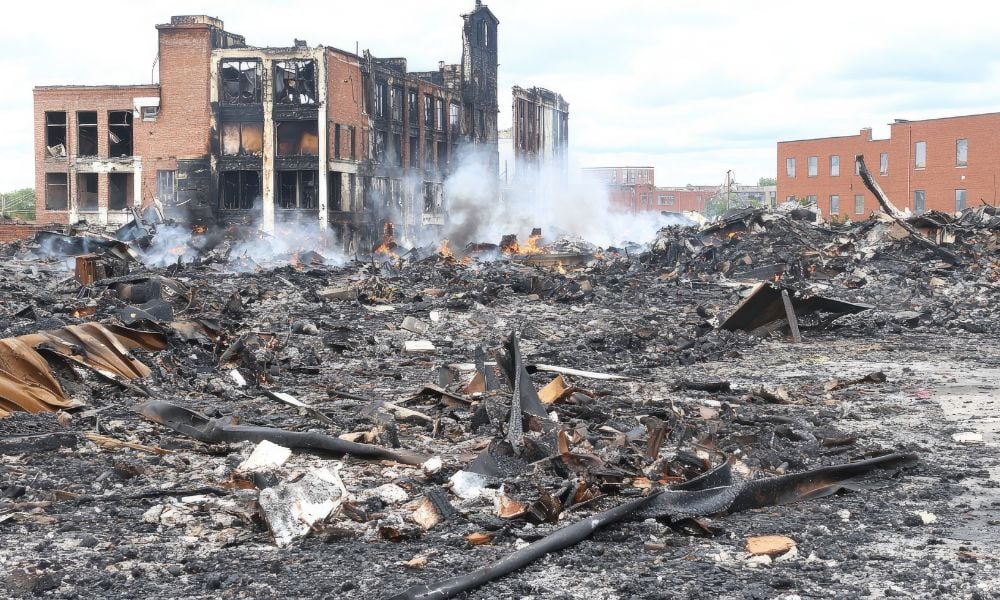
A Michigan trailer maker is suing its insurer, saying it refused to send a fire-loss dispute to appraisal after a roughly $557,000 payout.
Wolverine Trailers, which builds and distributes trailers to dealerships, says a fire destroyed its commercial building in Jackson, Michigan, on or about Aug. 21, 2024, according to a complaint filed July 3, 2026, in the US District Court for the Eastern District of Michigan.
The building was insured by Atlantic Casualty Insurance Company under a commercial property policy. The filing says the policy covered the building for $624,924, business personal property for $48,991, and business income and extra expense for $160,000.
The insurer accepted liability and paid about $557,373.01 across building damage, personal property, debris removal, and funds released under a fire withholding program, the complaint says. But the two sides could not agree on the full amount owed. Wolverine Trailers says its own estimate to restore and rebuild came to $1,197,954.51.
So in May 2026 the company demanded an appraisal, which the policy allows. Appraisal is a built-in shortcut where each side picks an appraiser, the two appraisers pick a neutral umpire, and they settle the dollar figure without a trial.
The policy's appraisal clause, quoted in the complaint, says that if the insurer and policyholder "disagree on the value of the property or the amount of loss, either may make written demand for an appraisal of the loss." Michigan law, MCL 500.2833, backs that up, requiring loss-amount disputes to go to appraisal when either party asks.
Here is where it gets interesting for claims professionals. The complaint says Atlantic Casualty refused to take part. According to the filing, the insurer argued there was no further coverage available because the company "allegedly failed to mitigate its damages when it demolished the Property." The complaint also says the insurer called the fight a coverage dispute - something a court decides - rather than a dispute over the amount and scope of loss, which is what appraisers handle.
That distinction is the whole ballgame. Wolverine Trailers says the City of Jackson ordered it to vacate and demolish the building after declaring it dangerous and unsafe. It also argues that once an insurer admits a loss is covered, Michigan courts have held that sorting out which items were damaged is a job for the appraisers, not the courtroom.
The company wants the court to declare that appraisal is the right venue, to order the insurer to name its appraiser, and to appoint an umpire. It also brings a breach-of-contract claim, seeking the loss amounts an appraisal panel sets plus 12 percent penalty interest under Michigan law for claims not paid on time.
For insurers and claims teams, the case sits on a familiar fault line: when an insurer admits a loss is covered but the parties still disagree on the amount, is that a coverage question for the court or a scope-of-loss question for the appraisers? The complaint puts a failure-to-mitigate argument, tied to a city-ordered demolition, squarely into that mix.
These are allegations that have not been tested, and no court has ruled on the claims.