What happened: GEICO alleges a Brooklyn medical supply company billed more than $733,000 for laser devices and cold therapy units prescribed to fender-bender victims through a kickback-fueled scheme.
Who's involved: GEICO (four entities) as plaintiff; a Brooklyn-based DME supplier and its owner as defendants.
What's at stake: Over $200,000 in damages already paid, more than $450,000 in pending claims GEICO wants voided, plus treble damages under RICO.
Why it matters: The complaint maps a full no-fault DME fraud playbook - photocopied prescriptions, boilerplate forms, clinic kickbacks - that SIU and claims teams across the industry confront daily.
Where it stands: Complaint filed October 7, 2026.
A $3,750 laser therapy device for a minor sprain. The same prescription for virtually every patient. And a company that allegedly started billing insurers nine days after it was incorporated.
Those are the allegations at the center of a federal lawsuit filed by GEICO in the US District Court for the Eastern District of New York on October 7, 2026, targeting a Brooklyn-based durable medical equipment supplier and its owner. The complaint accuses the supplier of exploiting New York's no-fault auto insurance system to bill GEICO more than $733,000 for equipment the filing calls medically unnecessary, prescribed through what it describes as a "fraudulent scheme" built on kickbacks, photocopied prescriptions, and pre-printed boilerplate forms.
GEICO says it has already paid out more than $200,000 on the claims. It wants that money back, a court order voiding more than $450,000 in pending bills, and treble damages under RICO, the federal racketeering statute.
The insurer is a wholly owned subsidiary of Berkshire Hathaway.
According to the complaint, virtually all of the policyholders who received the disputed equipment had been in minor, low-impact collisions - what the filing calls "fender-bender" accidents - and suffered nothing more serious than a sprain or strain. Many never went to a hospital.
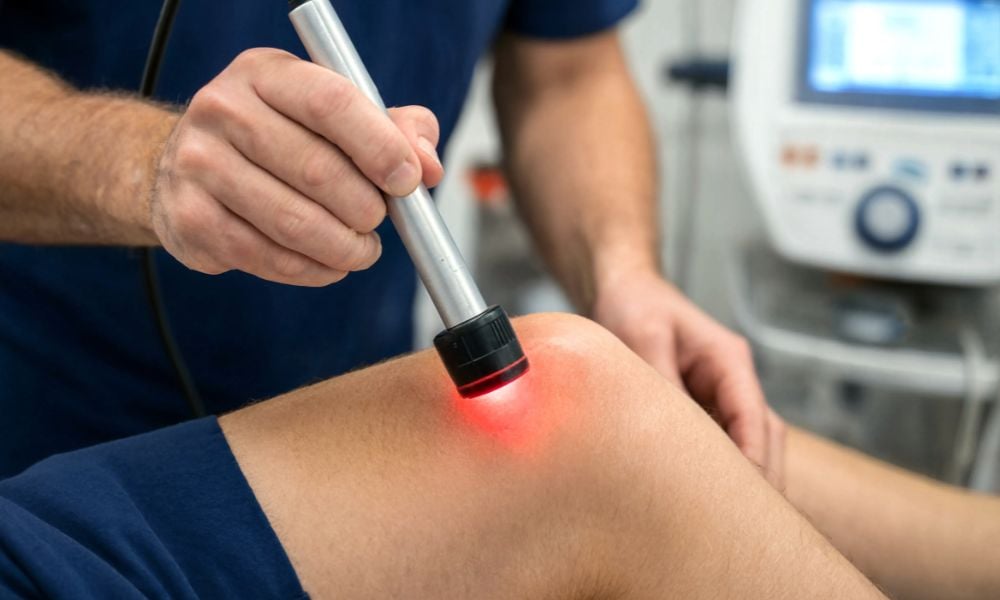
Yet the filing alleges that nearly every one of them was prescribed an almost identical set of equipment: laser therapy devices billed at $3,750 or $3,756 each, and cold compression therapy systems at $3,100 each. All were billed under a catch-all code reserved for items not individually priced in the state's fee schedule.
The complaint says the prescriptions were not driven by medical need but by "predetermined fraudulent protocols" at several clinics across the Bronx, Brooklyn, and Yonkers. Different ages. Different accidents. Different physical conditions. Same equipment.
The filing describes a pipeline in which unlicensed clinic operators - the complaint calls them "Clinic Controllers" - directed prescriptions to the supplier rather than handing them to patients. The complaint alleges this was deliberate: routing prescriptions through a legitimate retail channel would have invited questions about why so many patients were being prescribed the same expensive devices.
Instead, the complaint says, prescriptions were generated on pre-printed template forms, many carrying photocopied physician signatures. GEICO includes side-by-side comparisons of signatures from multiple prescriptions in the filing, alleging they are identical copies. Some prescriptions were allegedly issued on dates the prescribing provider never treated the patient. Others were undated entirely.
One clinic location alone, the complaint says, cycled through more than 110 different healthcare providers - a "revolving door" that the filing attributes to efforts to dodge insurer investigations rather than any genuine change in practice ownership.
There were also significant gaps between when prescriptions were allegedly issued and when equipment showed up. The complaint cites one case where a laser device was prescribed in May 2024 and delivered more than three and a half months later.
The complaint takes aim at both types of equipment. The filing alleges the laser therapy devices are "not FDA cleared or approved" and notes that commercial insurer policy bulletins have described low-level light therapy as "experimental and investigational," with "no legitimate body of evidence" supporting its use for back, neck, or shoulder pain.
On the cold compression therapy systems, the complaint is more direct. The filing states the devices "essentially provide compression and cold therapy to a part of the patient's body, which is not more effective than using a standard ice pack and bandage." The complaint adds that cold therapy is generally most effective in the first few days after an acute injury - yet the devices were routinely prescribed weeks after the accidents.
A $3,100 device that does the same job as an ice pack. That is the allegation.
Beyond medical necessity, the complaint alleges the supplier deliberately inflated what it charged. Under New York's no-fault rules, items not on the state fee schedule can only be reimbursed at the lower of 150% of what the supplier paid for them, or what they cost the general public. The filing alleges the supplier used cheap, low-quality equipment but billed as though it had purchased high-end devices - and never included purchase invoices with its claims, which the complaint says would have exposed the gap.
GEICO brings six legal claims: it wants the court to declare the pending bills void, alleges two counts of federal racketeering (one for running the scheme, one for conspiracy), and adds common-law fraud, unjust enrichment, and aiding and abetting fraud against unnamed co-conspirators. The insurer is seeking a jury trial.
The case maps a fraud pattern that no-fault claims teams and SIU investigators across the industry have been flagging for years: high-volume DME billing tied to clinic networks, cookie-cutter prescriptions, and catch-all billing codes used to inflate charges for low-cost equipment.
The allegations in the complaint have not been tested in court, and no judge has ruled on the merits.