Sewage bacteria in the soil. An internal approval that allegedly vanished. New federal lawsuit targets USAA over a denied slab-leak claim.
Tennessee homeowners are suing USAA and its affiliate, claiming the insurer ran an inadequate investigation of a hidden plumbing leak that damaged their home's foundation - and then shut the claim down when independent testing contradicted its own findings.
The suit was filed September 15, 2026, in the US District Court for the Eastern District of Tennessee. It names USAA Casualty Insurance Company and Garrison Property and Casualty Insurance Company as defendants, alleging breach of contract and bad faith.
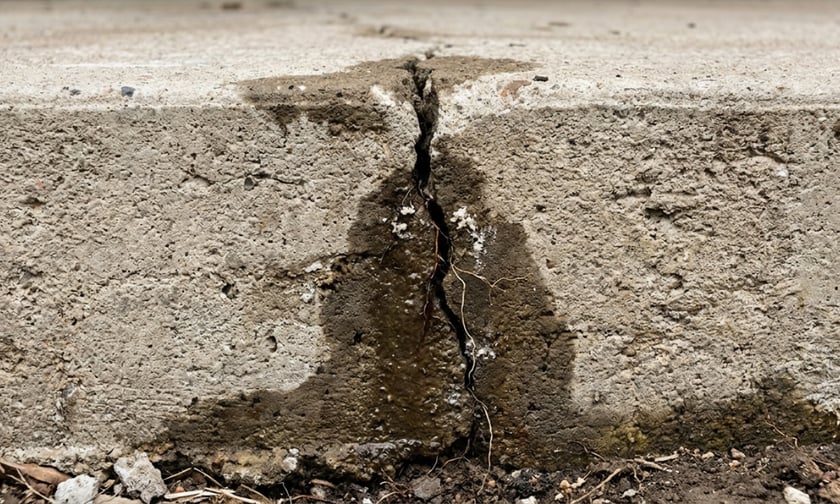
The story, according to the complaint, starts on August 3, 2025. The homeowners noticed water seeping through a crack in an exterior concrete block wall at their Johnson City property. They had no idea where it was coming from. They reported the loss to USAA the next day.
Things moved quickly at first. A plumber confirmed a serious leak on August 5. Two days later, Hometown Plumbing ran a camera down the lines and found an active leak in the kitchen drain beneath the foundation. Photos and video went to USAA.
Then the pace changed.
The filing says USAA sent its own contractor, who determined an engineering review was needed before any repairs could start. The insurer's chosen firm, EFI Global, inspected the property on August 14. The complaint describes that inspection as visual only - no one tested the soil or looked below the surface. Two weeks later, EFI's report came back. Its conclusion: "settling."
The homeowners were not persuaded. The complaint says they had already flagged concerns about EFI's methods and formally asked USAA to approve testing by Foundation Systems Engineering, an independent firm. USAA denied the request.
So the policyholders paid for it themselves. On September 2, 2025, they commissioned FSE's investigation at a cost of $10,382, according to the filing.
FSE's report landed on October 24. It told a very different story. According to the complaint, FSE found that water pressure from a hidden wastewater leak beneath the slab had been building up underground, saturating the soil and destabilizing the foundation. Moisture levels ranged from 10.8% to 64.3%. Sewage bacteria showed up in every sample. The settling theory, the complaint says, had it backwards - the leak came first, and the structural movement followed.
Here is where the timeline gets pointed. Around November 3, 2025, the filing alleges, USAA's own adjuster reviewed FSE's findings, documented them in the claim file, and told the policyholders he was waiting on final managerial sign-off to "make sure everything gets authorized."
Two days later, USAA reversed course. The complaint says the insurer declined to authorize coverage and closed the claim - without conducting further investigation, challenging the engineering findings, or citing any new policy exclusion. The policyholders say they found out on November 11, when the claim showed up as "Closed" in the USAA app.
The complaint also targets how USAA handled additional living expenses, the part of a homeowners policy that covers the extra costs of keeping a household running when damage makes a home partly or fully unlivable. According to the filing, an adjuster gave verbal approval for food and laundry reimbursement during an August 12 site visit. That approval was later revoked. A different adjuster then allegedly tied living-expense payments to future repairs rather than the family's ongoing loss of use. The result, the complaint says: the policyholders kept living in the home without a functional kitchen or laundry and with limited bathroom access.
USAA did transfer $2,900 on September 9, earmarked for food costs during kitchen repairs, according to the complaint. The filing argues that amount did not address the broader living conditions the family was dealing with.
Then there is the adjuster turnover. The complaint describes four different adjusters cycling through the file, with the homeowners alleging they had to re-explain their case each time. One adjuster allegedly called to discuss the EFI report before the policyholders had even received it - despite a written request that the report be sent first.
After multiple unanswered escalation requests, the homeowners reached out through USAA's social media channel, according to the complaint. A manager who got involved allegedly told one of the policyholders she "had to fix [her] home." The homeowner says she refused to be pressured into what the filing calls "piecemeal or premature repairs" while USAA declined to complete a fair investigation.
The suit brings two counts. The first is breach of contract. The second invokes a Tennessee statute that allows a penalty of up to 25% of the covered loss, plus attorney fees, when an insurer refuses a valid claim without reasonable cause. The complaint seeks minimum damages of $87,530: estimated repair costs exceeding $50,000, additional living expenses of at least $5,000, out-of-pocket diagnostic and engineering costs of approximately $12,000, plus consequential damages, punitive damages, and pre-judgment interest.
The policy was a standard homeowners form covering sudden and accidental physical loss, including damage from plumbing discharge. It ran from September 22, 2024, to September 22, 2025, according to the complaint.
One more pressure point: the policy's one-year repair deadline from the August 3, 2025, loss date is approaching, and the policyholders allege USAA has refused to grant an extension despite delays they attribute to the insurer's investigation.
For claims teams and coverage professionals, the case is a reminder that how an insurer investigates a claim - not just whether it ultimately pays - can itself become the centerpiece of a bad faith action.
The allegations in the complaint have not been tested in court, and no judicial determination has been made on the merits.