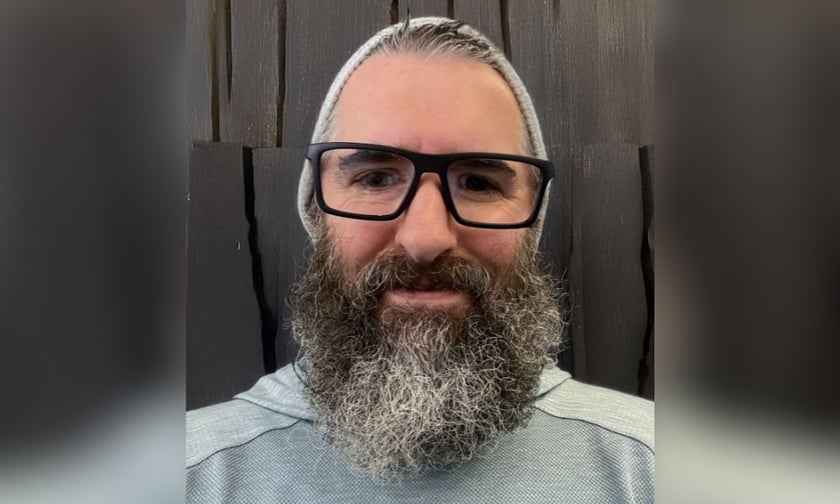
Even as commercial lines growth cools across the US property and casualty (P&C) market, independent agencies that built their books on personal lines are pushing further into commercial business, a shift driven largely by the desire for diversification and growing market opportunity, according to Michael Rabinowitz (pictured), lead product manager at EZLynx a cloud-based management system designed for independent agents.
Rabinowitz pointed to two forces converging on independent agencies at once. Automation is making personal lines rating faster and more commoditized; pressuring agencies to diversify, while small business insurance remains underserved and growing.
"There are multiple dimensions creating the environment for agencies to go after more commercial business," Rabinowitz said. "One is that automation in personal lines is becoming ever more advanced, and that's creating pressure on agencies to diversify their book of business. At the same time, small businesses are underserved and growing, which creates real opportunities."
He said the pandemic accelerated the trend, as commercial business proved more resilient than personal lines during a period of instability,a pattern reflected in a recent report showing independent agents gaining ground as the commercial market softens.
"What we began to see within the EZLynx customer base was that agencies who had been primarily personal lines started exploring commercial, so they could create resilience in their book of business and achieve greater stability," he said. "The advancements in technology are now allowing them to do that more successfully."
Agencies moving into commercial lines aren't following a single playbook, Rabinowitz said. Some concentrate on a niche, such as cyber or contractor risk, while others take on nearly any opportunity that comes through the door.
"There's certainly a notion that being more niche is the way to start, and it makes perfect sense," he said. "A niche approach is appealing because it allows agencies to dive into a particular class and develop internal solutions tailored to that type of business."
"We also see agencies that are more generalist, not pushing away any business that comes through the door," Rabinowitz said. "They'll evaluate each opportunity and determine whether they have the resourcing to be successful."
Commercial submissions have long meant juggling a standardized data form with a maze of carrier-specific portals, a mismatch Rabinowitz said sits at the root of agency frustration, even as digital tool adoption among independent agencies continues to climb.
"The submission process is a patchwork because the data collection is a patchwork," he said. "When you fill out an Acord form, you're engaging with the Acord standard and collecting information based on that. But when you go to a carrier portal, you're dealing with individual carrier requirements for the data needed to generate a rate." The fix, he said, is separating data collection from distribution, so agents aren't re-entering the same information across multiple systems. "The agent stays focused on data collection, and the system handles where it gets distributed to carriers," Rabinowitz said.
Rabinowitz said the biggest challenge to building commercial workflows isn't the technology itself, but the quality of the data feeding it, an issue that is becoming more visible as some brokerages now use AI models to review commercial accounts in minutes rather than days. Agency management systems are often filled with agency-specific shorthand and inconsistent classification codes, which can throw off newer AI tools built to extract information automatically.
"If you don't have the right North American Industry Classification System (NAICS) code to classify a business, and you're using AI tools to extract information based on those codes, you can see exactly where it goes wrong," he said. "A focus on data quality is becoming critically important." He described the current moment as a convergence rather than a single breakthrough. "It's like ingredients, if you miss one, the whole dish may not work out," Rabinowitz said. "It's really a confluence of things coming together."
Making the leap from personal to commercial lines, Rabinowitz said the goal is building confidence through familiar, guided tools, not a wholesale reinvention of how agents work.