Westland Insurance’s chief information officer did not set out to build a career in insurance. Yet after entering the sector by chance, he has become one of its more pragmatic voices on transformation: standardize first, extract value second, and treat AI not as theatre but as a tool for speed, judgement and growth.
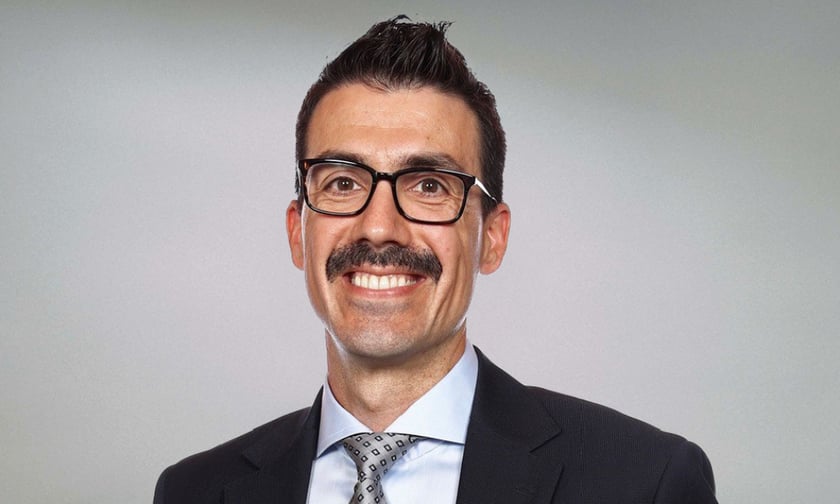
Kanaris Paraskevopoulos (pictured) arrived in insurance by an indirect route. Trained as an electronic systems engineer, he entered the labour market at a difficult moment, when opportunities in his field had thinned amid the decline of Nortel and wider lay-offs in the sector. A work term with Saskatchewan Government Insurance opened an unexpected door, and what began as a one-year role turned into roughly a decade. He said he “fell into insurance somewhat by accident”, but adds that he is “super happy that that’s what happened”.
That first chapter was followed by a move away from the public sector and towards modern software culture. Paraskevopoulos said he had been studying not just the technology of companies such as Netflix and Amazon, but the way they worked. He left SGI for a software-as-a-service business in retail point-of-sale, joining when it was a relatively small operation and leaving after a period of rapid expansion in which the company grew to around 1,000 people and won major enterprise customers including AT&T.
He was then drawn back to SGI as the organization embarked on a transformation programme under a new chief information officer. That return culminated in his own appointment as CIO, with much of his time devoted to delivering the transformation agenda. From there, the move to Westland followed naturally. He already knew the business through its partnership with SGI and had watched its strong growth from a distance before taking the CIO role in July 2025.
By the time Paraskevopoulos joined Westland, the business had already come through an intense phase of acquisition-led growth. It had bought multiple brokerages while simultaneously implementing Acturis as its broker management and policy administration platform. Alongside that, it had put in place a cloud-based data platform built on Databricks. His role, therefore, was to ensure the company now drew full value from the systems it had installed.
The strategic logic is straightforward. Westland first needed national operational consistency: common workflows, standardised processes and reliable data. Only after that foundation was in place could it move on to improving speed of service, broker experience and customer outcomes. Paraskevopoulos described the newer phase as one in which the company can refine, scale and grow, while serving customers more in the manner they prefer.
He regards Acturis and the data platform as important components of Westland’s technology estate, while recognizing there is more to be done. The task now is to connect these systems with other tools in a way that produces measurable business outcomes.
If the first stage of transformation was about standardization, the next is about judgement. Westland is now focused on using its data to shape frontline decisions inside employee workflows: which leads should be handled first, which renewals are most at risk, and where attention is most likely to produce commercial value. Paraskevopoulos is careful to stress that this is not merely a reporting exercise. It is about turning information into action.
This is the point at which his thinking on data and artificial intelligence converges. He explicitly rejects the idea of treating the two separately. In his telling, data is the essential substrate and AI the means of extracting and applying value from it. “I always put AI and data together,” he said, arguing that the pair are effectively inseparable in any serious modern transformation effort.
In a market saturated with grand claims for artificial intelligence, Paraskevopoulos sounds notably restrained. Westland, he said, is still early in its AI journey, but it is already using the technology in several practical settings. One example is email submission processing. Where submissions arrive in inboxes and would previously require manual extraction and re-entry, AI is used to pull out the relevant information, structure it and enable automated submission.
The significance, he argues, lies not chiefly in labour efficiency but in responsiveness. AI, in this sense, is a tool for commercial acceleration. “We really see it as a revenue play,” he said, “it’s really about that speed.”
The company has also rolled out Copilot to a large share of staff for back-office work and data analysis, with plans to broaden and refine that deployment. Yet Paraskevopoulos remains a believer in augmentation rather than wholesale substitution. For now, he sees the strongest use case in a “human in the loop” model, with AI supplying timely data and insight to support employees in real time.
Over time, he expects a more autonomous future, including broader straight-through processing in areas such as underwriting and claims. But he does not describe this as imminent inevitability so much as a trajectory to be managed with care.
Where, then, does he think the real industry shift will occur over the next three to five years? Not merely in better models, cheaper compute or more pervasive copilots, though he expects all of those. Instead, he points to the “orchestration of multiple AI tools” as the likelier inflection point.
This matters because large organizations already run on sprawling stacks of software: HR, finance, telephony, line-of-business systems and more. If each application embeds its own intelligent assistant, the result may be capability without coherence. Paraskevopoulos’s argument is that the real gain will come when those tools are coordinated through a common layer that can automate whole workflows rather than isolated tasks. He goes further still, suggesting that once confidence and maturity are sufficient, some interfaces may disappear from view altogether as routine processes simply continue in the background.
His caution is directed less at the technology than at management habits. In a fast-moving AI market, long project cycles carry a new danger: by the time a firm finishes building something, the market may already provide it natively.
In this cycle, planning too far into the future can be risky. Technology may “leapfrog” the original idea before the project is complete.
For all the emphasis on systems and models, Paraskevopoulos is clear that transformation remains a human problem as much as a technical one. Many Westland employees entered the business through acquisitions and have therefore absorbed several rounds of change: joining a larger organization, moving onto core platforms, and then adapting to standardized workflows. To manage this, Westland has a dedicated change-management team outside IT, designed to help individuals through what he calls the “change curve”.
Broker reaction to change has, he said, been uneven, in part because acquired firms arrived with varying degrees of technological maturity. Still, he believes the benefits of consistent processes and consolidated data are now becoming more visible across the organization.
Asked about the hardest part of the job, Paraskevopoulos does not cite budgets or legacy technology. Instead, he identifies the challenge of sorting among many worthy demands. The central difficulty is sequencing and prioritization: choosing the highest-impact changes at the right time, without diluting effort across too many good ideas.
It is a revealing answer. In many firms, transformation is still discussed as if the principal problem were access to innovation. At Westland, according to Paraskevopoulos, the harder task is disciplined selection: deciding what to do, what not to do, or not to do yet.
For all his evident appetite for systems and strategy, Paraskevopoulos’s life beyond work is less abstract. He and his wife spend much of their time ferrying their twin daughters, who are about to turn 11 and compete in cheerleading. Weekends, in season, are shaped by competitions.
He is also an enthusiastic golfer, a runner and a regular gym-goer. And, perhaps unsurprisingly for a career technologist, he does not entirely leave the subject at the office. At home, he still likes to experiment with new tools, especially AI. As he put it, “I love to tinker with stuff at home.”