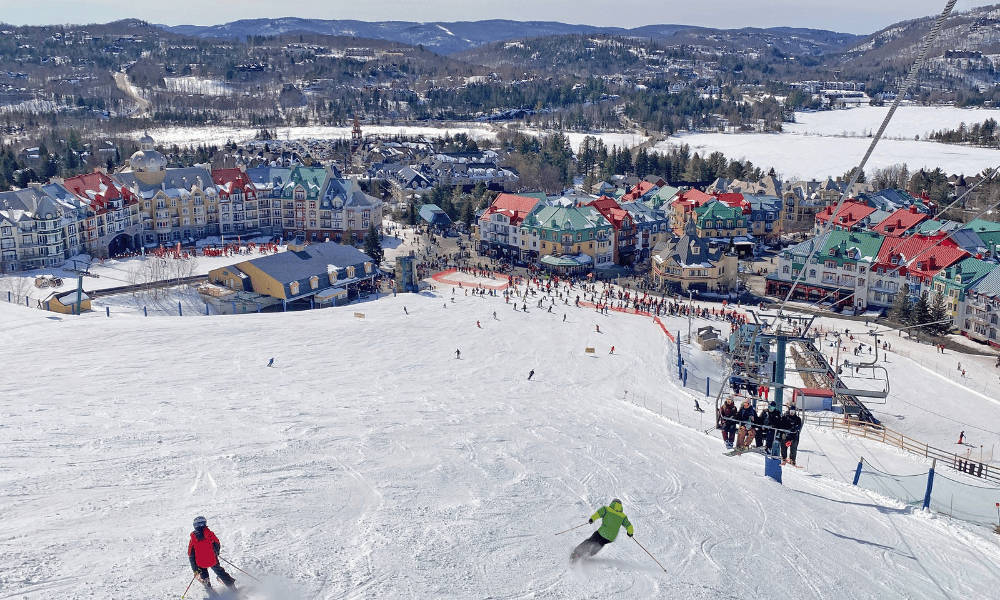
Tremblant and Alpine Canada canceled the women's World Cup giant slaloms set for December 5 and 6 at Mont-Tremblant, Quebec, on November 25, 2026, the second time in three years that a lack of snow has scrapped the event.
In a December 2, 2024 letter to partners, Alpine Canada estimated that the last cancellation would cost it more than $1 million, including lost international broadcast and advertising revenue, domestic partnerships and sponsorship income.
Neither organizer has put a figure on this year's losses or said whether the event carried weather or cancellation cover.
Organizers concluded the course could not meet World Cup quality and safety standards.
"Favorable snowmaking windows have been extremely limited over the past several weeks," event director Nicholas Cogger said.
Cogger told the Canadian Press that a swing of about 1.5 degrees could have made a difference in 2024, but this year organizers would have needed a variance of "north of seven, eight degrees."
The International Ski and Snowboard Federation (FIS) said it was "working on a potential rescheduling" but has named no date or venue. It said the same when the 2024 races were canceled.
Refund arrangements for ticket holders had not been posted on the event website as of November 25.
Tremblant was due to be the fifth stop of the women's season and its third giant slalom venue, after Sölden, Austria, where Paula Moltzan won in late October, and Killington, Vermont. Mikaela Shiffrin races at Killington this weekend for the first time since her crash there two years ago.
In 2024, warm weather hampered snowmaking and left too little snow to race.
When racing resumed in 2025, New Zealand's Alice Robinson and Austria's Julia Scheib won one race each, and Canada's Valérie Grenier finished third in the opener.
Alpine Canada president and chief executive officer Andrew Baker said the federation shares "in the disappointment of the athletes, particularly our Canadian skiers."
Baker said organizers are looking ahead to December 2027, although half the competitions have been canceled since Tremblant returned to the FIS calendar.
FIS chief race director Peter Gerdol said Tremblant remains on the 2027 calendar.
"I have no idea of not coming any more to Tremblant, it's just that we need to talk about it together," he told the Canadian Press.
Cogger ruled out February or March, when snow is less of a concern, because the resort is already busy then. Early December, he said, is "really the best window of opportunity for us."
Both cancellations were caused by a lack of snow rather than damage to property. The 2024 losses Alpine Canada listed included broadcast, advertising, partnership and sponsorship income.
Event cancellation insurance remains underused in Canada, according to Michael McDermott, head of sports, entertainment and contingency at HDI Global Specialty SE Canada. He has said rising climate risks are exposing gaps in event protection and that cancellation cover still lags behind exposure.
Read more: Wildfire smoke tests Canada's event market as cancellation cover lags
Gerdol said the "super" El Niño is causing headaches for skiing across North America's East Coast.
The US Climate Prediction Center's November 12 outlook put the chance of a strong-to-very strong El Niño through January to March 2027 at more than 79%.
Scott St. George of the Willis Research Network has warned flood, drought and energy disruption could alter clients' exposures across properties, suppliers and shipping routes.
"To count on a strong start to the ski season is kind of a risky proposition, even more so moving forward," said Weather Network senior meteorologist Doug Gillham, a recreational alpine skier.
"It's more irregular to have a consistent cold early in the season," he added.
Montreal has gone longer than ever without its first snowfall, past the previous record date of November 23, 2011, according to the Canadian Press.
Severe weather caused more than $2.4 billion in insured damage across the country in 2025, the 10th-costliest year on record, according to the Insurance Bureau of Canada.
Brokers with sports federations, festival organizers, ski resorts and tourism operators can check at onboarding whether early-season and outdoor events carry event cancellation insurance, and whether that cover responds to insufficient snow or adverse weather rather than physical damage alone.
At renewal, Alpine Canada's estimate of more than $1 million in lost income from one canceled weekend in 2024, alongside a more than 79% chance of a strong-to-very strong El Niño through March 2027, gives clients a basis for reviewing sponsorship, broadcast and ticketing exposures.