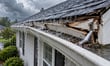
A powerful storm system hit Vancouver Island on November 24, 2026, bringing rainfall, wind, and coastal flooding warnings – and drawing attention to a coverage gap that brokers placing residential property in British Columbia know well.
Environment Canada issued a coastal flooding warning, citing a series of deep low-pressure systems tracking across offshore waters. King tides are coinciding with storm surge and large waves, pushing water levels 20 to 50 centimetres above the highest astronomical tides, according to the agency. Levels are forecast to peak Thursday.
East Vancouver Island, from Nanoose Bay to Fanny Bay, could receive 30 to 60 millimetres of rain by early Wednesday morning. Exposed coastal areas – including Quadra, Hornby, and Denman islands – could see wind gusts reaching 90 km/h, according to Environment Canada. A second storm system is forecast for Wednesday night.
Read more: Flood claims season arrives with BC’s coverage gap intact
Local authorities activated flood operations across several communities. In Courtenay, Puntledge Park, Lewis Park, McPhee Meadows, and Riverway Trail were closed, with sandbags made available at the local firehall. Colwood closed parking areas at Lagoon Beach after high tides breached protective logs. Tofino issued warnings for beaches and exposed shorelines.
Comox Search and Rescue advised the public to avoid rising rivers. B.C. Hydro warned residents to stay clear of the Campbell River and Elk Falls Canyon during increased water releases scheduled from November 24 through December 7, 2026.
For brokers with property clients on the B.C. coast, the storm arrives at a point where the residential flood insurance market has expanded but the coverage gap has not closed.
According to the Insurance Bureau of Canada’s (IBC) The State of the Flood Insurance Market in Canada, published July 2026, approximately 94% of residential properties across Canada are now eligible for overland flood insurance – a product that was largely unavailable before 2015. Take-up has risen from 26% of Canadian households in 2017 to 71% in 2023, with 88% of overland flood policies now costing $300 or less annually.
That still leaves roughly three in 10 homeowners without overland protection. The IBC report also found that the number of homes unable to access overland flood coverage has fallen to approximately 850,000 – a significant reduction, but concentrated almost entirely in the highest-risk areas, including coastal and flood-prone communities now under active warnings
Sewer backup is a separate product with its own take-up shortfall. Both remain optional endorsements, not standard inclusions.
Read more: Flood coverage gap puts pressure on Canada’s broker channel
The IBC report found that roughly 2% of all residential properties account for more than half of Canada’s total potential flood losses. Those properties sit disproportionately in the zones now under weather alerts.
British Columbia’s flood history gives context to what is at stake when storm systems of this scale arrive. The December 2025 atmospheric river caused close to $90 million in insured damage across southern B.C. and parts of Alberta, with the Fraser Valley absorbing the majority of losses, according to an IBC news release published January 16, 2026.
The 2021 benchmark remains significant. The November 2021 atmospheric river produced more than $675 million in insured damage in B.C. – the costliest severe weather event in the province’s history at the time, according to IBC.
“Coming just four years after the devastating 2021 floods, this most recent flood damage is a painful reminder of the need to build BC’s resilience and better protect communities from the new weather reality we face,” said Aaron Sutherland, vice-president, Pacific and Western, IBC, following the December 2025 event.
The Liberal Party pledged $450 million over five years for a national flood insurance program during the April 2025 election campaign, targeting an April 2026 launch. As of mid-2026, IBC stated that no delivery timeline had been confirmed by Public Safety Canada.
“Investing in community resilience and damage prevention is always more cost-effective than paying to rebuild year after year following every disaster,” Sutherland added.