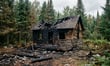
What happened: Ontario's Court of Appeal upheld the dismissal of claims against a mutual insurer and a brokerage over a 2018 hunting camp fire.
Who's involved: Commonwell Mutual Insurance Group and Finnegan Insurance Brokers Ltd.
What's at stake: Over $134,000 in combined costs awarded against the policyholders, on a policy originally worth $55,000.
Why it matters: Bad faith claims need evidence, broker negligence claims need expert testimony, and overreaching in litigation carries real costs consequences.
Where it stands: Decided at the Court of Appeal level, November 5, 2026.
A hunting camp worth roughly $33,000 by appraisal, a fire insurance policy capped at $55,000, and a lawsuit that somehow ended up claiming $10 million. Ontario's Court of Appeal has now closed the book on all of it.
In Jordan v. Commonwell Mutual Insurance Group (2026 ONCA 795), the Court of Appeal for Ontario upheld the dismissal of claims against both Commonwell Mutual Insurance Group and Finnegan Insurance Brokers Ltd. arising from a fire that destroyed a hunting camp in Perth, Ontario, in November 2018. The court also allowed a cross-appeal on costs, replacing the trial judge's $10,000-per-defendant award with substantially higher amounts.
The two joint owners of the property held a cash value fire insurance policy with Commonwell for $55,000. They filed a proof of loss claiming $51,000.
The claim stalled early. An Ontario Provincial Police investigation into the cause of the fire held up the adjustment process. That investigation eventually ended in the policyholders' favour, after which Commonwell triggered the statutory appraisal process under Ontario's Insurance Act - essentially, a formal independent valuation of the loss. An umpire put the cash value of the property at $32,918.26.
The policyholders initially challenged whether the appraisal was binding. By October 2022 - three years into the litigation - they agreed in court that it was. Commonwell paid out the appraised amount. The policyholders then sold the property for $23,000.
That was not the end of it.
The policyholders continued the action, alleging Commonwell had breached the insurance contract and acted in bad faith in adjusting the claim. They alleged the broker had been negligent in failing to advise them that the policy covered only cash value, not replacement cost.
Then, still under Ontario's Simplified Procedure rules - a streamlined process for smaller claims - they filed an amended statement of claim seeking $10 million in damages, limited to $200,000.
One of the policyholders also claimed during questioning at trial that he had reached a $50,000 settlement agreement with Commonwell that the insurer had breached. The trial judge refused to allow the claim to be added so late, since it would have introduced an entirely new claim well past the limitation deadline.
After a three-day trial, the defendants asked the judge to throw the case out at the close of the policyholders' evidence. Roughly 15 months later, the trial judge delivered a one-and-a-half-page decision dismissing the entire action against both defendants.
The Court of Appeal agreed there was nothing to work with.
On the bad faith claim, the policyholders had pointed to delayed phone calls, the pace of the fire investigation, and slow claims processing. The trial judge found that the policyholder's frustration appeared to stem from a belief that the insurer and police suspected arson. There was no evidence of that - and as the appeal court put it, if Commonwell had believed the policyholder set the fire, it would not have paid him anything.
The breach of contract claim was not pursued on appeal. One of the policyholders had admitted at trial that he knew, before the lawsuit was even filed, that he did not have a replacement cost policy.
The broker negligence claim ran into a different wall. While Ontario law recognises that a broker owes a duty of care to a prospective insured, the policyholders never called an expert witness to establish what a reasonably competent broker should have done or how this broker fell short. That gap, the court confirmed, was fatal to the claim. On top of that, the policyholder acknowledged he had never discussed coverage limits with his broker and had renewed the same policy more than once.
A private appraisal valuing the replacement cost at approximately $140,000, which the policyholders tried to rely on at appeal, had already been struck from the trial record with their own counsel's consent.
At trial, the judge had awarded each defendant just $10,000 in costs - a fraction of what they had spent. Commonwell had sought $116,286.80; Finnegan had sought $97,714.39.
The Court of Appeal found that the trial judge had focused too heavily on proportionality while overlooking other important factors, including four days of discoveries, multiple rejected settlement offers, and the basic principle that successful defendants are entitled to reasonable reimbursement of their legal costs. The court noted that experienced counsel for both defendants had charged modest hourly rates, yet the trial-level award had not even covered Commonwell's undisputed out-of-pocket expenses.
The appeal court replaced the costs order: $40,000 plus $11,607.37 in disbursements to Commonwell, and $40,000 plus $2,556.24 in disbursements to Finnegan. On top of that, each defendant was awarded $10,000 for the appeal against the dismissal and another $10,000 for the costs appeal.
All told, the policyholders now face a combined costs bill of over $134,000 - on a property insurance claim where the policy was worth $55,000.
Cases like this are a sharp reminder that bad faith allegations against an insurer require actual evidence to survive, that broker negligence claims in Ontario will not get past the starting line without expert testimony on the standard of care, and that years of escalating litigation on a modest property claim can produce a costs bill that dwarfs the original dispute.