Aviation insurers are recalculating how much a single passenger death could cost them, with higher liability assumptions feeding through into capacity and pricing at airline renewals.
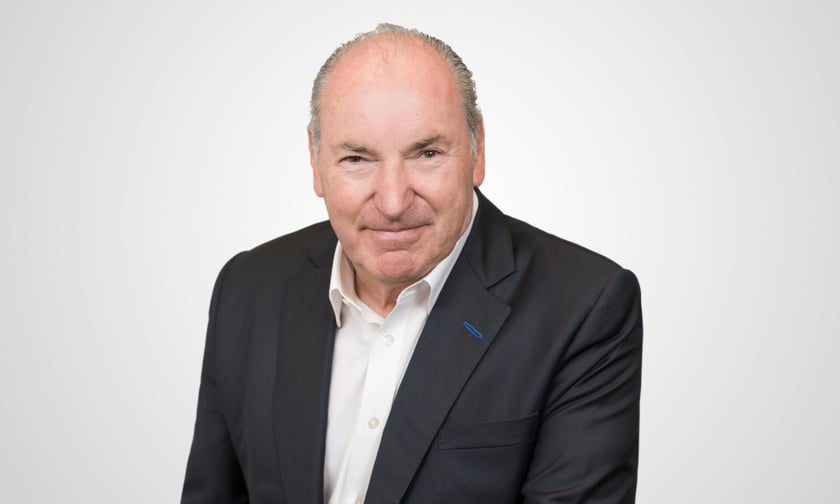
According to Nigel Weyman (pictured), global executive - aerospace at Gallagher in London, the shift reflects growing recognition among underwriters that liability awards, particularly in the US, can be considerably higher than previously assumed under the Montreal Convention's liability framework for international carriage by air.
"The main driver of what is affecting the judgment of insurers is the recognition that liability awards are increasing disproportionately to what they had imagined," Weyman said.
Brokers calculate a probable maximum loss, or PML, for clients by considering factors including where an aircraft is based, where it flies and the nationality profile of its passengers, before applying an assumed value to each life.
"Because of the recent losses that we had at the end of last year and during last year, it has made underwriters much more aware that US liability awards are much higher than they had been accounting for in that PML computation," Weyman said.
Where insurers were once working from an average figure for US Liabilities of $4m to $5 million per life, Weyman said many are now applying a figure closer to $10 million. On a 300-seat widebody aircraft, that could turn a scenario previously modelled as a $1 billion liability loss into one approaching $2 billion – "maybe bigger than the limit in theory", he added.
That recalibration has been particularly visible in US airline renewals.
"There were some very significant renewals," Weyman said. "We don't do any of the major ones, but I could hear the wailing from the street that they must have been pretty big increases."
The effect extends beyond US-based carriers to airlines flying into the country, although the nationality mix of passengers can affect the exposure.
"There is a wariness of overexposing themselves," Weyman said, with insurers potentially deciding they "may not support you with the same size line that you traditionally expect of an individual market."
Those individual capacity decisions can alter the supply-demand balance across the class and put upward pressure on rates – one of the eight attributes typically associated with a hard insurance market. They also follow a difficult period for aviation insurers, with recent analysis describing the market as facing its biggest test since the Ukraine war began.
"We've had a very, very bad year in 2025 and it followed a few bad years," Weyman said.
He pointed to the fatal UPS cargo aircraft crash in Louisville, Kentucky, which killed three crew members and 11 people on the ground, according to the National Transportation Safety Board's investigative update, as an example of how losses can extend well beyond the aircraft itself.
The resulting business interruption and clean-up costs were, in Weyman's words, "far greater than you might have scoped in a scenario."
With no single market leader able to dictate how the wider aviation market responds, Weyman said individual insurers are making their own decisions about how to approach the renewal season.
Weyman said underwriting judgment can have a greater impact on terms and conditions than on price, where insurers can take markedly different positions.
He pointed to the historical treatment of low-cost carriers as an example. Some underwriters initially viewed airlines operating as many as eight take-offs and landings a day as inherently riskier than carriers flying a single long-haul rotation, only for loss statistics to later suggest short-haul flying was, if anything, marginally safer.
"Those underwriters that were originally demanding higher terms had to change their minds," Weyman said, as insurers taking a tougher position risked pricing themselves out of the business.
The example is a reminder that underwriting assumptions are not fixed: when the loss data challenged them, insurers had to adjust their view.
The immediate challenge is dealing with the assumptions being applied today. Higher aviation rates are not simply the result of a difficult loss year. Insurers are also reassessing their maximum exposure, with consequences for both the capacity available and the price airlines ultimately pay.