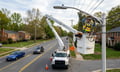
Connecticut Insurance Department Commissioner Josh Hershman joined builders, roofing professionals and industry leaders last week to promote the FORTIFIED Roof program, a construction standard developed by the Insurance Institute for Business and Home Safety for improving homes' resistance to high winds and severe storm damage. The event, hosted by the Home Builders and Remodelers Association of the Connecticut River Region, introduced local builders, remodelers and roofing professionals to FORTIFIED certification requirements. Connecticut has not adopted mandatory FORTIFIED discounts - and that gap between state endorsement and insurance incentive is the analytically significant detail for brokers and homeowners considering the investment.
A University of Alabama study, commissioned by the Alabama Department of Insurance, estimated insurers would have saved $105.6 million in losses if every home in Hurricane Sally's 2020 Gulf Shores path had met the FORTIFIED Roof standard, rising to $116.1 million under the higher FORTIFIED Gold standard. That is the loss reduction case for the program. The insurance incentive case is what Alabama and Kentucky have built alongside it: Alabama, the program's longest-running adopter with more than 53,000 designations, pairs FORTIFIED with mandated wind mitigation discounts, while Kentucky enacted mandatory premium discounts for FORTIFIED-designated homes under legislation effective March 2026. Both states have created a direct financial return for homeowners that makes the upfront certification cost commercially rational. Connecticut has not.
State rules in Connecticut permit insurers to offer windstorm or hail deductibles in place of a standard deductible but do not require them. Mitigation credits some carriers already offer for qualifying features remain voluntary and vary by insurer. The CID event introduced the FORTIFIED standard to Connecticut builders without any accompanying discount mandate. Builder awareness without premium incentive may generate some uptake among homeowners who understand the loss reduction and resale value case - FORTIFIED-designated homes sell for roughly 7% more than comparable non-designated homes per Southern Economic Journal research - but the adoption trajectory in Alabama and Kentucky suggests that mandatory discount legislation is what drives volume rather than state endorsement alone.
IBHS announced on May 20, 2026 that FORTIFIED had surpassed 100,000 designations nationwide across 34 states, with more than 20,000 new designations issued in 2025 alone - a year-over-year increase of more than 20% - and the program on track to reach 120,000 by end of 2026. IBHS has identified expansion beyond established coastal states as a 2026 priority, giving the Connecticut initiative its specific geographic context as an inland state where FORTIFIED adoption has historically been lower.
Hershman said FORTIFIED standards offer homeowners, builders and communities a framework for strengthening properties against the weather challenges Connecticut faces. George Bradner, assistant deputy commissioner and director of the CID's Property and Casualty Division, said proactive mitigation was essential as severe weather becomes more frequent and more damaging.
For brokers advising Connecticut homeowners on roof replacement decisions, there is now a state-endorsed standard to reference - but no guaranteed premium discount attached to it. Until Connecticut moves from voluntary credits to mandatory discounts, the financial case for FORTIFIED certification rests on resale value and potential carrier-specific mitigation credits rather than the consistent premium reduction that Alabama and Kentucky homeowners can count on.