Photo: Collection of the U.S. House of Representatives
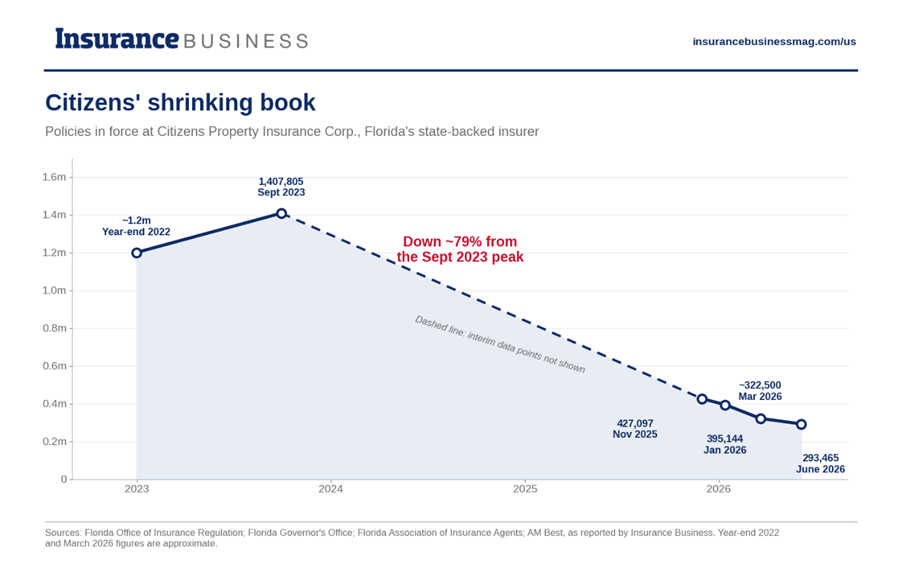
Florida's property insurance market has had an unusually calm couple of years. Citizens is shrinking, reinsurance is getting cheaper and litigation is falling. Now the race for governor has put a much more radical question in front of voters: should private insurers keep covering the wind at all?
That is the core of the fight between Democratic nominee David Jolly and Republican nominee U.S. Rep. Byron Donalds ahead of the Nov. 3, 2026 general election. Jolly wants to move hurricane and wind coverage out of private homeowners policies and into a state-backed fund.
Donalds calls that a government takeover, and his campaign has put a price on it. A TV ad that began airing Sept. 8 says the plan would cost every Florida family $1,000 a year and push up home, auto and renters premiums.
A fact-check by PolitiFact published with WLRN found that the ad takes a real number and stretches it. The research behind it never looked at Jolly's plan. It examined a 2024 Florida House proposal, and the $1,000 figure comes from one scenario in which Floridians would temporarily pay emergency fees to Citizens after a catastrophic storm drained the insurer's reserves.
Jolly's plan builds on an institution most Florida insurance professionals already depend on. The Florida Hurricane Catastrophe Fund was set up after Hurricane Andrew, which NOAA estimates destroyed more than 50,000 homes and caused roughly $26 billion in damage. The fund reimburses residential property insurers for part of their hurricane losses, and authorized property insurers are required to participate, with limited exceptions.
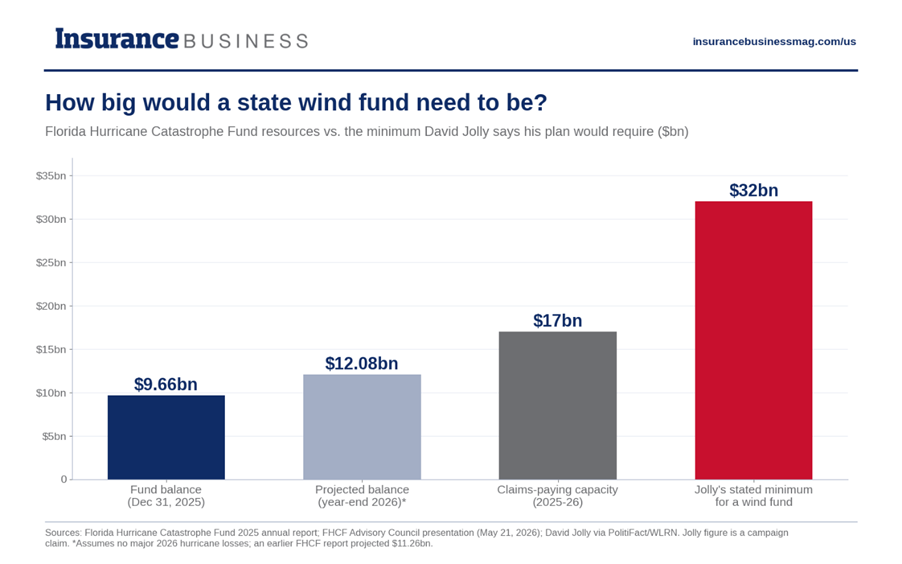
At the end of 2025, it had about $9.66 billion on hand, 138 participating insurers and an estimated $17 billion in claims-paying capacity against $3.6 trillion in exposure.
Jolly would turn that reinsurance backstop into the primary insurer for wind. He says the fund would need at least $32 billion to get started. He has not published detailed mechanics. He told PolitiFact that homeowners would not have to buy a separate wind policy and that private carriers could still be hired to underwrite and handle claims. Flood coverage would stay separate.
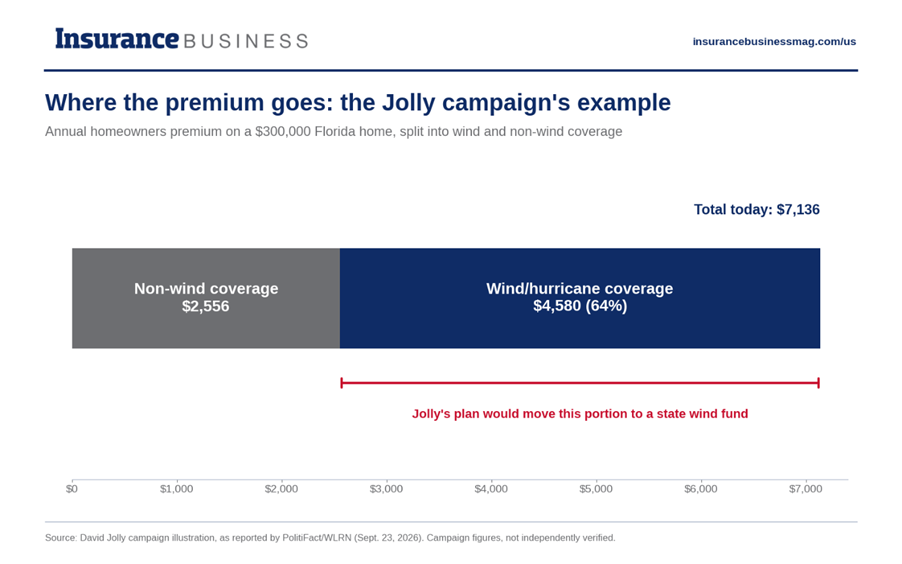
His campaign's example is a $300,000 home with a $7,136 annual premium. Take out the wind component and the bill falls to about $2,556, a cut of roughly 64%. Jolly has also been direct about his view of the current setup. On his campaign website he describes the cat fund as "a bailout for insurers" because its payments go to carriers rather than to homeowners.
The specialists PolitiFact interviewed agreed that taking wind out of private policies would lower premiums at first. They doubted the savings would be as large as Jolly claims, and several said his plan might shift costs to other people rather than reduce them.
Gabriel Carrillo, program director at the University of Central Florida's Center for Risk Management and Insurance Education, said the fund would save money by removing private insurers' profit margins. It would still have claims-handling and operating costs, though. He also warned that public programs tend to underprice risk, because raising rates after heavy losses runs into political resistance. He said he doubted a government fund could do the job "cheaper and more efficiently than a widely diversified industry."
Catastrophe modeler Karen Clark made a more basic point. Florida carries about 60% of U.S. hurricane risk because of where it sits and how much coastal property it has, and no new funding structure changes that geography.
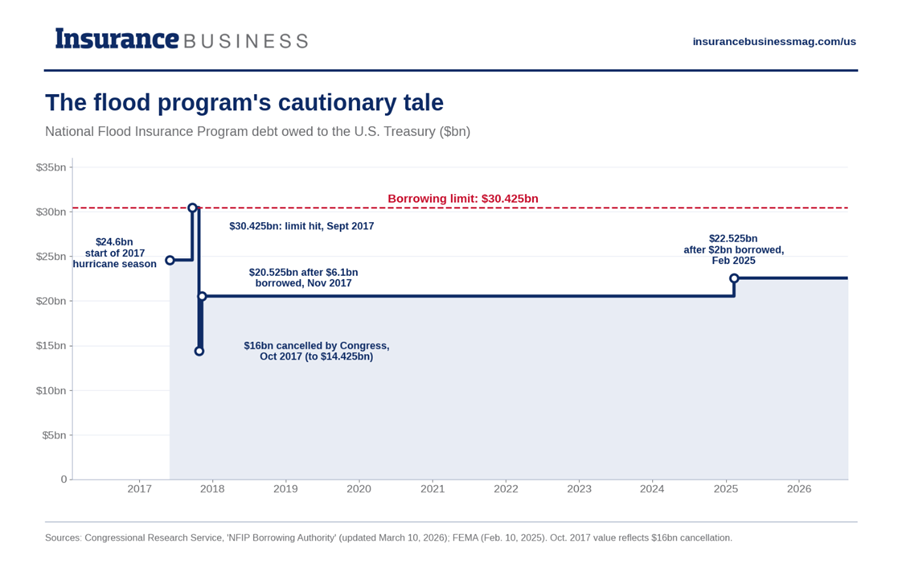
The closest precedent does not help Jolly's case. According to the Congressional Research Service, the National Flood Insurance Program owes the Treasury $22.525 billion. That is after $16 billion of its debt was cancelled in October 2017 so it could pay claims from Hurricanes Harvey, Irma and Maria. FEMA last borrowed in February 2025.
Agents know the "hurricane tax" idea well, even if their clients don't. Under Florida law, public insurance entities such as Citizens and the cat fund can levy emergency assessments if a catastrophe wipes out their reserves. Those charges can be added to almost every property and casualty policy in the state, including auto, renters and commercial. Policyholders are legally required to pay them, which is why critics describe them as a tax.
The FSU study, prepared for the Legislature's Office of Program Policy Analysis and Government Accountability, found some real benefits to having one state entity cover wind. Coverage and pricing would be more uniform, the main cause of insurer insolvencies would be removed, and more carriers might be willing to write non-wind risks. The downside is that the whole state's wind exposure would sit in one entity, a single point of failure that could spread costs across nearly every policyholder. The study has not been released to the public.
Donalds has made that statewide exposure a central campaign message, arguing that everyone pays after a storm no matter which part of Florida it hits. Jolly responds that the study relies on current assessment rules, which he would change. He also says his fund would buy reinsurance, as any large risk-bearing entity does.
Read next: Florida hurricane could cause $300bn in insured losses, Swiss Re warns
That reinsurance promise is where many industry observers disagree most strongly. Several experts questioned whether global reinsurers would take on an entire state's wind exposure, and at what price. Jeff Brandes, a former Republican state senator who founded the Florida Policy Project, said a single $100 billion storm is possible, and that the goal should be spreading risk around, "not put it in one place."
Florida's private carriers already lean heavily on reinsurance. AM Best found the state's top 10 active composite companies ran average ceded reinsurance leverage of 562% in 2025, against a 55% average for US personal property composites. The market is currently favorable: property-catastrophe rates fell 15% to 20% across many layers at the June renewal, and Citizens placed its 2026 risk transfer program at about 30% below 2025 levels. Swiss Re, however, has cautioned that the lack of a major Florida landfall since Ian reflects favorable variability rather than a structural reduction in risk.
Read next: Florida clears two carriers to absorb 40,000 Citizens policies
Donalds wants to keep private insurers at the center of the market and continue the tort reforms of 2022 and 2023, which state regulators say are working.
Florida's share of national homeowners insurance lawsuits fell from 79% in 2020 to 41% in 2025, and Citizens reported 293,465 policies in force as of June 5, down from roughly 1.2 million at year-end 2022. The state-backed insurer also delivered an 8.7% average rate cut to policyholders this year.
Donalds's centerpiece is an Insurer Scorecard. His campaign describes it as a "first step" toward accountability and says it would be backed by legislation standardizing how carriers report claim denial rates and payment times. Critics point out that the state's regulator already runs a rate comparison tool.
Read next: Florida regulators approve transfer of 90,000 policies from Citizens to private insurers
For carriers, the Jolly plan would remove the largest and most volatile part of the Florida homeowners premium from their books. That would reshape underwriting, reinsurance purchasing and the business case for the many newer Florida-focused insurers that have entered the market since the reforms.
Agents would face the job of explaining yet another restructured policy. Voters are paying attention: Insurify polling found 71% of Floridians think elections affect their insurance costs, and 49% reported a premium increase in the past year.
Whoever wins, the change would not come quickly. Jolly told PolitiFact that if a final version of his plan is shown to lower consumer costs, he would probably take it to voters as a ballot initiative.