Property claims heading into 2027 face a dual challenge: finding the people and resources to turn that payment into a completed repair.
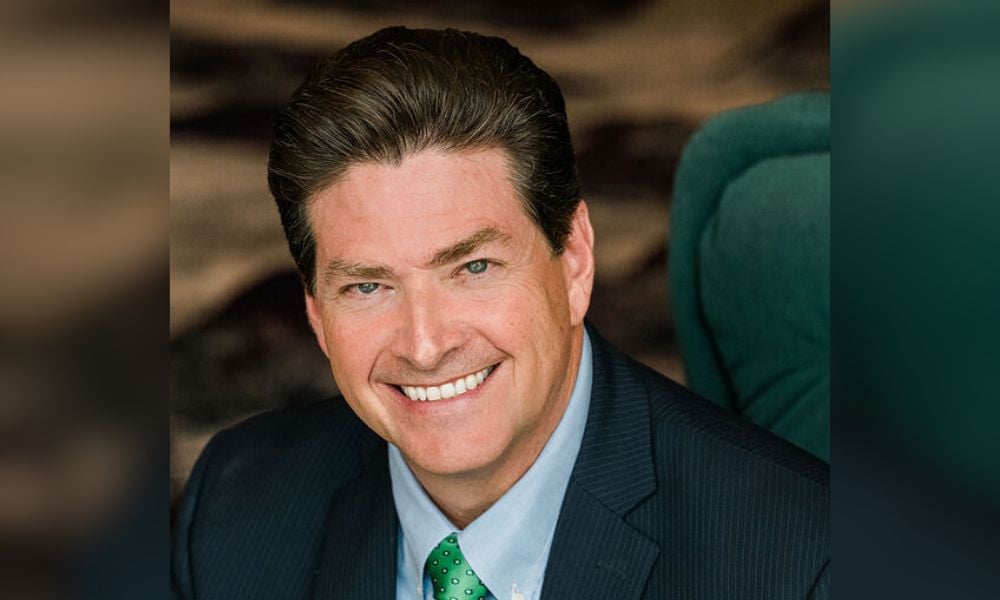
Labor shortages across adjusting and construction, increasingly complex contractor economics and higher policyholder expectations will remain central pressures, according to Lance Malcolm (pictured), president of US Network Solutions at Crawford & Company.
Those pressures can reach into broker-client relationships when repairs stall or communication breaks down.
“Over the last 10 years, policyholders’ expectations have elevated exponentially,” Malcolm told Insurance Business. “The experience that (repair contractors) deliver for that policyholder translates back to that insurance carrier and potentially back to that broker as well.”
Recent US data shows progress in the claims experience, alongside persistent constraints on the workforce needed to deliver it. J.D. Power’s 2026 US Property Claims Satisfaction Study found that homeowners’ repairs took an average of 29.6 days, down 2.8 days from the previous year. The average time before final payment fell 3.4 days to 40.7 days.
But improvements in average service do not eliminate the strain that can emerge when repair demand surges. Malcolm sees a continuing challenge in balancing speed, workmanship and accurate estimates with economics that work for insurers, policyholders and contractors.
In a workforce survey released in September by the Associated General Contractors of America and NCCER, 42% of respondents said shortages of their own or subcontractors’ workers had delayed projects.
Among firms with hourly craft openings, 88% said those positions were as hard or harder to fill than a year earlier. The survey covers construction broadly, rather than insurance restoration specifically, but underscores the hiring environment in which repair contractors operate.
Claims employers also face an ongoing need to replace departing staff. The Bureau of Labor Statistics projects about 21,600 openings annually across claims adjusters, appraisers, examiners and investigators over 2025–2035, despite a projected 6% decline in overall employment. Those openings are expected to arise from workers changing occupations or leaving the labor force.
Read more: The next catastrophe capacity crunch may be adjusters, not insurance
Malcolm said attracting people into both claims and the trades remains difficult. At the same time, the costs of operating a contracting business extend beyond wages and building materials.
Rising fuel prices are “hugely impactful,” he stressed: “It’s trucks that the crews ride in to go to the jobs. It’s fuel that runs the generators that put temp power into a structure.”
He also identified safety and insurance pressures, an aging workforce and economic uncertainty as issues shaping contractor viability. The challenge is maintaining service standards while ensuring the businesses doing the repairs can operate sustainably.
A major catastrophe can magnify each of those pressures, exposing the limits of a response plan built around resources that may become unavailable.
Malcolm pointed to Florida’s 2004 hurricane season, when successive storms stretched adjusting capacity. “By the time we got to (Hurricane) Ivan, there were no more independent adjusters,” he said.
His argument is that claims operations need several ways to handle losses, with the flexibility to redirect work when one becomes overwhelmed. Those options can include field adjusters, desk handling, inspection services, policyholder self-service and managed repair networks.
Complex losses may require an adjuster on site, while simpler claims could be handled using photographs or other documentation. A contractor network, such as Crawford's Contractor Connection, can provide another route for estimating damage and carrying out repairs.
But even a prepared network cannot avoid every bottleneck. Communication between stakeholders becomes essential when a delay requires claims teams to change their approach. Malcolm urged carriers and claims providers need to keep brokers informed when resource shortages disrupt the response, so they can support their clients.
“Be transparent, share what’s happening,” he said.” I see more brokers with a claims department now where they’re working with their policyholders too. But you’ve got to communicate with them.”