The US commercial insurance market is softening, capacity is plentiful and admitted carriers are competing for business they previously avoided. Yet demand for excess and surplus lines coverage continues to grow.
US surplus lines direct premium written reached $143.2 billion in 2025, up 10.4%, according to AM Best, marking an eighth consecutive year of double-digit growth for the overall market.
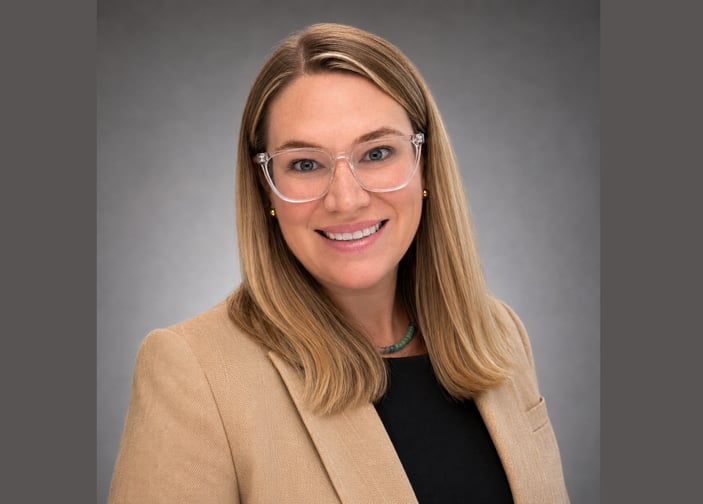
Caitlin McGrath (pictured), who will become Swiss Re Corporate Solutions’ head of E&S US on September 21, said the flow of business into the channel is increasingly tied to the risks companies face rather than hard-market capacity shortages alone.
“The risks businesses face are becoming more complex, whether that’s natural catastrophe, supply chain disruption, the evolving US litigation environment, emerging technologies or broader economic uncertainty,” McGrath told Insurance Business. “At the same time, even in a market where capacity is generally plentiful, it remains more selective around certain exposures, particularly natural catastrophe, high-hazard property and areas where values and concentrations are growing quickly.”
This selectivity is helping keep complex accounts in E&S even as admitted insurers regain appetite elsewhere. The channel’s freedom over forms and rates also allows underwriters to respond more quickly when an exposure changes faster than standardized products can accommodate.
“The wholesale and specialty broker market has also become increasingly sophisticated, helping bring complex risks to the right underwriting solutions,” McGrath said. “So even as conditions in parts of the broader market soften, we’re still seeing strong demand for E&S.”
Brokers are also considering the E&S channel earlier when a client’s exposures require tailored coverage, specialist claims expertise or a structure that combines conventional insurance with alternative risk transfer. “That’s one reason E&S is becoming a more deliberate part of insurance programs, with brokers and clients considering it earlier in the process and using it more strategically,” noted McGrath.
The pace of growth is moderating. US-domiciled surplus lines insurers generated $105.9 billion in premium during 2025, an increase of 8.9%, ending their seven-year run of double-digit gains.
More recent data shows that the number of risks entering the channel is still rising rapidly. The 15 state stamping offices tracked by the Wholesale & Specialty Insurance Association (WSIA) recorded $47.6 billion in surplus lines premium during the first half of 2026, up 2.8% from the same period last year. Item counts increased 16.9%.
The figures appear to show a market where heavier competition and rate pressure are slowing premium growth while placement activity continues expanding. The stamping offices process approximately 64% of national surplus lines premium, making their data a broad indicator of demand across the sector.
In commercial property, capacity and pricing have improved considerably for accounts with favorable loss histories and well-protected assets, but insurers remain cautious around severe convective storm, wildfire and flood exposure. Large values, difficult occupancies and concentrated portfolios can also require specialist underwriting regardless of the direction of the broader market.
“Property remains a significant growth opportunity for us, particularly in areas where complexity, catastrophe exposure or concentration require specialist underwriting,” McGrath said. “Even in a softer market, there is attractive business to pursue if we remain disciplined around risk selection, pricing and aggregation.”
The surplus lines market has also become more deeply embedded in commercial placement.
E&S carriers wrote more than $51 billion in general liability premium during 2025, representing 39% of the entire P&C industry’s general liability volume, AM Best data showed. Surplus lines’ share of commercial insurance premium has risen from 7.1% in 2000 to 27.5%.
Litigation trends and rising claim severity continue to support E&S demand in general liability, commercial auto and professional lines. Elsewhere, AI, cyber and data privacy are creating exposures that established policy forms may not address clearly.
Property and liability risks are also increasingly connected. Supply chain concentration can turn a single disruption into losses across multiple companies, while material shortages and higher repair costs can extend business interruption periods and expose insurance-to-value gaps.
“We are also seeing professional liability exposures evolve as technology changes how businesses operate and the US legal environment continues to develop,” McGrath said. “We are also seeing larger and more costly recall and contamination events as supply chains become increasingly disrupted and concentrated, with more companies relying on the same large suppliers.”
The sustained growth of E&S has attracted carriers and MGAs that are relatively new to the US wholesale market. According to AM Best, supply had begun to outweigh demand during the 18 months leading into mid-2026, giving policyholders greater negotiating power. It revised its outlook for the surplus lines segment from positive to stable in November 2025 as premium growth and rates moderated. McGrath noted that that while competition broadens choice, particularly on risks viewed as attractive, brokers should be conscious of the durability of capacity.
“There is abundant capital, but not all capital is equal,” McGrath said. “New capacity can be very competitive, particularly when market conditions are attractive, but not all capacity has been tested through a full cycle.”