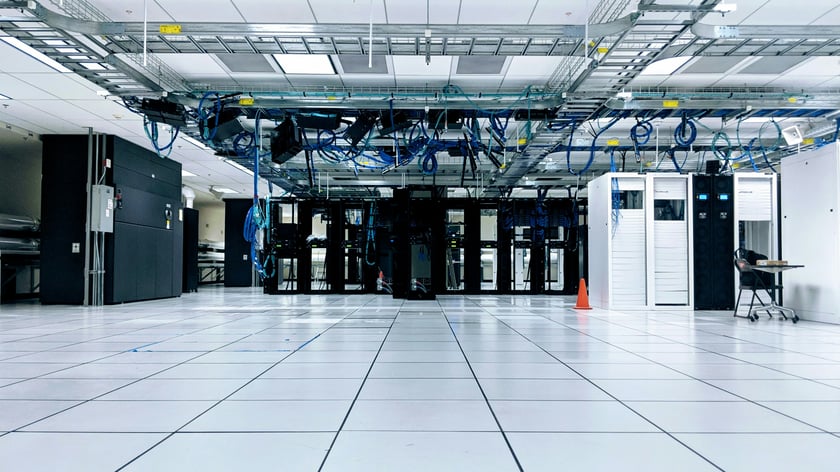
Annualized US data center construction spending topped $50 billion for the first time in April, based on US Census Bureau figures. The projects behind that number are not the commercial builds that once dominated construction insurance portfolios. A single hyperscale campus now carries risks spanning construction, power infrastructure, supply chain, cyber, and surety in a single project, and total insurable values have reached $30 billion or more at the largest sites.
Alliant Insurance Services has formalized an integrated risk advisory practice for this risk profile. The firm draws on experience across hundreds of digital infrastructure projects, a claim it makes based on its own portfolio data and has not independently verified.
The placement challenge for hyperscale data centers is structural. A builders risk policy addresses physical loss during construction but leaves uncovered the power grid dependencies that determine whether a project completes on schedule. Transformer delivery timelines now exceed 12 months, and GPU supply chains face geopolitical constraints that stretch traditional builders risk and business interruption assumptions.
Those exposures interact. A supply chain delay pushing construction into a more active severe weather season can compound losses in ways a conventional policy does not capture. The coverage gap has begun to affect project financing directly. Moody's noted in a recent analysis that investors, including Blackstone, were reported to have passed on data center debt opportunities in March because of insufficient insurance.
AM Best, meanwhile, confirmed the structural nature of the problem in a June report. "The required insurance coverage is currently beyond what the traditional property/casualty industry has previously experienced," said associate director David Blades.
Alliant's framework treats risk transfer as one component of a broader exposure analysis. The assessment covers site design, power grid dependencies and supply chain concentrations before determining which risks should be mitigated, retained, contractually transferred, or insured. Michael Cusack, president of Alliant P&C, said the firm's historical project and loss data allows it to "identify and prioritize those exposures before they affect project performance."
Alliant's construction risk capabilities are backed by experience in power, utility, and energy infrastructure. That pairing reflects how data center risk has evolved. Limited grid availability has pushed larger developers to build dedicated power generation into their projects. Alliant says it has brokered programs for some of the nation's largest cogeneration and combined-cycle energy infrastructure projects.
The convergence of data center and energy risk is a recognized placement challenge. Aon expanded its Data Center Lifecycle Program to $5 billion in July and is developing a companion program for the power generation facilities being built alongside data centers. Placing either component without accounting for the other risks misaligning coverage where power delivery obligations intersect with construction timelines.
The builders risk handoff compounds the problem. Phased hyperscale campuses bring individual data halls online while construction continues elsewhere on the same site. A loss crossing both areas can trigger coverage disputes between carriers. Liberty Mutual's newly formed North America construction team is among those developing transitional policy structures.
Alliant's practice spans construction, power and energy infrastructure, cyber and surety, among other specialty lines. The formalization under a single advisory framework reflects where client demand is concentrating as projects grow too large and too interconnected for conventional single-line placement.