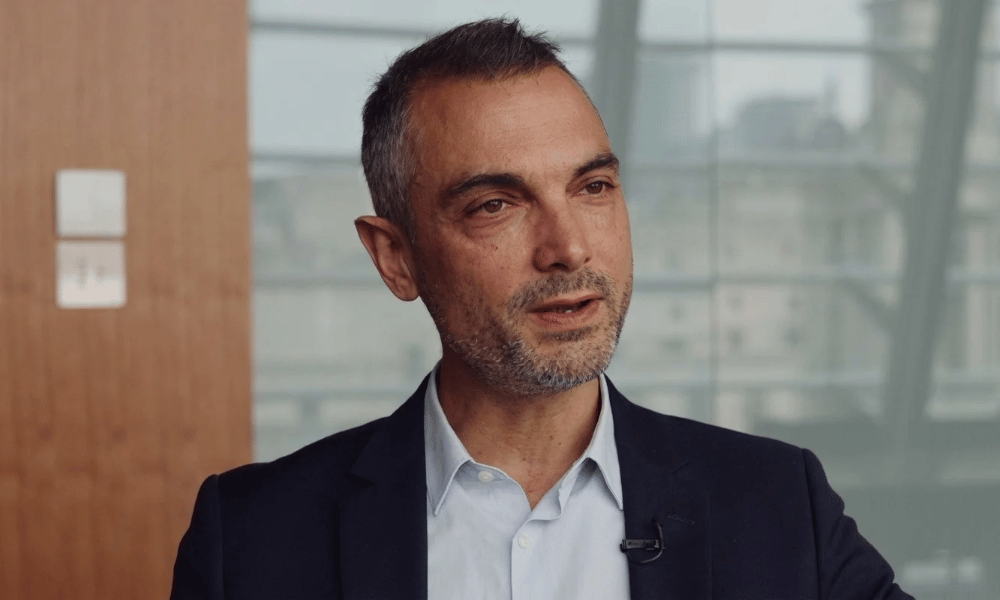
Brokers can find capacity for parametric insurance. The harder sell is getting clients to pay for coverage tied to a preset trigger, especially when they’re used to policies that pay based on assessed losses, according to Gallagher Re’s Antoine Bavandi (pictured).
Bavandi, the reinsurance broker’s global head of public sector, parametric and climate resilience solutions, told Insurance Business that there is more expertise to structure the coverage than there was five years ago, and buyers are more familiar with how it works.
“To me, the key bottleneck remains affordability and the cultural shift from indemnity to parametric,” he said.
Gallagher Re recently structured and placed a UN insurance backstop, led by Liberty Mutual, that can release up to US$40 million for aid before disasters strike. It pays when the UN’s Central Emergency Response Fund cumulatively allocates more than US$61.5 million to early action during the policy period. The broker is also working on what Bavandi described as a highly innovative sovereign flood program, though he declined to give details.
Read more: Liberty Mutual leads UN insurance backstop that pays for aid before disasters hit
The most immediate opportunity lies where technology can now price risk with confidence and conventional reinsurance is retreating.
Bavandi sees an opening in the Midwest, where some traditional markets are moving away from layers exposed to frequent severe convective storms. A payout triggered by hailstone size, for example, could help a property client fund a larger deductible. Brokers can test that trigger against past claims to see how often it would have responded at the insured sites.
"Where traditional insurance is walking away or is moving up, there is definitely opportunity for parametric capital to step in," Bavandi said. "Most of the time in these sophisticated, mature markets, we're looking at complementary use of parametric."
The second growth area is the protection gap in developing countries, where government programs make parametric cover far more feasible.
The World Bank’s 2018 Pacific Alliance catastrophe bond, which Bavandi worked on, provided $1.36 billion in earthquake protection for Chile, Colombia, Mexico and Peru. Jamaica’s World Bank-backed cover paid out the full $150 million after Hurricane Melissa in 2025. Jamaica's cover was tested last year, when Hurricane Melissa triggered a full $150 million catastrophe bond payout under its World Bank program.
Read more: Jamaica's $150 million payout rekindles parametric concerns, but ILS market holds firm
"Many government programs are now either buying parametric insurance directly for the first time, like for emergency response funding or public infrastructure, or moving some of their indemnity programs to parametric," Bavandi said. "The numbers remain small, but it's much bigger than what we saw in the early days, 15 or 20 years ago."
Flood remains the gap. It’s also the top area of demand among buyers in developing countries, according to Bavandi.
The challenge with designing parametric cover for this peril is that heavy rain upstream can flood a town that saw little rain itself. The depth and extent of flooding can vary sharply within the same area. Brokers can look at river gauges or satellite maps of inundation, then test how well those readings track past losses where the buyer needs protection. A mismatch between the payout and the loss, known as basis risk, can leave a government short of cash when it needs to respond.
“Flood is extremely granular, and you cannot rely on excess precipitation alone,” Bavandi noted.
Beyond natural catastrophes, however, parametric demand is uneven. Bavandi said cyber demand is concentrated in North America and parts of Europe, with more interest from sophisticated private buyers.
One area where there could be scope is conflict data in designing cover for political violence and terrorism. Bavandi pointed to Armed Conflict Location & Event Data (ACLED), which records incidents around the world. “We are thinking of using some of those data sources, including for humanitarian response financing,” he said.
Bavandi also sees demand for funding that keeps public services running after a disaster. He cited the Philippines as an early adopter for critical infrastructure. For governments with tight budgets, that gives brokers a practical starting point for working out how much coverage to buy. The immediate cost of getting an essential service back online can differ from the eventual repair bill.
“Because we know that when the system is down, there are a number of cascading effects that you want to prevent from happening,” Bavandi said.