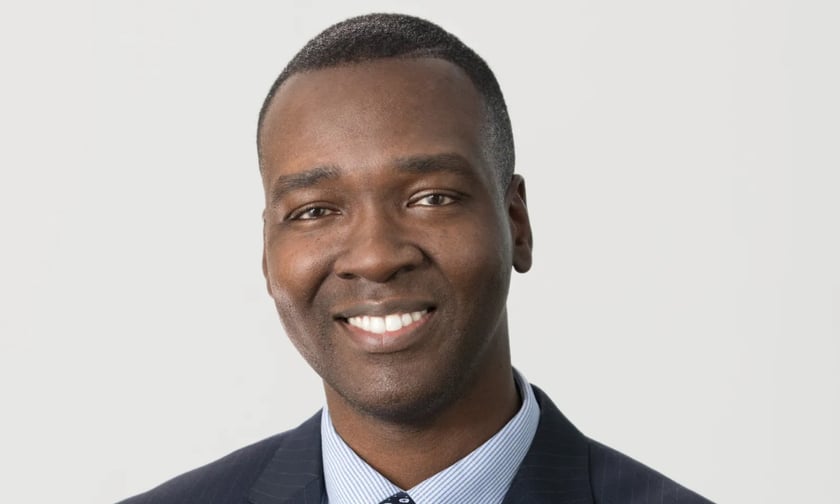
Centene Corporation has appointed Bradley Bolivar (pictured) as chief information officer, effective August 31.
Bolivar joins from Fannie Mae, where he served as CIO leading enterprise technology strategy across application development, infrastructure, cybersecurity, data and artificial intelligence, and brings nearly three decades of technology leadership spanning financial services, media and consulting, including a prior stint at Warner Bros. Entertainment. He succeeds Brian LeClaire, who plans to retire by the end of October.
Centene CEO Sarah London framed the hire around how central technology has become to the insurer's operating model.
"We are entering a new era where data, technology and AI are not just business enablers, but strategic capabilities that shape how we operate, innovate and create value. Brad's proven ability to solve complex technology challenges will position Centene to deliver simpler, better health experiences and improved outcomes for the nation's most underserved populations," London said.
Bolivar's appointment comes as Centene works through the aftermath of a difficult 2025, when the company posted a $6.67 billion net loss driven largely by inadequate government reimbursement rates against rising medical costs. The company has shown real recovery momentum since, raising full-year 2026 adjusted earnings guidance twice, most recently to above $4.80 per share after a strong second quarter.
But the underlying dynamics remain genuinely mixed: Medicaid, Centene's largest book of business and roughly half its total membership, is now expected to see full-year membership attrition of 8% to 9%, up from an earlier estimate of about 6%, even as the composite rate per member has improved to roughly 5%. In effect, Centene is being paid more per Medicaid member on a book shrinking faster than management expected three months ago, a split that puts real pressure on how efficiently the company can operate as its highest-margin members potentially churn out alongside less profitable ones.
That's the specific operating environment Bolivar inherits, and it's also precisely the kind of problem his background at Fannie Mae was built around.
At Fannie Mae, Bolivar accelerated enterprise modernization and expanded AI and automation specifically to improve operational performance at scale, at an organization managing enormous transaction volumes with thin, tightly regulated margins, a structural similarity to Centene's Medicaid and Medicare business that isn't obvious at first glance but maps closely onto the operational efficiency challenge Centene is now navigating.
Bolivar's own remarks pointed directly at that opportunity.
"Healthcare is undergoing rapid change, creating an opportunity to reimagine how technology, data and innovation can improve experiences and drive better outcomes," Bolivar said, adding that he looked forward to building on the foundation already in place.
Centene's own Q2 earnings commentary specifically credited AI-enabled cost-management initiatives as contributing to its recent margin improvements, suggesting the company already sees technology investment as a lever in its recovery rather than a background function, a framing that gives Bolivar's mandate more immediate weight than a typical CIO transition.
For an industry watching how major Medicaid managed care organizations respond to a period of rate volatility and membership churn following pandemic-era eligibility redeterminations, Centene's decision to recruit CIO leadership from outside healthcare entirely, from a government-sponsored mortgage enterprise managing its own scale and automation challenges, signals that the company sees its next efficiency gains coming from operational technology discipline honed elsewhere rather than healthcare-specific experience alone.
Competitors and industry observers are likely to watch closely whether that outside perspective translates into measurable medical cost ratio improvement over the next several quarters, given how directly Centene's own recovery narrative now depends on using technology to manage a book of business that's getting smaller and, for now, better reimbursed at the same time.