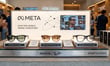
Smart glasses are creating a fast-moving sexual misconduct exposure for schools, healthcare providers and other organizations, with discreet recording capabilities raising questions about supervision, privacy and where claims may land across insurance programs.
The devices can resemble ordinary eyewear while capturing images, video and audio, making their use far less apparent than a smartphone camera.
“Smart glasses make it less obvious when images, video or audio are being captured,” said Paul Nash (pictured), EPL and Safeguard Focus Group Leader for US and UK Executive Risk. “It can be a lot more discreet than someone picking up their phone and taking a picture. People can just use their eye contact to take a photo, which obviously makes it a lot more difficult (for businesses) to control.”
Some devices display a light while recording, but Nash warned that people may not recognize what it signifies.
Recordings may include children, vulnerable adults, employees, visitors or sensitive information, he said. Once captured, the material can be shared, edited or used for bullying, harassment and exploitation.
AI tools add another layer by allowing images or recordings to be analyzed, altered and repurposed.
“I’d also add that smart glasses create risks across all industries. It’s not just schools, healthcare or transportation,” Nash said. “It’s absolutely any industry that works with children or vulnerable adults.”
Concerns around the technology have intensified as videos apparently captured without subjects’ knowledge have circulated online.
The Los Angeles Times recently reported growing restrictions on smart glasses in venues including businesses, universities and courtrooms. It also reported that users had found ways to conceal or disable recording indicator lights, prompting Meta to introduce software designed to disable cameras when tampering is detected.
Although the exposure cuts across industries, Nash identified education and healthcare as especially concerning because of the vulnerable populations they serve. Residential facilities and other premises with large numbers of visitors can also face greater difficulty identifying misuse.
The threat is not confined to an adult targeting a child. “It’s not just an adult preying on students, in this example; it’s any peer-on-peer misuse,” Nash said, noting that incidents could involve students recording other students, teachers or staff.
Coverage will depend heavily on the allegations and how a plaintiff’s attorney frames a claim. A sexual molestation liability policy may be triggered where an institution is accused of failure to supervise, negligent supervision or negligent hiring. An invasion-of-privacy allegation could implicate general liability coverage, while cyber and reputational harm policies may also come into consideration.
“But it really does matter how the claim is framed by the plaintiff’s attorneys in that instance,” Nash said. “It’s still the case that many policies we look at, especially GL policies, either exclude molestation or are silent.”
Employee-on-employee incidents may expose another boundary. Nash said sexual molestation liability policies generally do not cover insured-on-insured claims. If one employee used smart glasses to film another, coverage may instead be sought under a GL or employment practices liability policy. Many EPL policies include invasion of privacy within their definition of inappropriate employment conduct, potentially creating a path for a harassment claim involving the devices.
Insurers have not yet begun routinely adding written smart-glasses questions to application forms or supplements, Nash said. That could change as the technology and claims experience develop. Early underwriting discussions are more likely to focus on prevention, including an organization’s rules, procedures and decisions about whether the devices are permitted on its premises.
An outright ban is one possible control, but Nash emphasized awareness and access to specialist risk-management support. He said insurers would prefer to underwrite the exposure rather than immediately introduce broad exclusions.
The threat is no longer entirely hypothetical. “We’ve already had an AI claim in the U.S. involving sexual molestation,” Nash said. “We had a teacher who was recording students and then manipulating the images at a later stage. It was discovered, and a claim was made.”
Whether smart glasses become a significant source of litigation will depend partly on adoption and behavior, but Nash expects sexual misconduct claims connected with the broader use of AI to increase. For now, the market’s response is likely to develop through risk controls and evolving underwriting questions.
“As I mentioned, proactive risk management is key for insureds and insurers,” he said. “But we would rather underwrite through the exposure than go full-on with exclusions straight away.”