Rapid shifts in energy, transportation and building-material costs are challenging the usefulness of annual inflation adjustments as a way of keeping insured property values aligned with actual reconstruction costs.
That volatility is increasing pressure for more frequent, property-specific valuations, particularly where buildings depend heavily on materials whose prices can move sharply within a policy year.
Construction input prices rose 4.8% year-over-year in the first quarter of 2026, the largest annual gain since January 2023, according to the Associated General Contractors of America, citing BLS data.
Separately, a Kroll study of property appraisals found an estimated 90% of buildings studied were underinsured, with 68% of those valued from 2020 to 2021 underinsured by 25% or more. Together, the figures point to a valuation problem that is not simply about general inflation, but about whether insured values can keep pace with rapidly changing replacement costs.
Jason Taylor, senior vice president of pricing data strategy at Verisk Claims Solutions, said carriers may need to rely less on blanket annual inflation factors and revalue properties more frequently using current cost data.
"The more often carriers can revalue with actual data, meaning taking the data on that and keeping it up to date — number one, have there been additions to the structure? Have there been any changes? Have they got a new roof? — the more they can keep up on that and the more they can run it through current costs rather than simply applying an inflation factor," Taylor told Insurance Business.
"Those have merit. We've had models in the past where an inflation factor was applied every year, and it seemed to be adequate for at least certain times in insurance history. But I think that's less applicable because of the variability that we're having today."
Kristina Talkowski, SVP, Commercial Middle Market at Nationwide, said underinsurance remains widespread, particularly after several years in which rising property insurance costs pushed some buyers to reduce limits or retain more risk themselves.
"We do see underinsurance being very common during the actual loss event, and that could be because we're using estimates that are a year old and the cost structure is changing faster than that," she said.
"As costs were increasing pretty significantly for property insurance over the last several years, we saw limits compress, both in terms of limits availability and people simply choosing not to purchase coverage and instead retain risk at the top.”
With property pricing now more stable, she said insureds have an opening to reconsider whether those limits still make sense.
Valuation gaps can also arise when businesses fail to reassess critical equipment, materials and their availability. The question is not only what an asset costs today, but how readily it could be replaced after a loss.
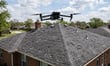
Verisk has noted the insurance-to-value concern is particularly acute for properties containing large amounts of petroleum-linked materials such as asphalt shingles, vinyl siding and synthetic flooring. Recent claims analysis identified flooring, roofing and vinyl siding as the material categories with the greatest financial exposure to petroleum-related cost movements.
Wind and hail events also account for nearly half of residential property claims, concentrating loss activity on some of the same exterior materials most exposed to oil-price changes.
The issue is not simply that oil prices can rise; petroleum can affect property repair costs through several channels, and the timing and magnitude of those effects can vary considerably by material.
Taylor grouped the exposure into three categories: materials with direct petrochemical exposure, including asphalt shingles, bitumen roofing, vinyl siding and synthetic flooring; products with energy-intensive manufacturing processes, such as glass, concrete, cement, aluminum and steel; and transportation-heavy products.
Greg Pyne, vice president of pricing at Verisk Property and Restoration Solutions, said supplier inventory and demand determine how fast cost pressures work their way into replacement costs. “We've seen situations where fuel goes up and there's an immediate impact on material costs,” he said. “That's because things like current supply and demand and current inventory impact that.”
The variability, he said, creates a potential insurance-to-value problem even where a building appeared adequately insured at the beginning of a policy period. A blanket percentage increase may not capture a sudden rise in the cost of a material heavily concentrated in a particular property or region.
Current market conditions may also be concealing some of the valuation risk. Pyne said subdued new construction, remodeling and claims demand can give suppliers more room to absorb higher input costs rather than immediately passing them through.
A major catastrophe could abruptly reverse those conditions. “Definitely, if we see hurricanes and large catastrophes happen in the next weeks or months, it could have an impact,” Pyne said.
The combination of elevated energy costs and post-catastrophe demand could therefore produce a sharper reconstruction-cost increase at exactly the point when insurers and insureds need materials most.
Pyne said the length of time that higher fuel costs persist also matters because brief spikes may not have enough time to flow through into material pricing. Sustained increases are more likely to draw attention from underwriting and claims teams.
“Since this has stayed elevated for a longer period of time, they're definitely starting to watch that more carefully and review it, and they want to know: how is this going to impact the future of costs?” he said.