A major appliance manufacturer is suing its service contractor’s liability insurer, alleging years of claims-handling failures forced it to pay out of pocket to settle a house-fire lawsuit – despite holding additional-insured status on the policy.
Electrolux Consumer Products filed the complaint on September 14, 2026, in the US District Court for the Middle District of Florida against AmGUARD Insurance Company. The five-count suit seeks a court declaration of the parties’ rights under the policy, breach of contract damages, and recovery under both Florida’s statutory and common-law bad faith frameworks.
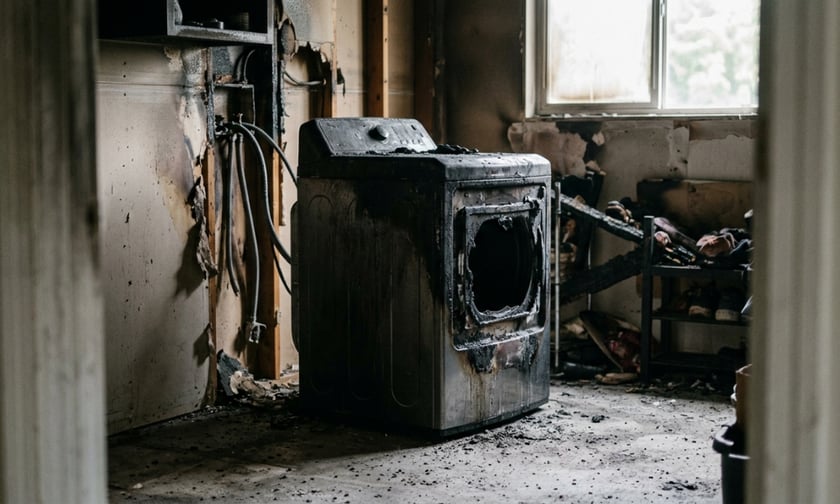
The dispute stems from a September 8, 2022, house fire in Florida. According to the complaint, a technician employed by a third-party appliance service contractor was performing warranty work on a Frigidaire freezer when he operated an oxygen/acetylene torch on flammable refrigerants and left the lit torch unattended in the homeowners’ garage. The fire destroyed the residence and caused bodily injury to one of the homeowners, the filing states.
The homeowners sued Electrolux, the service contractor, and the technician in the Circuit Court of the Twelfth Judicial Circuit, Manatee County, Florida, in March 2023. Under a 2019 servicer agreement, the contractor was required to indemnify Electrolux and name it as an additional insured on its commercial general liability policy – a businessowners policy issued by AmGUARD, effective February 2022, according to the complaint.
Electrolux says it tendered its defense and indemnity – formally requesting AmGUARD step in to cover its legal costs and any liability – on May 22, 2023, and that the insurer has never disputed Electrolux’s status as an insured. But the complaint alleges AmGUARD’s response came with conditions: Electrolux would need to waive its right to recover all past and future fees and costs, accept joint legal representation alongside the contractor and its employee, and agree to full cooperation – with the letter warning that failure to meet these conditions would count as a rejection of the defense offer.
When Electrolux rejected those conditions and proposed independent counsel, AmGUARD went ahead and appointed its own firm to jointly represent all three defendants in the underlying lawsuit, the filing states. That arrangement continued for roughly seven months, through November 2023, despite Electrolux’s repeated objections about the conflict between the parties, according to the complaint.
The filing points to a November 15, 2023, deposition of the contractor’s employee as a turning point. The complaint alleges that neither AmGUARD nor its appointed counsel informed Electrolux or its proposed separate counsel that the deposition had been scheduled. During the proceeding, the jointly appointed lawyer’s questioning focused solely on defending the contractor and its employee, without raising anything in support of Electrolux’s defenses, the filing states.
Three weeks later, the underlying plaintiffs moved to amend their complaint to add new claims against Electrolux, relying on testimony from that very deposition, according to the complaint. The original complaint had contained two counts against Electrolux; the amended version, filed in May 2024, expanded that to six – including three new negligence theories on top of the original vicarious liability and breach of warranty claims, the filing states.
Electrolux’s proposed separate counsel was not permitted to enter an appearance until December 10, 2023 – more than six months after the original tender, the complaint alleges.
The filing also describes what it characterizes as chronic adjuster turnover and unresponsiveness. The original adjuster left AmGUARD in late November 2023. A replacement was not assigned for approximately five months, until around April 2024, the complaint states. Defense invoices were routed to a general claims inbox in the interim.
Multiple mediations in the underlying lawsuit were cancelled because of the turnover, according to the filing. A court eventually ordered the parties to mediate within 30 days and specifically required adjuster attendance. At an October 2024 mediation, a single AmGUARD adjuster appeared on behalf of all three defendants despite the conflict, the complaint states. No settlement resulted.
A second court-ordered mediation on February 27, 2026, is central to the complaint’s bad-faith allegations. The filing states that no AmGUARD representative was present on Electrolux’s behalf when the session began. An adjuster for Electrolux’s claim eventually joined late, but told Electrolux’s counsel she had no authority to offer any of the policy’s limits to resolve the claims against Electrolux – those funds were reserved for the contractor alone, according to the complaint. AmGUARD did not participate in any mediation discussions related to Electrolux’s exposure and made no offer toward settling its claims, the filing states.
With no contribution from the insurer, Electrolux notified AmGUARD in March 2026 that it would accept the plaintiffs’ settlement offer and fund it from its own resources, the complaint states. Between March 21 and 24, 2026, Electrolux executed a settlement resolving the underlying lawsuit and a related subrogation action, without any contribution from AmGUARD, according to the filing. A separate subrogation claim from the homeowners’ insurer had earlier reflected paid losses exceeding $1.3 million.
The complaint further alleges persistent delays in the payment of defense costs. By October 2025, AmGUARD was approximately 11 months behind on invoices with an outstanding balance exceeding $121,000, the filing states. After Electrolux threatened regulatory action, AmGUARD made a partial payment of $86,611.50 in November 2025, but the balance grew again – exceeding $148,000 by January 2026, according to the complaint.
Electrolux filed a Civil Remedy Notice – a formal prerequisite under Florida law before an insured can sue its carrier for bad faith – with the Florida Department of Financial Services on May 22, 2026, under Florida Statute Section 624.155. The notice alleged failures to settle in good faith, to adopt proper claims-investigation standards, and to respond promptly to communications. The statute gave AmGUARD 60 days to cure the alleged violations. That window closed on July 21, 2026. The complaint alleges AmGUARD wired payment of outstanding defense fees one day later, on July 22, and that the late payment does not constitute a cure under the statute.
As of the filing date, Electrolux’s demand to AmGUARD included reimbursement for the self-funded settlement, $273,764 in unpaid defense fees and costs, and $5,909.30 in unpaid expert and litigation expenses.
The five counts are: a declaratory judgment asking the court to confirm AmGUARD’s defense and indemnity obligations; breach of contract; waiver and estoppel under Florida Statute Section 627.426 – arguing AmGUARD lost the right to raise coverage defenses by failing to follow the statute’s reservation-of-rights procedures; statutory bad faith under Section 624.155; and common-law bad faith, pled as an alternative to the statutory claim. Electrolux has requested a jury trial.
The allegations in the complaint have not been proven, and no court has ruled on the merits of any claim.