What happened: SNIC alleges Westminster filed two meritless lawsuits demanding $142 million on a $1 million CGL policy after engineering sham settlements to manufacture bad faith claims
Who's involved: Security National Insurance Company (plaintiff) and Westminster American Insurance Company plus its counsel (defendants)
What's at stake: Roughly $1 million in defense costs, reputational harm, and punitive damages under the Dragonetti Act
Why it matters: A carrier invoking the Dragonetti Act against another carrier and its counsel for allegedly weaponizing bad faith claims could change how the industry handles coverage disputes
Where it stands: Complaint filed November 18, 2026
A fire-escape balcony collapses, a worker is paralyzed, and two insurers end up in a years-long fight - not over who pays the claim, but over whether the whole fight was manufactured.
Security National Insurance Company has sued Westminster American Insurance Company in the US District Court for the Eastern District of Pennsylvania, alleging Westminster spent years chasing more than $142 million from a policy worth $1 million - and knew the whole time it had no case. The complaint, filed November 18, 2026, invokes Pennsylvania's Dragonetti Act, the state's law against filing baseless lawsuits. It names not just Westminster but a law firm and its lead attorney who handled the later rounds of the litigation.
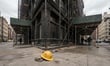
The story starts on June 25, 2019. Two workers were standing on a third-floor fire-escape balcony at a Philadelphia apartment building, tossing out construction debris, when it collapsed beneath them. One fractured two ribs. The other was permanently paralyzed.
Westminster insured the building's owner under a policy with $6 million in total coverage. SNIC insured AM Marlin Construction, a subcontractor that had been hired for a completely different job - fixing a bathroom ceiling leak inside one of the apartments. That job had nothing to do with the fire escape.
Westminster asked SNIC to defend the building owner, arguing it qualified as an additional insured under the SNIC policy. SNIC looked into it and said no. The policy only covered the building owner to the extent it was "held liable for" the subcontractor's work, according to the complaint. The claims against the building owner were about its own failure to maintain the fire escape, not anything the subcontractor did. And the subcontractor was never sued by anyone.
What happened next, the complaint alleges, turned a coverage dispute into something else entirely.
According to the filing, Westminster arranged two settlements with the injured workers at a mediation SNIC declined to attend. In the first, the paralyzed worker and his wife released the building owner for a reported $30 million. But only $5.4 million of that was actual cash from Westminster, below its own $6 million in policy limits. The rest - $24.6 million - was an unfunded assignment of the building owner's right to sue SNIC for bad faith, according to the complaint. A second settlement assigned the other worker's rights under the SNIC policy at a claimed value of $5 million, also unfunded.
SNIC's complaint calls both settlements "shams," alleging they were engineered to set SNIC up for liability it did not owe.
Westminster and its co-plaintiffs then sued SNIC, the complaint states, demanding "compensatory, statutory, and punitive damages in an amount in excess of $142 million." The case ran through a full cycle: the district court threw it out in August 2021, the Third Circuit overturned that ruling in July 2023 on a narrow policy-language issue - while acknowledging the lower court's reasoning had "considerable merit" - and then the district court dismissed the case again in September 2023, finding further changes to the complaint would be pointless. The Third Circuit agreed, affirming the dismissal in December 2024.
That was not the end of it. In October 2025, the same parties - again represented by the same law firm - filed what SNIC describes as "nearly a carbon copy" of the first lawsuit. Same facts, same parties, same $142 million demand. The new filing even referred to itself as "this Second Amended Complaint" and repeated a typo from the original, citing the wrong federal statute for jurisdiction.
SNIC asked the court to toss it and sent a letter threatening a sanctions motion. Less than three months after filing, the plaintiffs dropped the case for good, the complaint states, without receiving any payment or concession from SNIC.
SNIC now alleges the entire campaign was designed not to win a fair ruling but to pressure it into paying up - using the threat of massive damages, mounting legal bills, and bad press tied to a sympathetic plaintiff. The filing describes the demand as "frivolous": more than $142 million against a $1 million policy that, as two courts held, did not cover the claims at all.
The complaint brings three counts under the Dragonetti Act: one for launching the first lawsuit (against Westminster), one for pressing ahead with the bad faith claims after the initial dismissal (against all defendants including the law firm and its attorney), and one for launching the second lawsuit (against all defendants). SNIC says it spent roughly $1 million defending the two cases over more than four years and suffered reputational harm after the litigation was covered by multiple legal and industry trade publications.
Westminster American, a Mid-Atlantic commercial real estate insurer based in Owings Mills, Maryland, with more than 150 years of history, has not responded to the complaint. The allegations have not been tested in court, and no court has ruled on the merits of SNIC's claims.
The case puts a dollar figure on what carriers spend defending coverage disputes they ultimately win - and raises the question of whether the Dragonetti Act might see more use when insurers believe bad faith claims were manufactured rather than genuine.