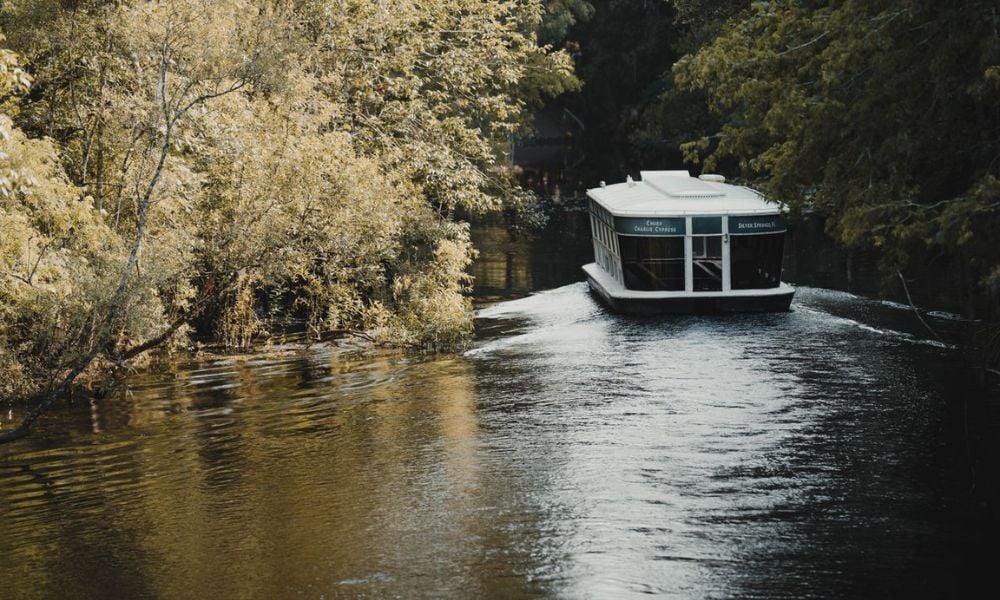
Europe's 2026 drought has pushed the Danube and Rhine to some of their lowest water levels in decades, forcing cruise lines into a summer of emergency operational adjustments. Viking, the largest European river cruise operator, reported that more than half its sailings had been affected since mid-July, per River Cruise Advisor, with approximately 10% to 12% of clients on those departures canceling.
The scale of the disruption reflects conditions on the ground. The Danube in Romania fell to its lowest level in roughly 30 years, according to AmaWaterways, which spent the summer rerouting ships, swapping vessels, and transferring passengers by motorcoach on portions of the Danube, Rhine, and Main.
Disruptions are concentrated on specific stretches, particularly the upper Danube between Regensburg and Passau and the Rhine between Koblenz and Rüdesheim, rather than across the entire European river network. But the insurance gap they expose applies broadly.
Standard cruise travel insurance covers trip cancellation for named triggers such as illness, death, or severe weather events. Low or high water levels sit outside those triggers in most policies. A client whose sailing is canceled or altered because the river is unnavigable has no covered claim under a standard plan, even a cruise-specific one.
"A lot of travelers assume a plan built for cruises would cover a water-related disruption, but that's usually not the case," said Chrissy Valdez, senior director of operations at Squaremouth. "Only a select few plans do, so with insufficient water levels becoming a more frequent issue, it's important to check the fine print of a policy before you buy it."
Purchase timing is also a factor. Many cruise insurance benefits, including cancel-for-any-reason add-ons and pre-existing condition waivers, are only available within a narrow window after the initial trip deposit, typically 14 to 21 days, according to Squaremouth. A client who waits until closer to departure may find those options have closed.
Cancel for any reason, or CFAR, is the broadest available option. It reimburses 50% to 75% of non-refundable trip costs if the client cancels for any reason not named in the base policy. Adding CFAR typically raises premiums by 40% to 60%, per Squaremouth, and it must be purchased within the initial deposit window.
CFAR pays out only if the client cancels voluntarily. If the cruise line modifies rather than cancels the itinerary, the coverage question shifts to whether the policy includes a trip interruption trigger for water level events. Most do not.
Cruise lines handle low-water conditions differently, which shapes how coverage applies. Riviera Travel canceled 10 European river departures this summer and offered full cash refunds or rebookings. AmaWaterways kept departures running through ship swaps and motorcoach transfers. A client bused around an unnavigable Rhine stretch has not had their trip canceled, and standard trip cancellation coverage is unlikely to respond in that scenario.
European river cruising has seen low-water disruptions in 2018, 2022, and now 2026. Hydrologists have flagged that reduced Alpine snowpack combined with prolonged summer heat is making these events more frequent. Clients booking fall or 2027 sailings are entering a risk environment where the coverage conversation belongs at booking, rather after an operator sends a disruption notice.